
Relying on simple infrared remotes for portable air conditioners prevents users from adjusting settings remotely based on changing weather conditions. This limitation often leads to a cycle of over-cooling or energy waste, as manual adjustments are only possible when someone is physically present. As global temperatures continue to fluctuate with greater intensity, the traditional approach to residential cooling is undergoing a significant transformation, moving away from manual, reactive adjustments toward proactive, data-driven management. Homeowners are increasingly finding that leaving an air conditioner running at a constant high output is both financially unsustainable and a strain on the mechanical life of the equipment. Modern smart home technology offers a sophisticated solution by serving as an intelligent intermediary, allowing for a precise balance between indoor comfort and energy conservation through high-tech sensors. This shift represents a transition to a system that understands the specific needs of the household.
Centralized Management Through Smart Thermostats
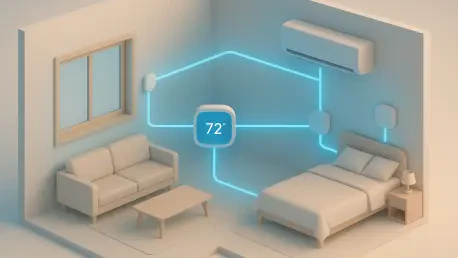
For homes equipped with central air conditioning, the smart thermostat acts as the primary command center for the entire HVAC system. Modern flagship devices, such as the Ecobee Smart Thermostat Premium, go far beyond simple scheduling by offering high-resolution interfaces and seamless integration with major ecosystems like Apple HomeKit, Amazon Alexa, and Google Home. This interoperability allows the cooling system to become part of broader home scenes, enabling voice control and synchronized routines that adjust based on the time of day or occupancy levels. By leveraging the Matter protocol, these devices ensure that different brands can communicate without lag or compatibility issues. This strategic integration emphasizes efficiency through automation rather than constant human intervention, allowing the residence to maintain a steady temperature. Residents can transition from always-on cooling to a system that anticipates when the house needs to be cooled before the heat peaks.
Addressing Temperature Imbalances With Remote Sensors
A major innovation in this space is the use of decoupled sensing to address the persistent problem of uneven cooling in large or multi-story homes. By placing remote sensors in high-traffic areas like bedrooms or home offices, the system can prioritize the temperature of the rooms actually being used rather than the hallway where the main unit is mounted. Furthermore, these devices now incorporate advanced indoor air quality monitoring, ensuring that the air remains healthy while humidity levels stay balanced. This consolidation of environmental health and thermal comfort into a single automated process reduces the carbon footprint of a home. It also ensures that the living environment remains habitable during extreme heatwaves without incurring astronomical utility costs. As the system gathers data over time, it learns the thermal profile of the building, making it more effective at predicting heat gain from sunlight or external factors, thus optimizing the compressor cycles.
Retrofitting Legacy Units for Enhanced Connectivity
A significant portion of the housing market relies on window units, portable air conditioners, or ductless mini-split systems that lack native internet connectivity. The Sensibo Air Pro illustrates how these legacy appliances can be retrofitted into a smart home network using infrared translation technology. By acting as a Wi-Fi-to-IR bridge, these controllers allow users to manage older cooling units via smartphone apps, providing the ability to pre-cool a home minutes before arrival instead of leaving the unit running all day. This modernization path is essential for renters or owners of older homes who cannot install central HVAC systems. The ability to monitor power consumption in real-time through these bridges also helps users identify which units are becoming inefficient or failing. By bringing these older machines into the digital age, homeowners can achieve a level of control previously reserved for the most expensive installations, extending the life of current assets.
Advanced Climate Reaction and Energy Conservation
Beyond simple remote access, these bridges introduce sophisticated automated logic known as climate reaction, which transforms how manual units function. This allows the air conditioner to trigger specifically when certain thresholds are met, such as a spike in humidity or a temperature rise above a set degree, and to power down once the target environment is achieved. This precision prevents the energy waste associated with overshooting cooling goals and includes safety sensors that monitor carbon dioxide levels, encouraging better ventilation and reducing the mechanical load on the compressor. Furthermore, the integration of local weather data allows these bridges to preemptively adjust cooling intensity before a heat front arrives. By making the cooling process autonomous, the system reduces the cognitive load on the user while maintaining a perfect indoor climate. This approach proves that smart technology is not just for new builds but is a versatile tool for any residence.
Strengthening Thermal Efficiency With Contact Sensors
The third essential component of a smart cooling strategy involves maintaining the home physical envelope to prevent energy loss. Even the most efficient HVAC system cannot perform effectively if cooled air is escaping through an open door or window. The integration of contact sensors, such as those from the Eve product line, addresses human error by using the Matter protocol to communicate with the cooling system. This cross-brand compatibility ensures that the thermostat knows the status of every entry point in the home without requiring manual checks. These sensors are small, unobtrusive, and can be installed in minutes, yet they provide the critical data needed for a truly intelligent home. By monitoring the perimeter, the smart home system can transition from a simple cooling machine to a holistic climate manager. This layer of awareness is vital in 2026 as energy costs remain a significant part of household budgets, requiring every possible measure to ensure that cold air stays inside.
Automated Workflows for Physical Envelope Protection
These sensors enable critical if-then automation workflows that protect both the budget and the hardware. For example, a system can be programmed to automatically pause the air conditioning if a patio door is left open for more than a few minutes, preventing the unit from attempting to cool the outdoors. This prevents the compressor from running continuously at maximum capacity, which is a common cause of premature mechanical failure. By making the cooling system self-regulating based on the physical state of the house, homeowners can ensure maximum efficiency even in busy households where doors and windows are frequently left ajar. Moreover, these automations can notify the user via a push notification if a window is open while the outdoor temperature is higher than the indoor target. This proactive feedback loop encourages better habits among residents, leading to a culture of conservation that supports the long-term sustainability of the cooling infrastructure within the home.
Strategic Implementation of Integrated Climate Systems
The synthesis of these technologies highlights a clear trend toward granularity, where energy is directed only to specific zones and at specific times. The modern smart home no longer views cooling as a binary on or off state for the whole building but as a nuanced response to real-time occupancy and environmental data. This transition ensures that comfort is achieved with the least amount of energy expenditure possible, extending the lifespan of expensive hardware through smarter operation. Integrating these systems requires a foundational network, such as a Thread border router, to ensure that all devices remain connected with minimal power draw. As users move from room to room, the system follows their presence, adjusting temperatures dynamically to match their preferences. This level of customization was once a luxury but has now become a standard expectation for those looking to optimize their living spaces. The resulting data provides insights into home efficiency that were once impossible.
Future Pathways and Long-Term Conservation Benefits
In the recent years from 2026 to 2028, the shift toward total interoperability across different manufacturers became the definitive standard for residential cooling. The cooperation between thermostats, remote sensors, and window monitors created a comprehensive climate defense system that prioritized both comfort and conservation. Homeowners who invested in these integrated solutions saw a significant return on investment through reduced utility bills and improved equipment longevity. The move toward automation provided a scalable way to handle rising external temperatures without sacrificing lifestyle quality. It was established that while the initial shift to smart hardware required a thoughtful setup, the long-term benefits in environmental health and financial savings proved indispensable. Future considerations now point toward even deeper integration with the electrical grid to balance loads during peak demand. This evolution successfully turned the home into a self-aware environment.