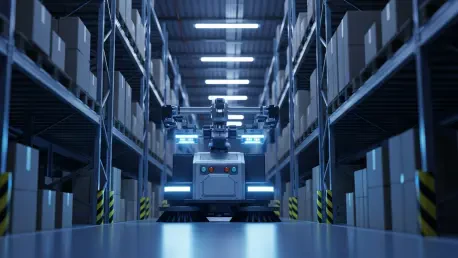

The global landscape of industrial maintenance has undergone a radical transformation as the warehouse cleaning robot market evolves from an experimental luxury into an essential pillar of modern logistics infrastructure. Valued at approximately $688 million in early 2026, this sector is currently on a trajectory to reach $1.209 billion by 2036, representing a robust compound annual growth rate of 5.8 percent over the next decade. This growth is not merely a reflection of increased automation but a fundamental reassessment of how cleanliness impacts operational efficiency and worker safety in high-velocity distribution environments. As logistics facilities expand to meet the demands of global trade, the integration of autonomous mobile robots has become the standard for maintaining massive square footage that was once impossible to clean consistently with human labor alone. These machines now represent a sophisticated fusion of heavy-duty mechanical engineering and advanced artificial intelligence, capable of operating in the chaotic, high-traffic corridors of fulfillment centers without disrupting the critical flow of goods.
Economic Impetus and Labor Dynamics
The Rising Cost of Manual Labor: A Catalyst for Automation
The financial landscape of the warehousing industry has reached a tipping point where the escalating cost of manual labor is directly driving the adoption of autonomous cleaning solutions. In the United States, average hourly earnings for storage and warehousing personnel have seen consistent upward pressure, making the allocation of human workers to repetitive floor-scrubbing tasks an increasingly inefficient use of capital. Facility managers are recognizing that paying a premium for manual janitorial services often yields inconsistent results, particularly when workers are asked to cover miles of concrete floor during grueling eight-hour shifts. By transitioning to robotic platforms, companies can achieve a predictable return on investment, amortizing the cost of the hardware over several years while simultaneously eliminating the overhead associated with recruiting, training, and retaining staff for entry-level maintenance roles. This economic shift has moved the conversation from whether a facility can afford a robot to whether it can afford to continue relying on a fluctuating and increasingly expensive manual workforce for basic sanitation.
Beyond the immediate reduction in payroll expenses, the automation of floor care allows logistics providers to strategically repurpose their existing workforce toward higher-value responsibilities that require human judgment and dexterity. Rather than spending hours behind a manual walk-behind scrubber, employees are being upskilled to manage complex “exception handling” scenarios, such as responding to chemical spills, clearing unexpected debris from pick paths, or maintaining specialized equipment. This transition transforms the role of the traditional janitor into a facility technician who oversees a fleet of autonomous assets, ensuring that human intelligence is applied to solving problems while the robots handle the monotonous task of high-volume cleaning. This labor optimization not only improves the overall morale of the workforce by removing the most physically taxing chores from their daily routines but also enhances the total throughput of the facility by ensuring that the warehouse environment is consistently maintained at a level that supports peak operational uptime.
The Scale of Modern Logistics: Meeting the Demands of Mega-Facilities
The physical expansion of distribution centers into “mega-warehouses” has rendered traditional cleaning methods obsolete, as the sheer scale of these facilities exceeds the practical limits of manual intervention. With tens of thousands of private warehousing establishments now operating across North America, many encompassing over one million square feet, the challenge of maintaining floor hygiene has become a logistical hurdle of immense proportions. Manual crews often struggle to achieve the necessary level of repeatability and speed required to keep these massive spaces compliant with safety and environmental regulations, especially in environments that operate on a twenty-four-hour cycle. Autonomous systems address this scale by offering high-capacity performance that can match the relentless pace of modern commerce, with the latest industrial scrubbers capable of cleaning nearly 5,000 square meters per hour. This capability ensures that even the largest fulfillment centers can maintain a standardized level of cleanliness across every aisle, regardless of the time of day or the availability of human staff.
Furthermore, the demand for standardized, high-volume cleaning is reinforced by the need for meticulous record-keeping and safety compliance in a highly regulated global market. Large-scale facilities require documented proof of cleaning frequencies to satisfy insurance requirements and workplace safety audits, a task that is naturally performed by robotic systems through their internal data logs. Human crews, by contrast, may inadvertently skip sections or provide inconsistent levels of agitation and water recovery, leading to potential hazards like slippery spots or accumulated dust that can interfere with sensitive sorting machinery. As warehouses grow in complexity, the ability to scale cleaning operations alongside the physical footprint of the facility has become a critical competitive necessity. The adoption of autonomous technology allows global logistics leaders to treat cleanliness as a measurable, scalable utility rather than a variable service, providing a foundation for safer and more reliable operations in the world’s most demanding industrial environments.
Market Segmentation and Technical Dominance
The Prevalence of Autonomous Scrubbers: Engineering for Industrial Durability
Within the current hardware landscape, autonomous scrubbers have emerged as the clear dominant force, capturing nearly half of the total market share due to their specialized ability to handle concrete warehouse flooring. These floors are subject to intense wear and tear, accumulating persistent tire marks from forklifts, fine dust from packaging materials, and various forms of industrial grime that simple sweeping cannot remove. Unlike domestic vacuuming robots, industrial autonomous scrubbers are heavy-duty systems designed to apply significant downward pressure and use high-volume water recovery to wash and dry the surface in a single pass. This “wet-dry” capability is essential for maintaining safety in high-traffic aisles, as it prevents the creation of slip hazards that could lead to worker injuries or vehicle skidding. The market’s preference for these robust machines highlights a fundamental industrial requirement for deep-cleaning capabilities that can withstand the rigors of a harsh environment while delivering visible, verifiable results on a daily basis.
Innovation within the scrubber segment is currently focused on maximizing operational efficiency by increasing cleaning widths and improving the sophistication of water filtration systems. Modern units are being designed with high-capacity lithium-ion batteries that allow for extended runtimes, enabling a single robot to cover a significant portion of a facility on a single charge with minimal downtime. Additionally, advancements in “on-board” water recycling technology allow these robots to reuse a portion of their cleaning solution, reducing the frequency of manual “tank and dump” cycles and further lowering the human intervention required. By focusing on these mechanical enhancements, manufacturers are ensuring that the robots are not just intelligent navigators but also highly effective cleaning tools. The continued dominance of the scrubber segment underscores the reality that, in a warehouse setting, the physical ability to remove stubborn industrial contaminants is just as important as the digital intelligence used to navigate the space.
Distribution Centers as Primary Applications: Navigating the Logistics Ballet
Distribution centers currently represent the most significant application for cleaning robots, accounting for approximately 40 percent of the global market due to their predictable and standardized layouts. These environments, characterized by long aisles, high-density racking, and clear signage, provide the ideal conditions for autonomous navigation systems to excel with minimal error. In these settings, robots can be programmed to operate with high efficiency by following optimized paths that cover the maximum area in the shortest possible time. However, the success of these deployments depends on the robot’s ability to integrate into the existing “ballet” of the warehouse, where forklifts, reach trucks, and human pickers are constantly in motion. To avoid becoming a bottleneck, robots must possess high-level situational awareness, allowing them to pause, reroute, or yield to material-handling traffic while still completing their cleaning objectives within a designated window of time.
The operational advantage of using robots in distribution centers is particularly evident as facilities move toward 24/7 schedules to meet the demands of rapid e-commerce fulfillment. In a traditional warehouse, cleaning might be relegated to a specific “down-shift,” but modern logistics hubs rarely have periods of complete inactivity. Autonomous robots provide the flexibility to clean during off-peak hours or even alongside active picking operations, provided they are given “protected route time” where they do not compete excessively with heavy machinery. This ability to maintain a facility’s cleanliness without requiring a total shutdown of operations is a major strategic benefit for facility managers. As the logistics industry continues to prioritize speed and uptime, the role of the cleaning robot has shifted from a tertiary support tool to a vital component of the facility’s heartbeat, ensuring that the environment remains in peak condition to support the high-speed movement of consumer goods around the clock.
Hardware Value and Software Intelligence: The Physicality of Automation
Despite the significant media attention given to artificial intelligence and cloud-based navigation, the physical hardware remains the most valuable component of the warehouse cleaning robot market, representing over 60 percent of a unit’s total cost. These machines are, at their core, sophisticated mechanical assets designed for longevity in punishing industrial conditions where dust, vibration, and temperature fluctuations are the norm. High-capacity lithium-ion battery packs, durable drive motors, heavy-duty brush assemblies, and reinforced chassis are the elements that determine the robot’s lifespan and its ability to perform consistent cleaning. While software provides the “brains,” the hardware provides the “muscle,” and facility managers are often more concerned with the durability of the squeegee blades and the reliability of the pump systems than they are with the specific version of the navigation algorithm. This reality emphasizes that the cleaning robot market is as much an extension of the traditional floor-care industry as it is a part of the high-tech robotics sector.
However, it is the integration of navigation software that transforms these mechanical units from simple automated tools into intelligent assets capable of fleet-wide coordination. Modern software platforms allow for comprehensive reporting, where managers can monitor the performance, battery status, and “percent-of-area-cleaned” metrics for multiple robots across different geographical sites from a single centralized dashboard. This data-driven approach allows organizations to prove the robot’s value through objective performance indicators, such as the total square footage cleaned per week or the reduction in manual labor hours. While the hardware does the heavy lifting, the software provides the necessary transparency to optimize cleaning routes and schedule maintenance before a mechanical failure occurs. The synergy between high-quality physical components and sophisticated digital management tools is what defines the current generation of robots, ensuring they are both physically capable and operationally intelligent enough to serve as reliable long-term investments.
Growth in 3PL and E-commerce: Maintaining the High-Tech Fulfillment Edge
Third-party logistics providers and e-commerce fulfillment centers have become the primary end-users driving the surge in demand for autonomous cleaning solutions. These organizations typically operate on razor-thin margins and handle massive volumes of inventory, making any incremental gain in operational efficiency or reduction in overhead highly attractive. In the fast-paced world of e-commerce, where facility turnaround times are measured in minutes, the “anytime” availability of a robotic cleaner is a superior alternative to the rigid and often unreliable schedules of traditional manual cleaning crews. Furthermore, the presence of expensive automated sorting systems and high-speed conveyors in these facilities makes dust control a priority, as accumulated particulates can lead to sensor failures or increased wear on mechanical parts. Cleaning robots serve as a proactive maintenance tool, ensuring that the environment remains pristine enough to support the sensitive technology that drives modern retail fulfillment.
The adoption of robotics in the 3PL sector is also a response to the need for extreme flexibility and scalability as client needs change. A logistics provider may need to ramp up operations during a peak holiday season, and having an autonomous cleaning fleet allows them to focus their human hiring efforts on pickers and packers rather than janitorial staff. Moreover, the standardized data output from these robots allows 3PL managers to include “verified cleanliness” as part of their service level agreements with retail partners, providing a layer of professional transparency that was previously difficult to quantify. As e-commerce continues to take a larger share of the global retail market, the pressure on fulfillment centers to maintain a high-tech, high-efficiency edge will only increase. In this context, cleaning robots are no longer viewed as an optional upgrade but as an essential utility that protects the facility’s infrastructure and ensures that the high-speed engine of global commerce continues to run smoothly and safely.
Regional Market Perspectives
North American and European Trends: Standardization and Regulatory Compliance
North America, and the United States in particular, currently serves as the primary engine of growth for the warehouse cleaning robot market, driven by a sprawling network of standardized warehousing and a persistent labor shortage. Major national operators are increasingly seeking “plug-and-play” robotic solutions that can be replicated across hundreds of different sites to maintain a uniform standard of cleanliness and safety regardless of local labor conditions. This regional trend is characterized by a focus on “fleet health” and the integration of robotics into broader corporate sustainability goals, where automated systems are used to reduce water and chemical consumption through precise dosing. The push for automation in the U.S. is not just about cost-cutting; it is a strategic response to a logistics sector that is growing faster than the available workforce, making autonomous technology a critical tool for maintaining the continuity of the national supply chain.
In Europe, the market for warehouse cleaning robots is being shaped by a combination of rising labor costs and stringent environmental and safety regulations. European facility managers are often early adopters of technology that can be documented to improve workplace ergonomics and reduce the environmental footprint of industrial operations. Because labor laws and wage inflation are particularly impactful in the European Union, companies are turning to robotics to protect their operational margins while adhering to strict standards regarding the use of cleaning chemicals and water disposal. There is also a strong emphasis in the European market on the availability of local service networks and regional technical support, as downtime is viewed as a significant risk to operational stability. Manufacturers who can provide not only the hardware but also a comprehensive service ecosystem are finding the most success in this region, where the long-term reliability and environmental compliance of the machine are paramount.
Specialized Needs in the Japanese Market: Precision and Compact Reliability
The Japanese market presents a unique environment for the adoption of cleaning robots, defined by a rapidly aging workforce and a logistics infrastructure characterized by high-density, constrained facility layouts. In Japan, where physical space is at a premium, there is a strong preference for compact and highly maneuverable cleaning equipment that can navigate tight aisles and navigate around complex obstacles without disrupting the flow of goods. Robots in this market must be exceptionally nimble, utilizing advanced sensor suites to ensure they do not become an obstruction themselves in a crowded warehouse. The demographic reality of a shrinking labor pool has made automation an absolute necessity rather than a choice, leading to a high level of cultural and professional acceptance for robotic coworkers within the industrial sector.
Furthermore, Japanese facility managers place an extremely high value on equipment reliability and the precision of the cleaning results. In a culture that prioritizes meticulous maintenance and “zero-defect” operations, a robot that leaves streaks or misses corners is often viewed as a failure of the system. Consequently, manufacturers targeting the Japanese market must invest heavily in the quality of their navigation algorithms and the physical durability of their units. Local maintenance support is also a critical factor, as Japanese companies expect rapid response times and a steady supply of spare parts to prevent any disruption to their tightly integrated supply chains. The Japanese market is less about the sheer scale of the equipment and more about the precision, reliability, and “interoperability” of the robotic units within a highly disciplined and space-constrained operational framework.
Operational Realities and Competition
Strategic Alliances and Purpose-Built Robots: The New Industrial Synergy
The competitive landscape of the cleaning robot market is currently defined by a fascinating synergy between traditional industrial floor-care giants and “robotics-first” technology innovators. Many established brands, who have spent decades perfecting the mechanical aspects of scrubbing and sweeping, have formed strategic partnerships with AI and navigation experts to bring autonomous versions of their proven hardware to market. This “best of both worlds” approach allows facility managers to purchase equipment that has a familiar mechanical architecture and a reliable supply chain for wear-parts, while benefiting from the latest advancements in LiDAR-based mapping and obstacle avoidance. These alliances have accelerated the maturity of the market, as they combine the ruggedness required for industrial work with the digital sophistication required for autonomous operation, creating a new class of “smart” industrial machinery that is ready for immediate deployment.
On the other side of the competitive spectrum, purpose-built robotics companies are challenging the status quo by designing machines from the ground up to be purely autonomous assets. These “native” robots often feature more advanced AI-based route generation and are specifically engineered to handle the dynamic, high-traffic commercial environments where traditional equipment might struggle. These innovators are pushing the boundaries of what is possible, developing units that can automatically switch between different cleaning modes—such as sweeping and scrubbing—based on the real-time detection of different debris types. As these two types of companies compete for market share, the result is a rapid cycle of innovation that benefits the end-user through improved performance and lower total cost of ownership. This competitive tension is driving the industry toward a future where the distinction between a “cleaning machine” and a “robot” disappears, and every piece of industrial equipment is expected to possess some level of autonomous capability.
Moving from Pilot to Routine Operation: The Benchmark of Intervention-Free Uptime
A significant challenge currently facing the warehouse cleaning robot market is the transition from successful technology pilot programs to routine, daily operation within a busy facility. While a robot might perform flawlessly in a controlled demonstration or an empty aisle, its true value is only proven when it can navigate a chaotic picking shift without requiring human assistance. For many facility managers, the ultimate benchmark for success is the “intervention-free” runtime—the number of hours or square feet a robot can clean before a human must intervene to clear a path, reset a sensor, or refill a tank. If workers are frequently pulled away from their primary duties to “babysit” a stuck or confused robot, the economic justification for the technology quickly erodes. Therefore, manufacturers are increasingly focused on improving the “robustness” of their navigation systems to handle the unpredictable nature of a working warehouse.
To achieve this level of operational reliability, robots must be capable of handling a wide variety of “edge cases,” such as changes in floor texture, the presence of clear plastic wrap on the floor, or the sudden appearance of temporary obstacles like staged pallets. The goal is to move the robot from being a “special project” to being an invisible, reliable utility that operates in the background like the HVAC system or the lighting. Success in the next phase of market growth will depend on the ability of these machines to demonstrate high “completed area” rates consistently over months and years of use. As the technology matures, the industry is shifting its focus away from the novelty of autonomous movement and toward the boring but essential metrics of uptime, durability, and ease of use. The robots that can survive the daily grind of a fulfillment center with the least amount of human attention will be the ones that ultimately dominate the industrial landscape.
The Shift Toward Data-Driven Sanitation
Integration into the Smart Warehouse: Robots as Mobile Data Hubs
The most significant trend currently reshaping the industry is the integration of cleaning robots into the broader “Smart Warehouse” ecosystem, where they serve as much more than just sanitation tools. Modern robots are increasingly being equipped with additional sensors and cameras that allow them to act as mobile data-collection hubs as they traverse the facility. As they clean, these machines can perform inventory counts, check for rack damage, monitor ambient temperatures, or even identify safety hazards like blocked fire exits. This multi-purpose functionality transforms the cleaning process from a sunk cost into a source of valuable operational intelligence. By layering this data over the facility’s existing Warehouse Management System (WMS), site managers can gain a real-time, ground-level view of their operations that was previously impossible to achieve without manual audits.
The data collected by these autonomous fleets is also being used to optimize the layout and workflow of the warehouse itself. For example, if a cleaning robot consistently reports a high volume of debris or frequent blockages in a specific aisle, it may indicate a bottleneck in the picking process or a problem with how materials are being staged. By analyzing these “heat maps” of activity and cleanliness, facility managers can make evidence-based decisions to improve the overall flow of the facility. This level of transparency turns the humble task of floor scrubbing into a strategic advantage, providing insights that contribute directly to the facility’s productivity and safety. As connectivity becomes standard across industrial equipment, the cleaning robot will increasingly be seen as a vital node in a digital network, providing the continuous monitoring necessary to run a truly optimized logistics operation.
Adaptive Routing and Self-Pathing AI: The Future of Flexible Automation
The next generation of warehouse cleaning robots is moving away from reliance on static, pre-defined maps toward more adaptive, self-pathing artificial intelligence. This technology allows robots to adjust their cleaning routes in real-time based on the current state of the facility, rather than following a rigid path that may be blocked by a temporary obstacle. As warehouse layouts change to accommodate seasonal inventory or new sorting equipment, these “self-learning” systems can automatically update their internal maps without requiring a technician to perform a manual re-mapping exercise. This shift toward autonomous pathing significantly reduces the time and cost associated with the initial installation and ongoing maintenance of the robot’s logic, making the technology more accessible to smaller operators who may not have dedicated onsite technical support.
The implementation of adaptive routing also allows for more sophisticated “priority cleaning” strategies, where a robot can be instructed to focus on high-traffic areas during a shift change or to clean up a spill immediately upon detection. This level of flexibility ensures that the robot is always working where it is most needed, rather than blindly following a schedule. As AI continues to evolve, the ability of these machines to understand and predict the movements of human workers and other machinery will become even more refined, leading to a more harmonious and efficient co-existence. The ultimate goal is the creation of a “set-and-forget” system that can manage its own schedule, maintenance, and routing with minimal human oversight. This evolution will cement the cleaning robot’s place as an indispensable and increasingly invisible part of the global supply chain infrastructure, ensuring that the world’s warehouses remain safe, clean, and ready for the future of commerce.
The rapid adoption of autonomous cleaning technology across the global logistics sector has fundamentally altered the standard operating procedures of modern distribution centers. By successfully navigating the transition from manual labor to data-driven robotics, facility managers were able to overcome the dual challenges of rising labor costs and the massive physical scale of modern fulfillment hubs. The integration of high-durability hardware with sophisticated adaptive AI proved that robots could function not just as automated tools, but as vital nodes of operational intelligence within a smart warehouse ecosystem. As the industry moved beyond initial pilot programs into full-scale deployment, the focus shifted toward maximizing intervention-free uptime and leveraging robots for multi-purpose data collection. To maintain this momentum, organizations should prioritize the selection of robotic platforms that offer seamless integration with existing warehouse management systems and robust local support networks. Looking ahead, the continued refinement of self-pathing algorithms and water-recycling technologies will likely remain the key drivers of long-term sustainability and return on investment in industrial maintenance. The successful implementation of these systems has provided a scalable blueprint for how other labor-intensive facility tasks can be automated to support a more resilient and efficient global supply chain.