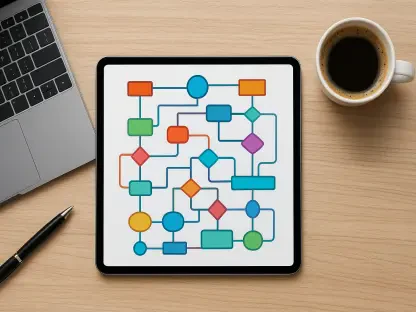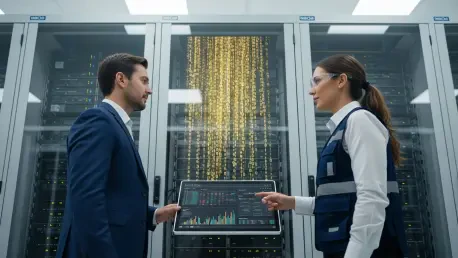

The arrival of a fourth industrial revolution phase is marked not by the release of smarter models, but by the physical arrival of AI engineers in mahogany boardrooms across the globe. This transition signifies a fundamental shift in the technology sector, where the focus has moved from developing foundational models to the gritty work of organizational redesign. The emergence of the OpenAI Deployment Company represents the peak of this trend, indicating that the value of artificial intelligence now lies more in its application than in its raw processing power.
The Evolution of AI from Software Tools to Operational Integration
For several years, the relationship between AI providers and businesses was defined by the Application Programming Interface (API). Companies would pay for access to a model, then struggle internally to make it useful. However, the industry has recognized that a massive implementation gap exists between possessing a powerful tool and actually improving the bottom line. This realization birthed the deployment-first model, which treats AI not as a product to be sold, but as a catalyst for a complete business overhaul.
This shift mirrors the historical rise of enterprise resource planning systems, yet it moves at a significantly faster pace. Providers are no longer content with being mere software vendors; they are becoming deep-level consultants who embed themselves within a client’s culture. This approach ensures that technology adoption is not left to chance but is instead a guided, mandatory evolution of the corporate structure itself.
Key Components of the New Enterprise AI Model
Forward Deployed Engineering: On-Site Integration
The cornerstone of this new model is the physical presence of specialized engineers who operate within customer organizations. These professionals do not simply install software; they actively redesign legacy workflows to be AI-native from the ground up. By working alongside internal teams, these engineers can identify specific bottlenecks that a remote development team would likely miss, such as inefficient data silos or redundant approval layers.
Furthermore, this proximity allows for the fine-tuning of models in real-world environments. When an engineer is on-site, the feedback loop between a model’s performance and the business’s requirements becomes instantaneous. This accelerates technical performance and ensures that the resulting infrastructure is tailor-made for the specific nuances of the industry, whether it be legal services, manufacturing, or retail.
Strategic Talent Acquisition: Consulting Expertise
Technical skill alone is insufficient for this level of transformation, which is why AI firms are aggressively acquiring human capital from traditional consulting sectors. The acquisition of specialized firms like Tomoro provided OpenAI with a ready-made army of 150 experts who understand the intersection of technology and human behavior. This blending of high-level engineering with management consulting bridges the gap between what a machine can do and what a business actually needs.
The importance of this hybrid expertise cannot be overstated. It allows AI providers to speak the language of executives while maintaining the technical rigor required to implement complex systems. By combining these two worlds, providers are able to navigate the cultural resistance that often accompanies digital transformation, making the adoption of AI feel like a logical progression rather than a disruptive shock.
Shifts in Industry Behavior: Funding Trends
The financial landscape is reacting to this shift with massive infusions of private equity. Firms like TPG, Bain Capital, and Blackstone are pouring billions into these specialized deployment units, recognizing that the next phase of growth is service-oriented. This funding fuels the transition from “AI-as-a-Service” to “Business-Transformation-as-a-Service,” where the product is a measurable increase in organizational efficiency rather than just tokens or compute time.
This trend has sparked an intense competitive rivalry between major players. While OpenAI moves toward large-scale enterprise consulting, Anthropic has mirrored the strategy with its own multi-billion dollar service venture. This arms race for the mid-sized and large-scale market suggests that the industry believes the era of the “self-service” AI enterprise is over, replaced by a model that requires heavy, high-touch involvement from the provider.
Real-World Applications: Corporate Infrastructure
In practice, these deployment units are fundamentally altering how companies function at their most basic levels. Engineers are now auditing hiring pipelines, performance management systems, and workforce planning strategies to identify where AI can take over routine cognitive tasks. In finance and professional services, models like Claude and GPT are being woven into the core operations, moving beyond simple chatbots to become the primary interface through which work is conducted.
What makes this unique is that “change management” is now being led by engineers rather than traditional human resources departments. This technical approach to organizational development treats a company like a system to be optimized. While this leads to rapid efficiency gains, it also fundamentally changes the nature of corporate leadership, placing more power in the hands of those who control the underlying algorithms.
Technical and Organizational Challenges: Widespread Adoption
However, this engineering-led transformation is not without significant friction. A notable tension exists between these external deployment teams and traditional Human Resources roles. In many cases, Chief Human Resources Officers are being omitted from strategic planning, leading to a disconnect between technical goals and employee morale. There is a risk that by focusing purely on optimization, these units may overlook the human element that keeps a company stable.
Technical hurdles also persist, particularly when attempting to modify legacy workflows that have existed for decades. Disrupting these systems without causing business continuity issues requires a level of precision that is difficult to maintain at scale. Moreover, allowing third-party providers to redesign a company’s internal performance metrics raises serious regulatory and ethical questions regarding data privacy and corporate autonomy.
Future Outlook: AI-Driven Business Architecture
Looking ahead, the role of the “AI Architect” is poised to become a permanent and essential fixture in corporate leadership. This role will likely oversee the continuous integration of automated systems into the business fabric, ensuring that the organization remains agile as technology evolves. There is also the potential for breakthroughs in automated organizational design, where AI begins to suggest its own structural improvements to the companies it serves.
While this consulting-heavy model is currently the domain of large firms with deep pockets, it will eventually scale down to smaller enterprises. As the methodologies become more standardized, the cost of deployment will drop, allowing even small businesses to benefit from custom-built AI infrastructure. The long-term impact on the global labor market will be profound, as the definition of “work” shifts from executing tasks to managing the systems that perform them.
Summary of the Enterprise AI Deployment Landscape
The transition toward deep operational implementation represented a pivotal moment in the history of corporate technology. It was observed that the success of AI depended less on the raw power of the models and more on the ability of organizations to change their internal structures. The emergence of specialized deployment units bridged the implementation gap that had previously prevented companies from realizing the full potential of digital transformation.
This shift validated the idea that AI was not just a tool but a fundamental architect of modern business. The heavy involvement of private equity and the acquisition of consulting talent proved that the industry was serious about moving beyond software sales. Ultimately, the lessons learned from these early deployments reshaped the definition of a successful enterprise, prioritizing algorithmic efficiency and technical integration over traditional management structures. The era of experimentation ended, and the age of the AI-integrated corporation began.