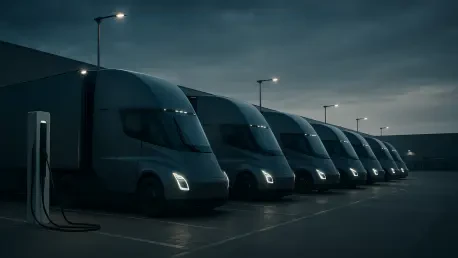

Strategic placement of high-performance charging infrastructure at sites in Corby, Knottingley, and Avonmouth has proven essential for supporting continuous industrial transport cycles. This initiative represents a significant shift from theoretical testing to practical, large-scale implementation in the milling sector. By integrating five specialized electric heavy goods vehicles into a network that moves 800,000 tonnes of wheat every year, the operation demonstrates that heavy-duty battery power is no longer restricted to short-range urban deliveries. The logistics industry has long been skeptical of the ability of electric platforms to manage the grueling schedules of the food supply chain, yet the current success of this rollout suggests a turning point. Instead of viewing decarbonization as a burden, the implementation focuses on how strategic partnerships and high-capacity technology can maintain service reliability while reducing the carbon footprint of essential agricultural distribution.
Operational Integration and Technical Viability
Building the Infrastructure Foundation
The transition toward a fully electric logistics fleet began with a careful evaluation of the power requirements at primary milling facilities, particularly the Corby site where initial trials took place. To ensure that the heavy vehicles remained operational throughout the day, the project utilized mobile charging units as a bridge to more permanent solutions. This phase was critical for understanding the energy draw of high-performance trucks and how to minimize downtime between shifts. Consequently, the installation of ultra-rapid chargers has allowed for seamless double-shift rotations, which are necessary for handling the massive volume of wheat moving through the United Kingdom. These charging hubs were not just designed for internal use; they were intentionally engineered to be accessible to third-party commercial operators. This helps to stimulate a regional charging ecosystem, ensuring that local power infrastructure supports a variety of electric fleets beyond grain milling.
Scaling from Pilot to Full Operations
Moving beyond the initial pilot required a sophisticated logistical strategy that synchronized vehicle movement with the availability of power grids at Knottingley and Avonmouth. The complexity of moving industrial quantities of agricultural products meant that any delay in charging could disrupt the entire food supply chain. To mitigate this risk, the collaboration focused on a holistic methodology that combined real-time route planning with advanced battery management software. This integration ensures that drivers can maximize their range while the fleet remains synchronized with the demanding delivery schedules of manufacturing clients. The shift from a single-vehicle test to a multi-site framework has proven that the primary hurdle for heavy logistics is not necessarily the vehicle technology itself, but the maturity of the supporting infrastructure. By treating the charger as a core component of the warehouse environment, the operation has successfully replaced diesel dependency with a high-torque alternative.
Sustainability Metrics and Future Directions
Environmental Impact and Efficiency Gains
The environmental results from the deployment of these five electric heavy goods vehicles have been substantial, with current data indicating an annual reduction of roughly 375 tonnes of carbon dioxide emissions. This shift significantly lowers the overall carbon intensity of the milling process, aligning industrial output with modern sustainability targets. Beyond the obvious climate benefits, the transition has produced tangible improvements in the daily operational environment. Drivers have reported a marked decrease in fatigue due to the significant reduction in noise and vibration compared to traditional internal combustion engines. This improvement in ergonomics contributes to higher employee satisfaction and safety within the logistics sector, which is often plagued by high turnover rates. Moreover, the efficiency gains are not merely environmental; the lower maintenance requirements of electric drivetrains provide long-term cost predictability and mechanical stability that was previously unattainable in high-volume transport.
Implementing Strategic Energy Solutions
The successful validation of the current fleet model paved the way for broader applications across both inbound and downstream logistics segments. This scalable approach served as a blueprint for other heavy industries looking to decarbonize their supply chains without sacrificing throughput. Past efforts in establishing this framework focused on overcoming technical hurdles, while the coming years through 2028 will center on optimizing energy use and grid integration on a national scale. Sector leaders considered how to leverage this existing infrastructure to support even heavier payloads and longer transit times. Focusing on a strategy that included vehicle choice and smart charging, the industry demonstrated that the electrification of heavy logistics is a viable path forward. The next steps involved integrating local renewable energy sources into these hubs to ensure that the electricity powering the food supply chain is as sustainable as the vehicles themselves.