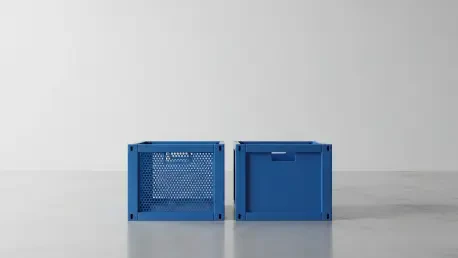

High-volume distribution networks often struggle with the physical limitations of standard storage equipment when dealing with oversized or oddly shaped inventory items. The introduction of the GoMaxi 64300 series signaled a major shift in material handling by offering the largest and deepest bale arm crates currently available to the industry. These 58-liter capacity units allowed businesses to manage bulky goods without the typical fragmentation of stock that occurred when using smaller, shallower containers.
Moving beyond conventional dimensions empowered fulfillment centers to streamline their picking processes. By accommodating more items per unit, these crates reduced the number of individual touches required for each order. This shift transformed how retailers approached high-volume logistics, ensuring that larger products remained organized and accessible throughout the entire supply chain journey.
The Economic Necessity: Maximizing Every Square Foot
In an environment where warehouse real estate costs remained at an all-time high, spatial efficiency was no longer a luxury but a fundamental requirement for operational survival. Modern supply chains faced constant pressure to increase stock volume while working within strictly restricted physical footprints. This tension drove the demand for innovative equipment that could adapt to both full-load distribution and empty-load storage.
Higher-capacity crates addressed the rising overhead of facility management by consolidating more products into fewer handling units. By utilizing the vertical space within a crate more effectively, businesses minimized the number of containers required for a single shipment. This reduction in the total number of units simplified inventory tracking and decreased the labor hours spent on manual handling.
Capacity and Versatility: Analyzing the GoMaxi 64300 Series
The technical design of these crates provided a dual-purpose solution tailored to diverse industrial needs. Measuring 600mm x 400mm x 300mm and supporting a robust 20kg load, the crates came in two distinct variations to serve specific sectors. The perforated 64300P model was engineered specifically for food processors, facilitating essential airflow to maintain produce freshness during transport.
In contrast, the solid-wall 64300S version was built for the rigors of distribution centers, offering maximum protection for sensitive or high-value items. Both models were constructed from durable blue polypropylene, with options for eco-friendly recycled materials to align with corporate green initiatives. This versatility allowed companies to standardize their fleet while still meeting the unique requirements of different product categories.
Expert Perspectives: Enhancing Sustainability and Operational Flow
According to Dan Starnes, Sales Director at goplasticpallets.com, these crates were developed specifically to fill a critical gap in the market for heavy-duty, large-scale handling. The strategic value lay in a sophisticated nesting design that allowed empty crates to tuck inside one another. This feature reduced the physical footprint of the crates by up to 80% during the return journey to the warehouse.
Maximizing the volume of every truckload allowed companies to significantly reduce the number of transport trips required for empty containers. This directly lowered operational costs and cut carbon emissions, supporting broader environmental goals. The efficiency gained during the return loop became a key competitive advantage for logistics providers looking to optimize their carbon footprint toward a greener future.
Strategic Integration: Transitioning to High-Capacity Storage Solutions
Logistics managers identified high-volume bottlenecks where standard crates led to wasted overhead space and inefficiency. A practical framework involved auditing the return logistics loop to calculate the fuel and cost savings generated by the nesting capability. Organizations then selected the specific crate wall type—perforated for perishables or solid for general merchandise—to ensure inventory protection was prioritized throughout the process.
Replacing aging, shallow stock with deeper, nestable units allowed facilities to streamline their workflows. The implementation of these high-capacity solutions provided a clear path toward handling increased volumes within limited storage areas. This transition focused on long-term sustainability by integrating durable, recyclable materials into the daily operations of the modern warehouse, effectively balancing environmental responsibility with commercial growth.