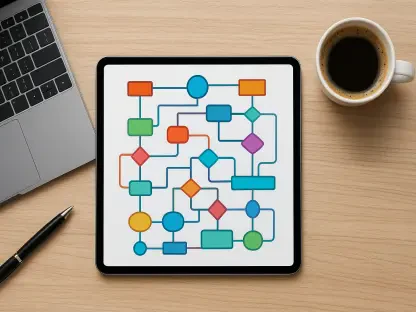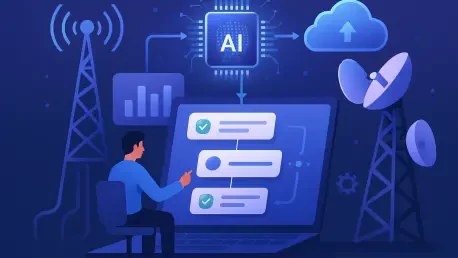

The era of manual ticket triage is ending as AI-powered engines automatically sort support requests into categories like billing, faults, or provisioning for immediate routing. This transformation represents a fundamental departure from early experimental phases where artificial intelligence functioned as a standalone feature, often requiring human agents to toggle between disparate applications or manually input data into isolated chat interfaces. In the current landscape, Internet Service Providers and Managed Service Providers have moved toward a model where intelligence is deeply woven into the core business logic. Using visual, no-code development environments, operators can now design sophisticated service lifecycles where AI models function as active decision-making nodes. These systems interpret complex datasets and generate context-specific responses without the traditional friction of manual data entry. By embedding these capabilities directly into the workflow, the industry has successfully replaced static methods with fluid, automated processes.
The Vendor Bridge: Standardizing Supplier Ecosystems
One of the most persistent obstacles in the telecommunications industry has been the extreme fragmentation of supplier interfaces, where different upstream network providers utilize a wide array of incompatible APIs and communication protocols. To resolve this complexity, modern architectures now employ a “Vendor Bridge” or a normalization layer designed to standardize these varied capabilities into a single, unified interface. This structural innovation effectively makes wholesale suppliers “swappable,” granting a service provider the unique ability to integrate or replace partners without the need to overhaul internal systems or rewrite existing business logic. By decoupling the service logic from specific vendor requirements, companies have gained unprecedented agility. This approach allows them to respond to market shifts or pricing changes by pivoting to new suppliers with minimal technical friction, ensuring that the underlying network remains both resilient and adaptable to the evolving needs of a global subscriber base.
The implementation of a normalized interface naturally extends the utility of reusable workflows across different brands and third-party partnerships. When a new supplier is onboarded into the ecosystem, the existing logic for service provisioning and assurance remains fully intact, which significantly reduces the development time and financial overhead typically associated with geographic or service expansion. This architectural shift ensures that the technology stack remains robust and flexible, enabling telecom businesses to focus on strategic growth rather than the mounting technical debt often caused by managing inconsistent data formats. Furthermore, this standardization allows for more consistent performance monitoring and reporting, as the data gathered from various sources is already pre-formatted for analysis. By removing supplier dependency at the technical level, organizations maintain a lean operational profile while simultaneously broadening their service reach and improving the reliability of their offerings.
Practical Deployment: Improving Service Accuracy and Support
The practical advantages of embedded AI are most evident in complex tasks such as invoice-to-order migration and sophisticated ticket triage. Advanced AI models are now capable of scanning a customer’s existing telecom invoice to extract critical data points, including location identifiers, service plan details, and pricing tiers, which are then used to prepopulate new orders with a high degree of precision. This automation eliminates the common errors associated with manual data entry, which historically led to provisioning delays and billing disputes. Beyond simple data extraction, these intelligent workflows manage the entire lifecycle of a support request by automatically classifying incoming tickets into specific categories. By routing these requests to the appropriate diagnostic path immediately, the system ensures that high-priority faults are addressed by specialized technical personnel without delay, while routine inquiries are handled through automated responses, maximizing resource efficiency.
The transition toward deeply integrated AI workflows represented a pivotal moment for the telecommunications sector as it moved away from the inefficiencies of manual oversight. Organizations that successfully adopted these embedded models found that they could scale operations more effectively while maintaining a higher standard of service quality. The shift to a standardized “Vendor Bridge” model eliminated the technical bottlenecks that previously hindered expansion into new markets. By prioritizing the normalization of data and the automation of service lifecycles, providers focused on delivering superior value rather than managing back-end complexity. Industry leaders refined these models to anticipate network disruptions before they impacted the user. Operators realized the best results when they invested in no-code platforms that allowed staff to tune these AI workflows, ensuring that business logic remained aligned with real-world needs. This proactive approach turned a once-reactive industry into a model of modern digital efficiency.