
The rapid transformation of logistics at the Roosendaal distribution center demonstrates that warehouse automation is no longer a luxury but a fundamental requirement for maintaining market relevance. By integrating the AutoStore system, Bleckmann has transitioned from traditional manual sorting toward a high-tech model that addresses the dual pressures of labor shortages and surging consumer expectations. This shift serves as a primary case study for businesses seeking to modernize their supply chains without sacrificing reliability or long-term growth.
Why Advanced Robotics Are Essential for Modern Logistics
Relying on manual labor in a high-velocity environment often leads to bottlenecks that stifle a company’s ability to compete in the European market. Modern logistics demands a move toward automated storage and retrieval systems to ensure consistency during periods of unpredictable demand. This evolution allows firms to capture a significant competitive edge by drastically increasing SKU density while simultaneously lowering the operational overhead associated with sprawling, low-density warehouse footprints.
Integrating these technologies allows for a drastic reduction in the physical footprint required to store vast inventories. Traditional shelving models consume excessive space and require lengthy travel times for human pickers. In contrast, robotic systems allow for a compact architecture that maximizes every cubic inch of a facility. This density is a critical factor for companies looking to expand their product ranges without investing in additional real estate or costly new construction.
Implementation of Innovative Fulfillment Best Practices
The success of the Roosendaal facility relies on a cohesive integration of hardware and software designed to work in tandem. Transitioning to a robotic grid requires a shift in mindset, moving away from linear picking toward a centralized retrieval model. This approach ensures that inventory is always accessible and organized based on real-time demand patterns, allowing the system to learn and adapt to changing order profiles.
Optimizing Spatial Efficiency Through Grid-Based Storage
Adopting a grid-based storage system allows for a remarkable seven-to-one space-saving ratio when compared to conventional racking setups. This efficiency is achieved by stacking bins vertically and utilizing autonomous robots to shuffle and retrieve them as needed. Logistics leaders can use this blueprint to store significantly more inventory within their existing walls, which is particularly valuable in regions where land prices are high.
Beyond just saving floor space, this high-density approach improves inventory accuracy by keeping products in a controlled, enclosed environment. By removing the need for wide aisles and forklift access, facilities can minimize dust and potential damage to goods. This structured environment ensures that every item has a precise digital footprint, making the transition to a fully automated workflow smoother and more reliable for long-term operations.
Reducing Lead Times with Autonomous Retrieval and Sorting
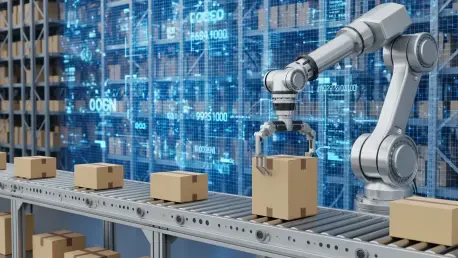
The goods-to-person methodology represents a major leap forward in operational speed by bringing items directly to the worker. Radio-controlled robots navigate the top of the storage grid, pulling specific bins and delivering them to ergonomic workstations in seconds. This streamlined workflow reduces the physical touchpoints required for each order, effectively accelerating the journey from the moment a customer clicks “buy” to the final dispatch.
Implementing these autonomous systems has proven to slash dispatch times by up to sixty percent compared to manual facilities. Because the robots handle the heavy lifting and navigation, human staff can focus on quality control and precision packing. This symbiotic relationship between human expertise and robotic speed creates a high-performance environment where orders are processed with unprecedented velocity, even during the busiest hours of the workday.
Scaling Operations for Peak Retail Fluctuations
Scalability remains a cornerstone of the modern fulfillment strategy, especially during high-pressure events like Black Friday. The modular design of the Roosendaal facility allows for the easy addition of more robots or picking ports without disrupting the current workflow. This flexibility ensures that the system can expand or contract based on seasonal needs, providing a safety net for retailers who face extreme spikes in order volume.
By integrating sophisticated conveyor belts and carton erectors, the facility maintains a steady flow even when throughput reaches its peak. This synchronized ecosystem allows for much later order cut-off times, giving customers more flexibility while ensuring the warehouse stays ahead of the curve. Companies that adopt such scalable frameworks can better manage their resources and avoid the chaos typically associated with major sales cycles.
Prioritizing Sustainability Through Lights-Out Warehousing
Sustainability has become a non-negotiable aspect of logistics, and robotic systems offer a clear path toward reducing a facility’s environmental impact. AutoStore robots are engineered for extreme energy efficiency, with a group of ten units using roughly the same power as a single household vacuum. This low energy consumption helps businesses lower their operational costs while meeting increasingly stringent carbon footprint regulations.
Moreover, because these robots do not require light to navigate the storage grid, facilities can operate in total darkness, a concept known as “lights-out” warehousing. This ability to function without overhead lighting or climate control in storage areas significantly cuts down on utility expenses. By choosing equipment that thrives in these conditions, logistics providers can demonstrate a genuine commitment to green practices while maintaining a high level of output.
Conclusion: Building a Future-Ready Fulfillment Blueprint
The implementation of the Roosendaal project proved that the marriage of robotics and sustainable design created a superior standard for the industry. Leaders who observed this transition recognized that success depended on selecting modular technology that scaled alongside business growth. This shift highlighted the necessity of moving toward carbon-neutral operations to satisfy both regulatory bodies and eco-conscious consumers. The final results indicated that prioritizing energy-efficient automation was the most effective way to ensure long-term resilience in a volatile global economy. Moving forward, businesses should consider integrating height-reduction packaging tech to further minimize waste and optimize shipping costs.