
As global mercury levels consistently shatter historical records, the definition of a standard business disruption has expanded far beyond the traditional concerns of cybersecurity or supply chain logistics. In the current landscape of 2026, extreme heat has transitioned from a seasonal weather phenomenon into a systemic, macro-level operational risk that threatens the very core of global enterprise stability. This research addresses the urgent transformation required to navigate these thermal challenges, shifting the perception of heat resilience from a localized facilities concern to a vital strategic necessity. By focusing on the intersection of infrastructure reliability, workforce safety, and long-term business continuity, the analysis provides a comprehensive framework for senior leadership to integrate thermal risk management into the broader corporate agenda.
The critical challenge for modern organizations involves framing heat resilience not as a passive reaction to climate shifts but as a proactive investment in operational health. For many years, companies viewed rising temperatures as an external factor managed through simple air conditioning adjustments; however, the current complexity of integrated IT systems and global labor forces demands a more sophisticated approach. The research explores how the convergence of environmental stress and technological dependency creates a new vulnerability profile for the modern enterprise, necessitating a fundamental rethink of how assets are protected in heat-stressed regions.
Navigating Thermal Risk in the Modern IT Landscape
The digital backbone of the modern economy is increasingly sensitive to the thermal environment, making the management of heat a primary concern for Information Technology (IT) departments. As data centers push the limits of density to accommodate advanced computing needs, the delta between ambient outdoor temperatures and optimal hardware operating conditions continues to shrink. This narrowing margin of error means that even a minor failure in cooling infrastructure or a brief fluctuation in the power grid can lead to catastrophic hardware damage or prolonged service outages. Consequently, the research positions thermal risk as a direct threat to the uptime and reliability of the global digital infrastructure that supports virtually every business sector.
Beyond the hardware itself, the modern IT landscape must account for the distributed nature of its workforce, which often operates in varied and sometimes poorly regulated thermal environments. The rise of hybrid work models and decentralized operational centers has made it difficult for enterprises to maintain a uniform standard of thermal safety. This research highlights the need for a unified strategy that addresses both the physical integrity of data centers and the physiological well-being of the human capital that maintains them. By recognizing that heat-driven disruptions can originate from both machine failure and human exhaustion, organizations can develop a more resilient posture that safeguards the entire operational ecosystem.
The Strategic Importance of Thermal Risk Management
Rising temperatures have ushered in a new operational reality where extreme heat serves as a force multiplier for existing risks, such as electrical grid instability and infrastructure decay. For senior IT leaders, the strategic importance of thermal risk management lies in the ability to maintain a social license to operate in regions that are increasingly hostile to high-energy consumers. As data centers consume vast quantities of electricity and water for cooling, they often find themselves in direct competition with local communities for these essential resources during heatwaves. Developing a business case for resilience therefore involves demonstrating a commitment to environmental stewardship and community stability, which in turn protects the long-term viability of the enterprise.
Quantifying the value of thermal resilience requires a shift in financial thinking from simple expenditure to the logic of “avoided costs.” By investing in advanced cooling technologies and predictive thermal monitoring today, organizations can bypass the massive financial penalties associated with unplanned downtime, legal liabilities from workplace injuries, and the skyrocketing costs of emergency repairs. This research provides senior leadership with the tools to justify these investments by highlighting the high cost of inaction, ensuring that resilience remains a priority even during periods of fiscal tightening. Ultimately, the goal is to create a business model that is not just surviving the heat but is specifically designed to thrive within a more volatile climate.
Research Methodology, Findings, and Implications
Methodology: A Multi-Disciplinary Framework
The methodology employed in this study involved a cross-disciplinary analysis that combined regulatory trends from the Occupational Safety and Health Administration (OSHA) with high-resolution climate data forecasting. This approach allowed for a comprehensive understanding of how federal safety mandates are evolving to address the realities of a warmer planet through the period from 2026 to 2030. Furthermore, the research integrated industrial feedback loops by reviewing the performance of major data centers during recent regional heat spikes, identifying the specific points of failure that led to operational degradation.
Techniques for the study included evaluating the “benefit-to-cost ratio” of specific resilience investments, such as the adoption of liquid cooling systems versus traditional air-based models. The researchers also assessed the integration of Information Technology (IT) with Operational Technology (OT), examining how unified data platforms could provide a more holistic view of environmental health. Data collection was further bolstered by a review of regional heat-safety policies and public sentiment surveys, which gauged how local communities perceive the thermal and environmental footprint of large-scale industrial facilities in their neighborhoods.
Findings: The Dimensions of Thermal Challenge
The research findings revealed that heat resilience is a multi-dimensional challenge that extends far beyond simple temperature control. One significant discovery was the prevalence of “policy drift,” where established safety protocols often failed to account for the reality of high-turnover operational environments or the specific needs of unacclimatized workers. The study also identified “heat pollution” as an emerging risk factor, noting that high-density data center clusters can create localized “heat islands” that increase the ambient temperature of the surrounding area, further straining both the facility and the local community’s cooling capacity.
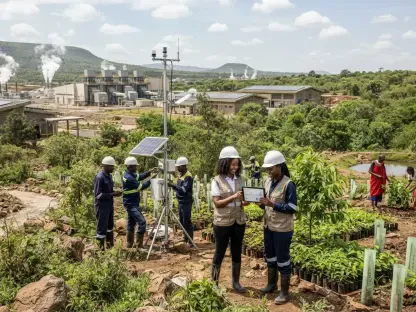
Successful resilience strategies were found to rely on a specialized “tech stack” that integrates real-time environmental sensors with wearable physiological monitors. These tools allow for the tracking of wet-bulb globe temperature and individual heat stress levels, providing the data necessary for proactive interventions. Moreover, the research highlighted that financial justification for these systems is most effective when organizations move from lagging indicators, such as historical injury reports, to leading indicators like energy consumption spikes and workforce acclimatization status. This shift enables a more predictive and preventive approach to thermal management.
Implications: Holistic Strategies and Societal Impact
The implications of these findings suggest that enterprises must transition away from fragmented, department-specific cooling strategies toward a holistic thermal management core competency. In practice, this means that organizations should adopt proactive sensing and notification systems to mitigate legal liabilities and prevent infrastructure failure before critical thresholds are breached. Such a shift requires a high degree of coordination between facilities management, IT departments, and environmental health and safety teams, ensuring that the entire organization is aligned toward a common goal of thermal stability.
From a societal perspective, the research emphasized the importance of corporate responsibility in mitigating the broader environmental impact of thermal output. Companies that proactively address their thermal footprint were found to maintain more positive community relations and face fewer regulatory hurdles when expanding their physical footprint. By integrating heat resilience into their corporate social responsibility (ESG) frameworks, enterprises can better navigate the complex intersection of industrial growth and environmental sustainability, ensuring that their operations do not come at the expense of local ecological or social health.
Reflection and Future Directions
Reflection: Overcoming Fragmentation and Policy Drift
The study highlighted the immense complexity of overcoming entrenched organizational silos that often prevent a unified response to thermal risk. A primary challenge encountered was the fragmentation of data between facilities management, which focuses on building temperature, and IT departments, which focus on server performance. This research addressed the gap by advocating for unified monitoring systems that provide a single pane of glass for all thermal-related metrics. It also shed light on the persistence of policy drift, where the pressures of daily operations frequently sidelined long-term safety goals, necessitating more automated and integrated safety triggers.
While the research covered a broad range of operational risks, it was acknowledged that the study could have been further expanded by exploring the specific physiological differences in heat tolerance across various global demographics. Factors such as age, underlying health conditions, and regional acclimatization patterns play a significant role in how heat affects individuals, and a more granular analysis could provide even more targeted safety protocols. Despite this, the research provided a solid foundation for understanding the macro-level triggers that drive the business case for resilience in a rapidly changing climate.
Future Directions: AI and Regulated Metrics
Future research should prioritize the investigation of AI-driven predictive cooling models, which have the potential to significantly reduce the energy footprint of large-scale enterprise data centers. By using machine learning to anticipate temperature spikes and adjust cooling loads in real-time, organizations can achieve a higher level of efficiency and stability. There is also a significant opportunity to explore how emerging carbon-tax frameworks and ESG reporting requirements will eventually incorporate thermal output as a regulated metric. As governments look for new ways to incentivize environmental responsibility, heat pollution may soon become a taxable or reportable offense.
Furthermore, unanswered questions remain regarding the privacy implications of using wearable health technology to monitor employee heat stress in a corporate setting. As these tools become more prevalent, enterprises will need to develop robust data governance policies that protect individual privacy while still ensuring workplace safety. Investigating the balance between employee autonomy and the corporate duty of care will be a crucial area of study as thermal technology continues to evolve. The integration of these digital health tools into the standard enterprise tech stack represents the next frontier in the ongoing effort to build a heat-resilient future.
Summary of the Business Case for Thermal Resilience
The research effectively established that thermal resilience was no longer an optional sustainability goal but a fundamental requirement for risk management and operational viability. By quantifying the avoided costs of downtime, legal penalties, and productivity loss, the study provided a compelling financial narrative for investing in advanced thermal technology. The findings demonstrated that a proactive approach to heat management protected not only the physical infrastructure of the data center but also the health and morale of the workforce. This dual focus ensured that organizations remained robust even as external environmental conditions became increasingly volatile and unpredictable.
The analysis also highlighted the necessity of moving toward a unified IT/OT data platform to eliminate the silos that historically hindered effective thermal responses. The study successfully mapped a strategic roadmap for enterprises to safeguard their human and digital assets, emphasizing the importance of acclimatization and real-time environmental sensing. By treating heat as a constant operational variable rather than a rare anomaly, leaders were able to build more sustainable and profitable business models. Ultimately, the work contributed a vital framework for ensuring that the modern enterprise remains resilient in the face of the intensifying challenges posed by global thermal shifts.