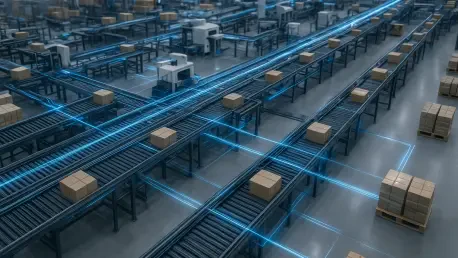

By analyzing historical trends and regional variations, the Order Picking Network allows for differentiated management based on the specific demand profiles of various product categories. As logistics matures, the industry is undergoing a monumental shift toward the Order Picking Network (OPN), a strategy that transcends traditional warehouse automation. Rather than treating the warehouse as an isolated service center, OPN redefines it as a vital, integrated node within a sprawling end-to-end supply chain. This approach connects producers, transport infrastructure, and retail outlets into a single, cohesive framework that operates with unprecedented fluidity. By prioritizing data-driven optimization across the entire value chain, companies move away from fragmented operations toward a holistic system that enhances efficiency at every touchpoint. This evolution is rooted in technical innovation, moving from automated case picking to multi-channel capabilities that meet high-speed demands. OPN addresses this by shifting the focus from internal warehouse performance to an integrated network logic that ensures every link in the supply chain works in perfect harmony.
Building the Foundation of Networked Excellence
Level One: The Distribution Center Engine Room
The first tier of the OPN strategy is the Distribution Center Level, which functions as the essential engine room of the entire logistics operation. With decades of experience and hundreds of global projects, the focus at this stage remains on achieving technical excellence and high system availability. Without a flawlessly executing warehouse foundation, broader network optimization remains an impossible goal. This level ensures that the physical act of moving and picking goods is handled with surgical precision before the system attempts to integrate wider external variables. High-performance machinery like Order Picking Machinery (OPM) provides the necessary throughput, but the network logic ensures this throughput is directed efficiently. By mastering the internal mechanics of the facility, operators create a reliable base that can withstand the pressures of fluctuating market demands. This technical mastery is not an end in itself but a prerequisite for the more complex layers of integration that follow in the wider ecosystem.
Level Two: Seamless Supply Chain Ecosystems
As the perspective shifts outward, the Supply Chain Ecosystem Level bridges the gap between manufacturers, regional warehouses, and the end customer. At this stage, the warehouse is viewed as a functional component of a larger horizontal system, where the primary goal is to minimize friction during the movement of goods. This requires a level of transparency that goes beyond traditional inventory tracking, involving real-time coordination with transportation fleets and retail outlets. By aligning the output of the distribution center with the specific intake capacities of stores, the OPN reduces the time goods spend in transit or sitting in backrooms. This horizontal integration allows for a more responsive supply chain that can pivot quickly when consumer behaviors change. The focus here is on the total flow of products, ensuring that no single node becomes a bottleneck for the others. This connectivity transforms the supply chain from a series of hand-offs into a continuous, synchronized stream of value that benefits all stakeholders involved.
Level Three: Integrated Enterprise Performance
The Enterprise Level represents the most sophisticated tier of the OPN, integrating all business areas to find the absolute sweet spot of operational performance. This high-level view prevents suboptimal outcomes where one department’s efficiency inadvertently creates bottlenecks or unnecessary costs for another, such as transportation or store labor. For instance, while a warehouse might save costs by packing pallets more densely, if that density makes shelf-stocking at the retail level more difficult, the overall enterprise loses money. OPN uses advanced modeling to balance these competing interests, ensuring that the logistics strategy supports the company’s broader financial and service goals. By breaking down the barriers between procurement, logistics, and retail operations, the enterprise can act as a single organism. This holistic perspective allows leaders to make decisions based on the total cost of ownership rather than narrow departmental metrics. The result is a more resilient business model that can maintain profitability even in highly competitive or volatile market environments.
Strategic Pillars and Dynamic Operational Control
Performance Metrics: Service and Productivity Pillars
Three core philosophical pillars—service, productivity, and preservation—guide the implementation of the OPN across all levels of the organization. Premium store service ensures that retailers receive exactly what they need at the right time, directly benefiting the end consumer experience by keeping shelves stocked with fresh products. End-to-end productivity challenges traditional logistics metrics by measuring the combined efficiency of the warehouse, the transport fleet, and the labor required to stock shelves. This means that success is not just about how fast a machine can pick a box, but how easily that box can be processed by a human worker at the final destination. By optimizing for the entire journey of the product, the system identifies hidden costs that were previously ignored. This comprehensive approach to productivity ensures that every investment in technology or process improvement delivers a tangible return at the point of sale. Service levels are maintained through this efficiency, creating a virtuous cycle of reliability and performance.
Sustainable Logistics: Preservation and Resource Care
The principle of preservation focuses on the long-term viability of the logistics network, emphasizing environmental sustainability and resource management. In the current landscape, logistics operations must be responsible as well as efficient, reducing their carbon footprint through smarter routing and energy-efficient automation. OPN integrates these goals into its core logic, ensuring that the drive for speed does not come at the expense of the environment or the well-being of the workforce. Ergonomic standards are prioritized to ensure that human workers are supported by technology rather than strained by it, which reduces turnover and maintains high morale. Furthermore, resource preservation includes the careful management of physical assets, extending the lifespan of machinery through predictive maintenance and optimized usage patterns. By building a system that is future-ready and socially responsible, companies protect their brand reputation and ensure their operations remain viable for years to come. This focus on sustainability is not a secondary concern but a fundamental requirement for any modern supply chain network.
Agile Operations: Replacing Static Delivery Models
A hallmark of the OPN is the transition from rigid, static planning to dynamic operational control that responds to the world in real time. Traditional logistics often relied on fixed delivery schedules and standardized patterns that could not easily adapt to sudden shifts in demand or supply chain disruptions. OPN replaces these outdated methods with a data-driven model that uses recurring patterns and real-time inputs to balance the network dynamically. This allows for differentiated management based on current demand, such as seasonal peaks, promotional cycles, or unexpected weather events. By moving away from “one-size-fits-all” scheduling, the network can prioritize urgent shipments while optimizing lower-priority flows for cost efficiency. This agility is powered by a central intelligence layer that monitors the entire network, identifying potential issues before they become critical failures. The result is a much more stable and predictable operation that can handle complexity without losing its efficiency or increasing operational costs.
Strategic Enablers: Dissolving Organizational Silos
By breaking down organizational silos, companies can transform logistics from a simple replenishment function into a strategic business enabler. Traditionally, departments like sales, transport, and warehousing operated with their own sets of data and objectives, often leading to conflict and wasted resources. The Order Picking Network provides a single source of truth that aligns these disparate groups around a common set of goals. When everyone from the warehouse floor to the executive boardroom looks at the same real-time data, decision-making becomes faster and more accurate. This alignment allows the organization to respond to market opportunities with a unified strategy, rather than a collection of disjointed tactics. The shift toward a networked approach encourages collaboration and innovation, as team members are empowered to see how their actions affect the rest of the business. Ultimately, this cultural and operational shift enables a level of responsiveness that is necessary to thrive in the modern retail environment, where speed and precision are the ultimate competitive advantages.
Harnessing Intelligence and Global Scalability
Predictive Intelligence: Moving Beyond Reactive Logistics
The brain of the OPN lies in its ability to process vast amounts of data and move from a reactive state to a predictive one. By analyzing historical trends and regional variations as time series, the system can forecast future needs with high precision, allowing for proactive inventory positioning. This means the network can anticipate a surge in demand for a specific product and begin moving stock closer to the customer before the orders are even placed. Because the developers of OPN often operate the facilities themselves, they benefit from an operational reality that informs the software’s development. This feedback loop ensures that the algorithms are grounded in the actual challenges of the warehouse floor, rather than theoretical models. The system learns from every transaction, constantly refining its ability to predict lead times, transportation delays, and labor requirements. This transition to predictive intelligence reduces the need for “safety stock” and minimizes the risk of stockouts, creating a leaner and more efficient supply chain.
Knowledge Transfer: Operational Reality in Practice
This data-driven approach allows for the creation of learning systems where successful strategies discovered in one region can be standardized across the entire global network. For instance, if a specific packaging method or coding pattern is found to improve picking speeds in a European facility, that knowledge can be immediately pushed to warehouses in North America or Australia. This global knowledge transfer ensures that the entire network benefits from local innovations, creating a culture of continuous improvement. The OPN acts as a digital nervous system, carrying best practices to every node in the chain without the need for manual training or intervention. This scalability is particularly valuable for large retailers who operate dozens of distribution centers across different continents. By standardizing the logic of the network while allowing for local physical variations, companies can maintain a high level of performance regardless of geography. This ensures that the enterprise maintains a consistent standard of service and efficiency across its entire global footprint.
Future Implementation: Actionable Insights for Resilience
The transition toward a fully integrated Order Picking Network transformed how the world’s leading retailers managed their inventory and logistics. They realized that the true power of a warehouse lay not in its standalone speed, but in its ability to synchronize with every other node in the supply chain ecosystem. By focusing on data-driven decision-making, these organizations successfully eliminated the inefficiencies of siloed departments and prioritized end-to-end productivity over local optimization. The shift necessitated a new approach to physical labor and environmental sustainability, ensuring that the logistics framework remained resilient against market shocks. Those who implemented these networked solutions reported significant improvements in store service levels and overall operational transparency. Ultimately, the adoption of this holistic model proved that technical excellence and strategic integration were inseparable components of a modern, profitable, and socially responsible enterprise. Leaders prioritized the synchronization of physical assets with software layers to ensure every pick contributed to long-term health.