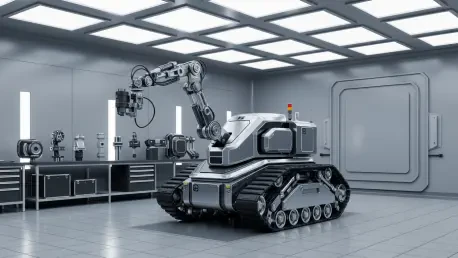

The traditional image of a first responder shrouded in a bulky, air-tight hazardous materials suit is rapidly being superseded by a more mechanical silhouette as specialized robotic systems take over the most dangerous tasks in chemical, biological, radiological, and nuclear environments. These sophisticated platforms, which were once exclusively found in military inventories for battlefield reconnaissance, are now becoming vital assets for civil defense units and urban fire departments worldwide. By performing high-risk tasks such as precise sampling, real-time detection, and systematic decontamination in environments far too toxic for human endurance, they provide a critical physical and psychological buffer between emergency responders and lethal hazards. As industrial processes become more complex and the global movement of volatile substances increases, the presence of these robots is transitioning from a niche technical capability to a fundamental requirement for modern public safety. This evolution is driven by the urgent need to mitigate human exposure to invisible threats while maintaining the operational tempo required to contain large-scale industrial or environmental disasters effectively.
The global landscape of emergency management is currently witnessing a paradigm shift where “standoff” assessments have become the gold standard for incident response. Rather than sending a human team into a “hot zone” with limited information, commanders now deploy robotic scouts to gather high-fidelity data from a safe distance before any personnel are put at risk. This strategy is heavily influenced by the increasing prevalence of advanced sensors that can detect minute concentrations of hazardous vapors or radiation from hundreds of yards away. By 2026, the integration of these advanced sensor suites into standard robotic platforms is expected to enter a high-growth phase, fueled by technological breakthroughs in miniaturization and wireless data transmission. This shift is not merely about replacing humans; it is about providing responders with a level of situational awareness that was previously impossible, allowing for more informed decision-making and a significantly reduced chance of long-term health complications for the dedicated individuals working on the front lines of global crises.
Core Economic Drivers: The Shift Toward Integrated Solutions
The financial trajectory of the CBRN and Hazmat robotics market currently reflects a steep upward curve, starting with a robust valuation of approximately $176 million in 2026. Experts in the field are anticipating a compound annual growth rate of 17.5%, a figure that is expected to drive the sector toward a valuation of nearly $900 million by the middle of the next decade. This rapid expansion is not simply a result of increased sales volume but signifies a fundamental change in the way public safety agencies procure and utilize technology. The industry is moving away from the purchase of standalone, remote-controlled vehicles and toward a more comprehensive “integrated solution” model. In this new framework, agencies invest in full-spectrum packages that include modular robotic arms, specialized sensor payloads, and ongoing technical support. This holistic approach ensures that the equipment is not just an idle tool on a shelf but a fully functional component of the emergency response infrastructure that is ready to be deployed the moment a crisis is reported.
Public sector funding remains the primary engine driving this market growth, with the “Government Purchase Model” accounting for over half of all transactions globally. Federal grant programs, such as those administered by FEMA in the United States or the expansive rescEU initiative across the European Union, are critical in enabling municipal departments to acquire high-end technology that would otherwise be far beyond their local budgets. These funding mechanisms allow for a more equitable distribution of safety capabilities, ensuring that even mid-sized cities located near major industrial hubs or transportation corridors can maintain a credible response to chemical or radiological threats. Furthermore, the market’s heavy reliance on government spending provides a layer of resilience against broader economic fluctuations, as public safety remains a non-negotiable priority for national governments regardless of shifts in the private sector economy. This stability encourages manufacturers to invest in long-term research and development, knowing there is a consistent demand for life-saving technology.
In addition to direct safety benefits, the value of modern CBRN robots is increasingly tied to their ability to provide “evidence-ready” data for regulatory and legal scrutiny. In an era of strict environmental oversight and high-stakes litigation following industrial incidents, simply identifying a leak is no longer sufficient for most agencies. Robots are now expected to function as mobile, autonomous laboratories that stream scientifically defensible telemetry directly back to command centers and government databases. This data-centric approach helps public safety agencies meet rigorous legal and safety documentation requirements that follow any major industrial accident or hazardous spill. By capturing high-resolution imagery and precise chemical readings at the exact moment and location of an incident, these robotic systems create a transparent record of the event. This capability not only helps in the immediate response but also plays a vital role in the subsequent investigation and recovery phases, where determining the exact cause and extent of a release is paramount for public trust.
Strategic Standoff Capabilities: Enhancing Sensor Fidelity and Durability
A major trend defining the current state of emergency response is the uncompromising prioritization of standoff capabilities to protect human life. By utilizing robots as the first point of entry into an uncertain or hostile environment, response teams can accurately identify the specific nature of a hazard—whether it is an alpha-emitting radiological source, a toxic chemical vapor, or a biological agent—without exposing human personnel to unknown risks. This “scout-first” strategy drastically reduces the potential for immediate injuries and the devastating long-term health complications that often plague first responders who have been exposed to hazardous materials. The ability to characterize a threat from a distance allows for the development of a targeted mitigation plan that uses the appropriate personal protective equipment and containment strategies, thereby preventing the “trial and error” approach that was once common in high-pressure hazmat situations.
Modern robotic platforms are increasingly embracing a concept known as “sensor stacking,” where multiple diverse detectors are integrated into a single, unified data stream. This process allows for a multi-dimensional view of the hazard environment by combining data from Geiger counters, chemical vapor sensors, thermal cameras, and LiDAR systems. As technology advances, the miniaturization of these sensors has allowed manufacturers to mount varied and heavy payloads on increasingly agile and compact chassis. This integration provides incident commanders with a comprehensive situational map, showing not just where the hazard is, but how it is moving and interacting with the surrounding environment. This level of detail is essential for managing complex scenes, such as a multi-vehicle accident involving different chemicals or a fire in a facility containing both radioactive materials and volatile solvents. The goal is to provide a single, clear operating picture that eliminates the confusion often associated with raw, unintegrated sensor data.
Durability and the ease of long-term maintenance have become equally critical trends in the design of modern CBRN robotics. Because these machines are frequently required to operate in corrosive chemical clouds or highly radioactive zones, they must be constructed with ruggedized frames and shielded electronics that can withstand extreme environmental conditions without failure. Manufacturers are also focusing heavily on the “decontaminability” of their units, ensuring that the robot’s exterior surfaces can be thoroughly cleaned and scrubbed of toxic residues quickly after an exposure incident. This design focus allows a robot to be returned to active service almost immediately after a mission, rather than being sidelined for days due to persistent contamination issues. This requirement for rapid turnaround is especially important during prolonged crises or multiple concurrent incidents where resources are stretched thin, and every available piece of equipment must be ready for deployment.
The current move toward extreme modularity is another defining characteristic of technological development in this sector. Public safety agencies are increasingly favoring “payload-ready” chassis that can be adapted to vastly different missions on the fly by simply swapping out modular components. This inherent flexibility allows a single robotic platform to serve as a high-sensitivity detection unit for one call and then be reconfigured into a heavy-duty manipulation tool for closing a leaking high-pressure valve on the next. This versatility maximizes the return on investment for taxpayer-funded equipment, making it a much more attractive purchase for departments that must justify every dollar spent. By creating a standardized interface for different sensors and tools, manufacturers are allowing agencies to build a customized toolkit that can grow and change as new threats emerge or as technology improves, ensuring the robot remains relevant throughout its entire operational lifecycle.
Operational Segments: Focus on Sampling and Chemical Mitigation
Sampling and detection robots currently represent the largest and most influential product segment in the market, holding nearly half of the total market share. Their dominance is deeply rooted in the “information-first” philosophy that has come to define modern emergency management protocols. Before a hazardous site can be effectively contained or cleared, responders must have a precise, verified understanding of the specific contaminants involved, making these mobile labs the vanguard of any sophisticated response effort. These robots are equipped with highly sensitive air monitors and surface samplers that can identify substances at parts-per-billion levels. The ability to provide this level of detail in real-time allows for the establishment of accurate “hot,” “warm,” and “cold” zones, which is essential for protecting both the responders and the surrounding civilian population from accidental exposure during the containment process.
Manipulation and disposal units follow closely behind in importance, focusing on the physical and kinetic aspects of the job. These robots are designed to interact directly with the environment—performing tasks like turning off high-pressure valves, moving contaminated debris, or safely handling potentially explosive materials. While these units are technically more complex than simple detection robots due to the need for sophisticated haptic feedback and high-torque robotic arms, their deployment usually follows the initial assessment performed by the detection units. The synergy between these two types of robots is what allows for a complete, unmanned response to a hazardous material incident. In many cases, the manipulation robot is the one that actually solves the physical problem, but it cannot do its job safely or effectively without the intelligence gathered by the detection systems that preceded it into the hazard zone.
Chemical incidents remain the primary application for these technologies, accounting for a significant and steady portion of the global demand. With thousands of hazardous material transportation incidents occurring annually via rail, road, and sea, the need for rapid robotic assessment of spills is a constant reality for emergency services. Industrial accidents at massive chemical manufacturing plants and leaks along thousands of miles of pipelines further emphasize the need for robots that can navigate through thick chemical clouds and across corrosive liquid spills that would destroy standard equipment. The ability of a robot to enter a chemical plant during a leak and identify the exact source of the failure allows human teams to stay back until the area is ventilated or the leak is plugged, preventing the catastrophic health impacts associated with acute chemical exposure.
In the nuclear and radiological sector, robots have become indispensable tools for both routine facility maintenance and emergency response scenarios. These specialized units require heavy-duty shielding to protect their sensitive internal electronics from the ionizing radiation that would quickly scramble the circuits of a standard commercial robot. As older nuclear facilities across the globe are decommissioned and transitioned to long-term storage, the demand for robots capable of working in high-radiation environments for extended periods is expected to rise significantly. These robots perform tasks such as mapping radiation levels in old reactor cores or handling radioactive waste containers, reducing the cumulative dose received by human workers. In the event of a nuclear emergency, these robots are the only assets capable of approaching the source of radiation to provide the data necessary to prevent a wider environmental disaster.
Regional Growth Hubs: Innovation and Competitive Landscapes
The United States currently serves as the global innovation and funding hub for the CBRN robotics market, with a growth rate that consistently outpaces the global average. U.S. public safety agencies are among the most aggressive in the world in adopting robotic systems that support both operational safety and the creation of detailed legal documentation. This growth is supported by a robust and demanding regulatory environment, as well as a strong cultural emphasis on reducing first responder fatalities during hazardous material calls that do not involve active fires. The integration of robots into the National Incident Management System (NIMS) framework has further standardized how these tools are used, ensuring that different agencies can work together seamlessly during a large-scale event. This mature market environment provides a fertile ground for manufacturers to test new technologies and refine their products based on direct feedback from some of the world’s most active hazmat teams.
In the European Union, the market is characterized by a high degree of cross-border cooperation and a focus on shared readiness for trans-boundary threats. The rescEU initiative is a cornerstone of this strategy, ensuring that all member states, regardless of their individual wealth, have access to a common stockpile of high-end CBRN assets. This collective approach allows smaller countries to benefit from the most advanced robotic technology, which they might not be able to afford or maintain on their own. The EU’s strategic focus is heavily weighted toward nuclear readiness and the enforcement of shared chemical safety protocols, reflecting the continent’s dense industrial geography and its history of cross-border environmental incidents. This collaborative model not only enhances safety but also drives market standardization, as manufacturers must ensure their robots are compatible with the communication and transport standards of multiple different nations.
Japan’s market for CBRN robotics is unique, characterized by a long history of industrial safety innovation and an exceptionally high demand for precision navigation in cramped spaces. Given the extreme density of its industrial architecture and its significant historical experience with nuclear incidents, Japan prioritizes the development of agile, compact robots capable of operating deep within the complex, multi-layered environments of power plants and chemical refineries. Their market focus is less on broad civil defense and more on highly specialized facility monitoring and disaster mitigation within hazardous material sites. Japanese manufacturers are world leaders in creating robots with sophisticated balance and climbing capabilities, allowing them to navigate stairs, ladders, and cluttered floors that would stop traditional wheeled or tracked robots. This focus on mechanical dexterity makes their technology highly sought after for urban search and rescue and complex industrial salvage operations.
The competitive landscape of the CBRN robotics industry is a dynamic mix of established defense giants and agile, specialized robotics firms that are pushing the boundaries of what these machines can do. Companies like AeroVironment and L3Harris continue to dominate the heavy-duty, defense-grade segment with massive platforms designed for extreme endurance and high-payload capacity. Meanwhile, firms like Boston Dynamics have revolutionized the field by introducing quadruped robots, such as the widely recognized “Spot” platform, which offers unprecedented mobility in human-centric environments. These leg-based robots can climb stairs, step over obstacles, and navigate the types of cluttered, unstable terrain that often characterizes a disaster site. This diversity in the market ensures that there is a robotic solution for almost every possible scenario, from a simple highway chemical spill to a complex structural collapse inside a contaminated industrial facility.
Overcoming Technical Restraints: Integration and Training Challenges
Despite the clear and overwhelming benefits of these systems, the market currently faces what experts call a “payload-proof” gap, where matching specific sensors to specific robot platforms remains a significant technical hurdle. If a robot is equipped with the world’s best chemical sensor but cannot effectively communicate that data back to the human operator in a clear and timely manner, its utility in a life-or-death situation is severely diminished. Overcoming these integration hurdles is a primary focus for engineers who are currently working on the next generation of response units. The goal is to create universal communication protocols that allow for seamless data flow between the sensor, the robot’s brain, and the operator’s handheld controller. Without this level of integration, the complexity of managing multiple different data streams can overwhelm an operator, leading to critical errors during the high-stress environment of an active emergency.
Another significant restraint on the rapid adoption of this technology is the substantial training burden placed on the personnel who must operate these complex machines. These are not simple toys; they are sophisticated scientific instruments that require a high level of technical proficiency to operate effectively under pressure. If the user interface is not intuitive, or if the initial training required is too extensive and time-consuming, adoption rates will naturally suffer, especially among smaller municipal departments that lack the specialized resources for dedicated training programs. To combat this, manufacturers are increasingly turning to augmented reality and simplified, “video-game style” controllers to make the learning curve less steep for new users. The focus is on making the robot an extension of the responder’s own senses, allowing them to focus on the mission at hand rather than the mechanics of the machine they are controlling.
There is a massive and largely untapped opportunity for vendors who can successfully provide truly “plug-and-play” modular systems that can be upgraded in the field. By allowing agencies to upgrade their sensors and software without the need to purchase an entirely new robotic chassis, manufacturers can create a recurring and sustainable revenue stream while keeping their customers at the cutting edge of detection technology. This modular approach also helps to bridge the significant gap between the rapid, almost monthly advancement of sensor technology and the much longer multi-year lifecycles of the expensive robot frames themselves. This strategy ensures that a department’s investment remains viable for a decade or more, even as the specific threats they face—such as new synthetic chemicals or emerging biological agents—continue to evolve and change over time.
The future reliability of the CBRN and hazmat robotics market will ultimately depend on the strength of local support and maintenance networks. Because these are critical life-safety tools, any amount of downtime during a crisis is completely unacceptable and can have catastrophic consequences. Suppliers who invest in robust, localized maintenance networks and offer on-site training and support are likely to outperform those who focus solely on the initial hardware sale. This shift toward a service-oriented business model ensures that the robots remain a reliable frontline component of global public safety for years to come. By prioritizing long-term operational readiness over short-term sales targets, the industry helped to foster a sense of trust between the technology providers and the first responders who depend on these machines to keep themselves and their communities safe from invisible, lethal threats.
The integration of advanced robotics into global emergency response protocols represented a significant milestone in the evolution of public safety management. These systems effectively bridged the gap between the necessity of high-stakes intervention and the paramount requirement for responder safety, particularly in environments contaminated by chemical, biological, or radiological agents. By providing a platform for standoff detection and remote manipulation, the technology allowed agencies to gather critical data and mitigate hazards without the immediate risk of human casualties. The move toward modular designs and integrated sensor suites further enhanced the versatility of these tools, ensuring they remained relevant across a wide spectrum of industrial and environmental crises. This strategic shift not only protected the lives of those on the front lines but also improved the accuracy and transparency of the data used to inform large-scale public health decisions during and after a disaster.
Looking forward, the success of robotic emergency response relied heavily on the continuous improvement of the user interface and the expansion of localized support infrastructures. As the complexity of robotic systems grew, manufacturers focused on reducing the cognitive load on operators through more intuitive control systems and automated navigation routines. The establishment of robust maintenance networks ensured that these high-tech assets were always ready for deployment, regardless of how long they had been in storage. Furthermore, the commitment to modularity allowed public safety departments to stay current with emerging threats without the prohibitive cost of replacing entire fleets of robots. By treating these machines as long-term, evolvable assets rather than static tools, the global emergency response community successfully harnessed the power of robotics to create a safer and more resilient world for everyone.