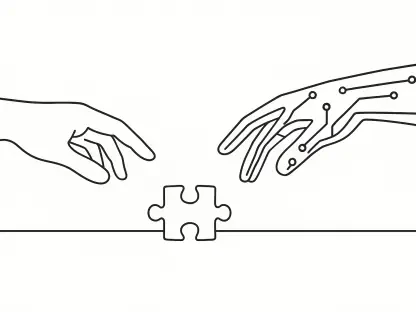

Modern organizations have recognized that the mere adoption of advanced technology is insufficient to sustain a competitive edge if the human component of the business remains disconnected from the digital strategy. This realization shifted the focus toward a more symbiotic relationship between artificial intelligence and the individual worker. Instead of viewing automation as a replacement for human talent, the current landscape emphasizes the enhancement of employee experience through intelligent interfaces and personalized workflows. Digital transformation is no longer a checklist of software deployments; it is an ongoing cultural evolution that prioritizes how people interact with their tools and each other. By placing the worker at the center of the technological ecosystem, enterprises are discovering that productivity gains follow naturally when the cognitive load is reduced. This approach requires a rethinking of how data is utilized to foster an environment of continuous improvement.
Maximizing Operational Efficiency: The Integration of Intelligent Systems
Hyper-Personalization: Customizing the Professional Journey
Large-scale implementations of adaptive learning platforms now utilize sophisticated algorithms to analyze individual performance metrics and career aspirations in real time. These systems provide a bespoke educational path that evolves as the employee masters new skills, ensuring that professional development remains relevant and engaging. By moving away from generic, one-size-fits-all training modules, companies have seen a significant increase in internal mobility and talent retention. The ability to identify specific skill gaps and bridge them through targeted content delivery allows workers to feel more confident in their roles. Furthermore, these platforms integrate seamlessly into the daily workflow, suggesting micro-learning opportunities during natural breaks in the schedule. This creates a culture of perpetual growth where learning is seen as a beneficial extension of work rather than a disruptive obligation. Such a shift in perspective is crucial for maintaining a workforce that is both agile and technically proficient.
Beyond skill acquisition, hyper-personalization extends into the very interface of the digital workspace, where artificial intelligence acts as a digital concierge for the employee. Intelligent assistants now manage complex administrative tasks, such as scheduling, expense reporting, and cross-departmental coordination, which previously consumed hours of productive time. By surfacing the most relevant documents and insights before a meeting even begins, these tools enable professionals to focus on high-level strategic thinking rather than data retrieval. This reduction in “work about work” has a direct impact on employee satisfaction, as individuals spend more time on the creative aspects of their jobs that provide a sense of fulfillment. The technology acts as a force multiplier, amplifying the unique strengths of each team member while mitigating their administrative burdens. Consequently, the boundary between the worker and the machine becomes blurred, leading to a more intuitive and frictionless professional environment.
Strategic Automation: Reshaping Cognitive Roles and Organizational Resilience
The deployment of large language models and specialized neural networks has fundamentally altered the nature of cognitive labor by automating repetitive analytical processes. For example, financial analysts and legal professionals now utilize generative agents to draft initial reports and perform preliminary research on massive datasets. This does not replace the expert’s judgment; rather, it provides a robust foundation upon which the human professional can build their final recommendations. This collaborative dynamic allows for a much higher volume of work to be processed with increased accuracy and consistency. Organizations that have successfully integrated these systems have reported a decrease in employee burnout, as the most tedious parts of the job are handled by the software. The focus has moved from “doing the work” to “validating and refining the work,” which demands a higher level of critical thinking and ethical oversight from the human operator. This evolution is redefining the very concept of professional expertise.
The strategic investments made in employee experience and artificial intelligence proved that a balanced approach was the only viable path for long-term success. Organizations moved away from the obsession with raw output and instead prioritized the quality of the work environment as a primary driver of financial performance. This historical shift necessitated that managers were trained not just in technical oversight, but in the nuances of leading digitally enhanced teams. Actionable steps were taken to democratize access to AI tools, ensuring that every level of the organization could benefit from the efficiency gains. Future considerations focused on the ethical implications of data privacy and the continued evolution of the human-machine interface. It was demonstrated that the most effective digital transformations were those that treated technology as a catalyst for human potential rather than a substitute for it. Leaders who embraced this philosophy successfully built resilient cultures.