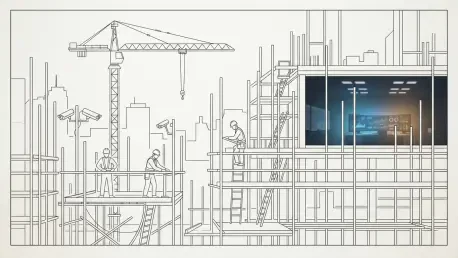

The technology’s ability to operate using standard camera systems makes it a highly scalable and cost-effective solution for massive aviation hubs like Rome’s Leonardo da Vinci International Airport. This specific capability recently catalyzed a $7.4 million Series A funding round for Ailytics, a Singapore-based industrial AI specialist. Led by Tin Men Capital, the investment included contributions from SEEDS, Safie, and several prominent family offices. This capital injection marked a pivotal moment for the firm, which originated from a research collaboration between the National University of Singapore and the Housing and Development Board. Since its inception, the company demonstrated an extraordinary growth trajectory, expanding its footprint from dozens of initial projects to over 400 active deployments across 15 nations. This rapid adoption highlighted a global demand for computer vision solutions that integrate with existing digital infrastructure and security assets.
Advancing Safety Through Contextual Reasoning
At the core of this expansion is the Ailyssa platform and its advanced contextual reasoning engine, AilyssaX. Unlike conventional AI models that struggle with environmental noise, these tools are specifically engineered to maintain high accuracy in the gritty reality of heavy industrial sites. Whether dealing with heavy dust in a construction zone, poor lighting in a shipyard, or significant visual obstructions on a factory floor, the software maintains rigorous monitoring capabilities. This robustness secured partnerships with industry giants such as NatSteel and DHL, as well as critical infrastructure managers at Changi Airport Terminal 5. By leveraging existing CCTV feeds, the system provides real-time alerts and data analytics without requiring the massive capital expenditure associated with hardware-heavy technological upgrades. This approach allowed legacy industries to leapfrog into the digital age by simply augmenting their current physical assets without any downtime.
The tangible results of these deployments were evident in the safety metrics reported by current users. Sites utilizing the vision AI observed a remarkable 73% reduction in recordable incident rates alongside an 84% decrease in safety non-compliances. Such figures represented more than just efficiency gains; they reflected a fundamental shift in how heavy industries manage risk and protect their workforce. Investors pointed to the company’s strong defensible moat, which was built upon a deep understanding of industry-specific workflows and access to proprietary, non-public datasets. This data-driven advantage allowed the AI to recognize nuanced hazards that general-purpose models might miss. Furthermore, the firm maintained a client churn rate of less than 1%, suggesting that once these systems were integrated into the daily operational flow of a maritime firm, they became indispensable components of the enterprise safety and risk management strategy.
Strategic Expansion and Future Implementation
With the fresh infusion of capital, the focus shifted toward broader geographical and sector-based reach. The organization planned to solidify its presence in the United States, Australia, and the Gulf region, while deepening its roots in Japan through a strategic partnership with Safie. This collaboration was particularly significant as it provided a direct pipeline into the Japanese construction market, a sector known for high standards and complex regulatory requirements. Beyond maritime and construction, the technology was adapted for use in manufacturing, logistics, oil and gas, and mining operations. This diversification strategy aimed to address similar pain points across various heavy industries where manual monitoring was increasingly insufficient. By establishing local teams in these key markets, the company ensured that it could provide the specialized support required for large-scale digital transformation projects in traditionally low-tech environments.
Industrial leaders recognized that the path to safer operations required a bridge between physical hardware and intelligent software. The successful scaling of this vision AI demonstrated that improvements in site management did not necessitate the total replacement of legacy systems. Instead, the focus shifted toward maximizing the value of existing sensors through sophisticated analysis. Companies that adopted these solutions early positioned themselves at the forefront of the industrial internet of things, creating a standard for hazard detection. Moving forward, the industry prioritized the integration of cross-platform data to create a holistic view of workplace environments. This evolution proved that the combination of deep domain expertise and adaptable AI was the most effective way to navigate the complexities of global modernization. The transition toward automated oversight allowed organizations to maintain a primary commitment to the safety of the workforce.