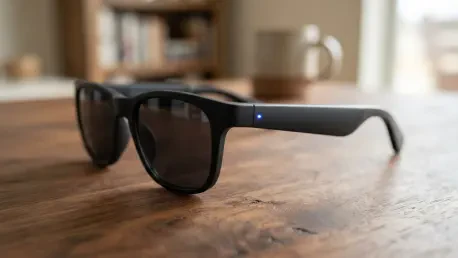

Industry experts warn that the split trust model between eyewear firmware, mobile apps, and cloud services creates multiple points of failure for user data protection. As smart glasses transition from niche gadgets to everyday essential wearables in 2026, the convenience of hands-free digital interaction is increasingly overshadowed by the technical realities of their construction. Unlike smartphones, which benefit from decades of security hardening and robust biometric authentication, the current crop of augmented reality frames and AI-integrated eyewear often prioritizes weight reduction and aesthetic appeal over hardened defense mechanisms. This design philosophy creates a unique set of challenges where the physical proximity of a device to a user’s face does not necessarily equate to the security of the data being captured. The reliance on external devices for processing power means that the link between the glasses and the smartphone is the most critical, yet frequently the most exposed, part of the entire ecosystem.
1. Investigative Findings: Examining Low-Cost Smart Glasses
The current market for wearable technology is flooded with a diverse range of products, varying significantly in both price and security maturity. Recent investigative research conducted by ABC Australia highlighted a troubling trend in the lower-tier segment of the market, specifically focusing on two budget-friendly models priced at A$60 and A$110. These devices represent a growing category of generic AI eyewear that promises high-end features at a fraction of the cost of mainstream competitors. However, the testing revealed that the software underpinning these devices is often repurposed or poorly audited. Both tested models utilized a common companion application known as HeyCyan to bridge the gap between the eyewear and the user’s smartphone. This shared software architecture means that a single vulnerability in the app or the communication protocol it uses can compromise an entire fleet of different hardware brands that rely on the same platform for their operation.
The most alarming discovery during this investigation was the total lack of authentication required for Bluetooth connections. When these budget glasses were not actively connected to their owner’s smartphone, they remained in a persistent state of “advertising” their presence to any nearby device. Researchers found that a third party within standard Bluetooth range could initiate a connection to the glasses without needing a PIN, a password, or any form of physical verification. This stands in stark contrast to the security standards established by mainstream audio wearables. For instance, high-end earbuds like AirPods or Galaxy Buds require a manual interaction, such as holding a physical button on the case, to enter a pairing mode. These budget smart glasses bypassed this essential “intent-to-pair” step entirely, leaving the hardware wide open to anyone with a smartphone and the right application installed, provided they were standing within a few dozen feet of the wearer.
2. Exploitation Scenarios: How Unauthorized Users Gain Control
Once a connection is established between an attacker’s device and a pair of vulnerable smart glasses, the potential for privacy invasion is immediate and severe. The primary concern is the ability for an unauthorized user to remotely trigger the onboard camera and microphone. In a real-world scenario, this means a stranger in a crowded café or on a commuter train could quietly link their phone to a nearby person’s eyewear and begin capturing high-definition photographs or video clips. Because the wearer assumes their glasses are “off” or simply disconnected, they may not notice the subtle indicators that the hardware has been hijacked. This capability turns a personal productivity tool into a remote surveillance station, where the attacker sees exactly what the victim sees, often without leaving any digital footprint on the victim’s own smartphone, which remains disconnected during the exploit.
Beyond the threat of real-time monitoring, the vulnerability also extends to the data already stored on the device’s internal memory. Many smart glasses temporarily cache images and videos before they are synced to the cloud or the primary smartphone app. The investigation demonstrated that an unauthorized user could browse and exfiltrate these saved files over the established Bluetooth link. Furthermore, the attacker can monitor the active data transmission between the eyewear and the official app if the owner attempts to reconnect. This type of “man-in-the-middle” positioning allows for the interception of sensitive audio recordings or visual data as it is being processed by AI assistants. The lack of encrypted handshaking in these budget models means that the information travels in a format that is easily decipherable by third-party tools, effectively nullifying any privacy protections the user thought they had in place.
3. Connectivity Architecture: The Reliance on Smartphone Links
To understand why these vulnerabilities exist, it is necessary to examine the physical and technical constraints of modern smart eyewear. In 2026, the industry has reached a consensus that users want frames that look and feel like traditional glasses, which limits the amount of hardware that can be stuffed into the temples. To keep the weight under fifty grams, manufacturers must offload the heavy lifting—such as cellular connectivity, complex AI processing, and large-scale storage—to a paired smartphone. This creates a “hub-and-spoke” architecture where the glasses are essentially a peripheral sensor array. While this design is efficient for battery life and ergonomics, it creates a paradox where the device is most vulnerable when it is “offline” from its primary host. When the connection to the owner’s phone is severed, the glasses automatically begin searching for a new link, broadcasting their availability to the environment.
This architectural dependence is shared by both budget and premium models, but the implementation of the security layer differs wildly between the two tiers. High-end devices like the Ray-Ban Meta series or the Even Realities G2 utilize sophisticated cryptographic keys to ensure that only a specific, authorized smartphone can communicate with the hardware. Even if these premium frames are disconnected and searching for a signal, they will reject any connection request that does not provide the correct digital handshake. The budget models tested in the recent investigation lacked this robust authentication layer, treating any incoming Bluetooth request as legitimate. This highlights a critical reality in the wearable market: the hardware architecture might look similar across different price points, but the invisible software barriers are what actually define the user’s safety. The “dumb” nature of the glasses without a phone is not just a feature limitation; it is a significant security liability if not managed correctly.
4. Market Realities: Differentiating Between Budget and Premium Tiers
The findings of the ABC Australia report should be viewed with a degree of nuance, particularly regarding the specific segment of the market they implicate. It is important to note that the identified flaws were confirmed only in the specific, low-cost models tested and do not necessarily apply to the broader smart glasses industry. Premium manufacturers are generally more incentivized to protect their brand reputation by investing in rigorous penetration testing and security audits. For a company like Meta or Even Realities, a widespread Bluetooth hijacking scandal would be catastrophic for sales and regulatory standing. Consequently, these companies often employ dedicated security teams to ensure that their firmware is hardened against the exact types of easy hacks seen in the A$60 devices. Buyers who opt for these more expensive options are, in many ways, paying for the software engineering and security updates that the budget manufacturers simply ignore.
Furthermore, the research demonstrated a potential for disaster, but it did not provide evidence that these vulnerabilities have been exploited on a mass scale by criminals yet. There are no confirmed reports of a consumer’s private photos being stolen and sold via this specific Bluetooth vulnerability in a real-world, non-experimental setting. However, the absence of reported cases does not mean the risk is non-existent; it often means the methods of detection are not yet available to the average user. As the adoption of smart eyewear continues to climb throughout 2026, the incentive for malicious actors to develop automated tools for scanning and exploiting these “open” Bluetooth connections will only grow. The distinction between a “possible” attack and a “prevalent” one is often just a matter of time and market penetration, making it vital for consumers to understand the security pedigree of the devices they choose to wear.
5. Consumer Protection: Practical Steps for Wearable Security
For individuals who already own smart glasses or are considering a purchase in the near future, there are several concrete steps that can be taken to mitigate these risks. The most significant move is to prioritize reputable manufacturers over anonymous white-label brands found on deep-discount marketplaces. A company with a transparent history of software updates and a clear security contact is far more likely to patch a vulnerability once it is discovered. When evaluating a new pair of glasses, a simple way to test their security is to check the pairing protocol. If the device allows a new phone to connect without any physical interaction on the glasses themselves—such as pressing a button or tapping a specific sequence on the touch-sensitive arm—it should be viewed as a high-risk product. Physical intent is one of the strongest defenses against remote hijacking, as it requires the attacker to have physical access to the device.
In addition to careful selection at the point of purchase, daily operational habits can significantly reduce a user’s attack surface. Turning the glasses off completely when they are not in use is a simple but effective way to close the Bluetooth discovery window. If the device is powered down, it cannot broadcast its presence or accept unauthorized connections while sitting in a bag or on a table. Users should also regularly audit the permissions granted to the companion app on their smartphones, ensuring it only has access to the data it strictly needs. Finally, a policy of regularly clearing local storage on the glasses can limit the “blast radius” of a potential breach. If media files are moved to a secure cloud or encrypted phone storage and deleted from the eyewear daily, an intruder who gains access to the frames will find little to no historical data to exfiltrate.
6. Future Trajectories: The Evolving Regulatory and Technical Landscape
The trajectory of wearable security is currently being shaped by a combination of technological standardization and increasing regulatory oversight. As governments in Australia, Europe, and North America become more attuned to the privacy implications of face-worn cameras, we are seeing a move toward mandatory security certifications for smart eyewear. These regulations may soon require all devices with recording capabilities to meet a minimum standard of encryption and authentication before they can be sold in major markets. This would effectively force budget manufacturers to either improve their software or exit the market, as the “HeyCyan” style of unsecured connectivity becomes a legal liability. The industry is also moving toward a more unified “trust architecture” where the identity of the wearer is constantly verified through sensors like continuous heart-rate monitoring or iris scanning, making it much harder for a third party to hijack a session.
Looking ahead through the rest of 2026 and into 2027, security is poised to become a core product feature rather than an afterthought. High-end brands are already beginning to market their “privacy-first” architectures, using hardware-level switches and encrypted enclaves to protect user data. This shift will likely lead to the development of standardized pairing protocols for all wearables, mirroring the evolution seen in the early days of Wi-Fi security. As these standards mature, the ease with which a researcher can “hack” a pair of glasses over Bluetooth will diminish significantly. However, the arms race between security researchers and malicious actors is unending. While the simple hacks discovered in budget models today will eventually be phased out, they served as a vital wake-up call for an industry that was moving too fast to look at its own shadow.
7. Strategic Roadmap: Securing the Next Generation of Smart Eyewear
The industry reached a critical juncture where the excitement of augmented reality met the hard reality of cybersecurity. Manufacturers that prioritized cheap production over data integrity found themselves facing intense scrutiny from both the public and regulatory bodies. In response, the market began to consolidate around brands that could prove their security claims through third-party audits and robust encryption standards. The lessons learned from the vulnerabilities of 2026 pushed the technology toward a “security-by-design” philosophy. This transition was not merely about fixing bugs in Bluetooth code but about reimagining how a person interacts with a device that is always on and always watching. Authentication became more seamless, yet more rigid, utilizing biometric markers that ensured the hardware remained a private extension of the individual rather than a public access point.
Policy changes at the major app stores also played a significant role in cleaning up the ecosystem. Marketplaces began enforcing stricter guidelines for companion apps, requiring them to use standardized, secure communication libraries rather than proprietary, unencrypted protocols. This narrowed the gap between budget and premium security, as even low-cost manufacturers were forced to adopt better coding practices to maintain their presence on iOS and Android platforms. Users, in turn, became more educated about the risks associated with “always-on” discovery modes. The collective shift in consumer behavior and corporate responsibility helped stabilize the market, turning smart glasses into a trusted tool for global communication. By addressing these early failures, the industry paved the way for a more secure and private future for all wearable technology.