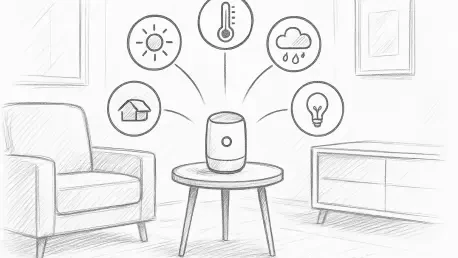

The new suite of smart home devices is built to be agent-native, meaning they are specifically optimized to communicate with the advanced Siri AI agent. For years, the smart home industry has struggled with a fragmentation problem, essentially acting as a brain without a body. Consumers often found themselves managing mismatched gadgets that rarely communicated effectively, leading to a disjointed user experience. Under the strategic guidance of John Ternus, Apple is now signaling a major shift to solve this dilemma by transitioning from a software provider to the architect of a comprehensive smart home nervous system. This initiative centers around the HomePad, a central hub designed to serve as the command center for a unified living environment. By securing the physical layer of the home, Apple aims to move beyond being a guest on a smartphone and instead become the primary operating system for the modern household. This evolution represents a fundamental change in how technology interacts with domestic spaces.
Bridging Hardware Gaps Through Strategic Partnerships
To rapidly scale this new ecosystem without the significant financial burden of managing low-margin hardware, Apple is employing a second-party manufacturing strategy with LG Electronics. This approach allows Apple to maintain its focus on high-margin user experiences and software integration while leveraging LG’s massive supply chain and production infrastructure. These peripherals, ranging from video doorbells to smart locks, will carry LG branding but are fundamentally built to meet the rigorous performance and security standards set by Apple’s internal engineering teams. This tactic mirrors successful past collaborations where Apple partnered with firms like Logitech and Belkin to fill gaps in its peripheral lineup. By delegating production to a seasoned industry leader, the company effectively avoids the overhead of traditional manufacturing while ensuring that every device in the home functions as a reliable extension of the central operating system.
The relationship with LG represents a calculated move to secure the physical footprint of the home before competitors can establish a dominant hardware layer. By utilizing a partner’s manufacturing capabilities, Apple can deploy a wide variety of sensors and actuators much faster than if it handled every aspect of production internally. This strategic pivot ensures that the HomePad hub is supported by a robust ecosystem of compatible devices right from the start. Rather than waiting for third-party manufacturers to adopt its latest protocols, Apple is taking the lead by co-engineering the very hardware that will define the user experience. This model provides a level of quality control that is often missing in the fragmented smart home market, where software updates frequently break compatibility. This strategy is expected to drive significant market growth from 2026 to 2028, allowing the company to scale its influence across the household without the risk of overextending its own resources.
A Specialized Ecosystem of Agent-Native Devices
The initial lineup includes seven core devices that target the most critical aspects of home automation, including security and climate control. For access, the collaboration has produced a video doorbell and a smart deadbolt that utilizes Ultra-Wideband technology to enable proximity-based, hands-free unlocking. This integration allows doors to open automatically as a user approaches, positioning the product as a sophisticated competitor to high-end dedicated lock systems. Surveillance is managed through two types of security cameras and a high-powered floodlight camera, all designed to provide high-definition feeds directly to the central hub. These peripherals are engineered to be agent-native, providing the necessary sensory input for the AI to understand the state of the home. By focusing on these specific categories, the ecosystem addresses the primary reasons consumers invest in smart technology while ensuring each component contributes to a unified vision.
This hardware acts as the nervous system within a three-layer architecture where the HomePad serves as the brain and a revamped Siri acts as the soul. By separating these functions, the system can provide localized processing power and data aggregation required to keep the smart home running without a constant internet connection. This structural approach gives Apple a distinct advantage over rivals like Google and Meta, who are currently locked in a software-centric agent war. While competitors focus primarily on the intelligence aspect, Apple is securing the physical infrastructure to ensure its AI has a standardized set of limbs to execute commands reliably. This integration of sensors and actuators allows the virtual assistant to interact with the physical world in real-time, performing complex tasks that were previously impossible. The result is a more responsive and intuitive living environment that anticipates needs rather than just reacting to commands.
Technical Standards and the Future of Home Privacy
To ensure long-term stability and performance, Apple is betting on the Matter 1.6 standard, which includes support for Joint Fabric and NFC commissioning. This technical choice ensures that while the devices are engineered for a specific ecosystem, they remain interoperable within the broader market, preventing consumers from feeling locked into a single vendor’s hardware. The integration of the Thread protocol further enhances this setup by providing a low-latency and high-reliability mesh network that covers large homes without repeaters. By standardizing the communication protocol, the company effectively commoditizes the physical hardware, shifting the primary value proposition from the physical device to the intelligence housed within the hub. This move encourages a shift in consumer behavior, where the focus is no longer on individual gadgets but on the integrated experience. Such a strategy allows the company to lead through superior software integration rather than proprietary hardware.
The strategic alliance was complicated by LG’s independent ambitions, particularly after its acquisition of the smart home platform Athom. This dual role as both a primary supplier and a potential competitor added a layer of complexity to the partnership that required careful management and clear boundaries. Moving forward, the industry discovered that the success of such an ecosystem depended on maintaining a balance between open standards and deep, proprietary integration. Stakeholders were encouraged to prioritize cross-platform compatibility while ensuring that security protocols remained uncompromising. As the market evolved, the focus shifted toward creating more sustainable and repairable hardware that could keep pace with advancements in AI. The transition highlighted the necessity for companies to look beyond immediate sales and consider the long-term lifecycle of the devices they placed in homes. By establishing this groundwork, the industry paved the way for a more reliable future for home automation.