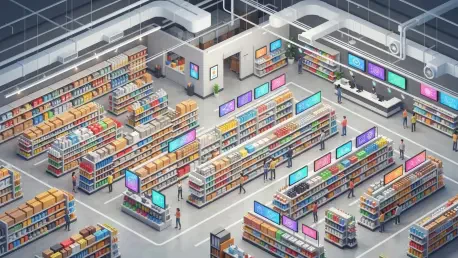

Massmart successfully reduced both energy costs and maintenance expenses by unifying the operations of more than one hundred and fifty separate locations. This significant achievement illustrates a broader industry shift where the intense pressure of the holiday shopping season is reimagined as a sophisticated diagnostic stress test for physical infrastructure. Typically, retail success is measured through sales volume and foot traffic, yet the most enduring value often lies in the data generated when a building’s mechanical systems are pushed to their absolute limits. During these peak intervals, the increased demand on heating, cooling, and lighting reveals hidden vulnerabilities that are easily overlooked during periods of normal operation. By treating the holiday rush as a real-world laboratory, organizations can transition from a cycle of reactive repairs to a model of proactive, data-driven optimization. This perspective transforms a chaotic seasonal hurdle into a strategic roadmap for long-term operational resilience and sustainability across an entire estate.
Enhancing Intelligence Through Systems Visibility
Transforming Energy Data into Operational Insight
Retail managers frequently struggle to bridge the gap between high-level utility billing and the specific mechanical actions that drive those expenses. While a monthly electricity bill provides a total cost, it offers zero visibility into the “where, when, and why” of energy consumption. During the peak shopping season, the constant operation of digital signage, refrigeration, and climate control creates a complex energy profile that can mask deep-seated inefficiencies. Real-time monitoring allows facilities teams to dissect this consumption at the circuit level, identifying waste that would otherwise remain hidden. For instance, sensors might reveal that HVAC units are cooling empty storage areas or that lighting systems remain at full intensity long after a store has closed for the night. By establishing a clear baseline of performance during high-stress periods, businesses can identify specific malfunctions and adjust their operational parameters to ensure that every kilowatt used contributes directly to the customer experience rather than disappearing into systemic waste.
The transition to granular visibility also facilitates a deeper understanding of how external factors, such as rapid weather changes or sudden spikes in foot traffic, impact building performance. In the current landscape of 2026, the use of interconnected IoT sensors allows for the collection of high-fidelity data that feeds directly into centralized analytics platforms. This technological framework enables facilities managers to move beyond simple monitoring and begin practicing “predictive intelligence.” By observing how equipment behaves under the maximum load of a holiday weekend, teams can pinpoint components that are nearing the end of their lifecycle before they actually fail. This level of insight ensures that maintenance is performed when it is most effective, rather than based on arbitrary schedules or in response to a disruptive breakdown. The result is a more stable environment that supports business continuity while significantly lowering the long-term cost of ownership for critical building assets.
Scaling Success Across Large Portfolios
For national retail chains, the challenge of maintaining operational excellence is amplified by the sheer scale of their portfolios. A minor configuration error in a single store’s thermostat might be a negligible expense, but when that same error is replicated across hundreds of locations, the financial and environmental impact becomes staggering. Utilizing a centralized management platform allows leadership to move away from site-by-site management toward a standardized performance model. By comparing data from different stores within similar climates and of similar sizes, facilities teams can quickly identify “outliers”—locations that consume significantly more energy than their peers. This “compare and contrast” methodology is particularly effective during peak seasons, as it highlights which stores are struggling to maintain comfort levels under pressure and which are operating with maximum efficiency, providing a clear priority list for capital investments and maintenance interventions.
Furthermore, this standardized approach ensures that best practices developed at a single flagship location can be instantly deployed across the entire estate. If a new lighting schedule or cooling setpoint is found to reduce costs by five percent in one store without impacting shopper comfort, that update can be pushed to every connected location with a single command. This level of control is vital for maintaining brand consistency, as it ensures that a customer in a northern climate experiences the same level of comfort as one in a tropical region. By the beginning of 2027, the ability to manage thousands of diverse assets through a single “pane of glass” has become a competitive necessity. It allows corporate headquarters to maintain a bird’s-eye view of their carbon footprint and operational health, ensuring that the entire organization moves toward its sustainability goals in unison rather than as a collection of fragmented parts.
Strengthening Resilience and Human Resources
Reducing the Burden on Store-Level Staff
The retail workforce is currently facing significant constraints, requiring store associates to be more focused than ever on customer engagement and sales execution. In this high-stakes environment, it is impractical and inefficient to expect floor managers or sales staff to double as amateur facility technicians. Manually adjusting thermostats, troubleshooting tripped breakers, or trying to override complex lighting schedules diverts valuable time away from the primary business of serving shoppers. Integrating automated building systems removes this technical burden from store-level personnel, allowing the physical environment to manage itself through pre-defined, intelligent algorithms. When climate and lighting systems are automated, they respond dynamically to occupancy levels and external conditions, ensuring the store remains comfortable without human intervention. This shift not only improves energy efficiency but also enhances employee morale by providing a consistently optimal workspace that supports their productivity.
Moreover, automation acts as a silent partner in maintaining store standards, preventing the human errors that often lead to unnecessary energy spikes or equipment damage. For example, an automated system can prevent “short cycling” of HVAC compressors—a common issue when manual adjustments are made too frequently—which extends the life of expensive mechanical assets. By the time 2027 arrives, the integration of these smart systems has become a standard practice for retailers looking to optimize their human capital. When employees are freed from the minutiae of building management, they can focus on high-value tasks that drive revenue and improve the brand’s reputation. This strategic alignment between building technology and human resources ensures that the physical store environment remains an asset that supports the workforce rather than a source of distraction and operational friction during the busiest times of the fiscal year.
Implementing Remote Diagnostics for Business Continuity
Business continuity is the lifeblood of retail, especially during the high-pressure shopping windows that define annual profitability. A critical system failure, such as a localized power outage or a broken air conditioning unit on a crowded afternoon, can lead to immediate lost sales and long-term damage to customer loyalty. Centralized monitoring provides a sophisticated safety net through remote diagnostics, allowing specialized technical teams to identify and resolve issues from a distance. In many cases, a software-related malfunction can be corrected digitally before the store manager even realizes a problem exists. If a physical repair is required, the diagnostic data provides the technician with the exact error codes and history needed to arrive at the site with the correct replacement parts. This proactive capability drastically reduces the “mean time to repair,” ensuring that critical infrastructure is restored quickly and efficiently without disrupting the shopping experience.
This link between “building health” and “customer comfort” is a fundamental cornerstone of modern retail resilience. By maintaining a seamless environment behind the scenes, retailers encourage longer store visits and higher conversion rates. Customers are more likely to linger in a store that is properly ventilated and illuminated, directly correlating environmental quality with financial performance. As we look toward the operational requirements of 2028, the ability to perform remote “health checks” on an entire portfolio has transformed how maintenance contracts are structured. Instead of paying for expensive, scheduled site visits that may find no issues, retailers are moving toward “on-demand” maintenance triggered by actual system performance data. This transition ensures that technical resources are deployed only when and where they are truly needed, safeguarding the operational integrity of the business while keeping overhead costs as low as possible.
Achieving Modernization and Future Power Demands
The Cycle of Data-Driven Improvement
The journey toward long-term operational excellence follows a logical and iterative cycle that begins with connecting existing hardware to a centralized digital platform. Once the flow of real-time data is established, facilities managers can monitor equipment behavior, compare performance against historical baselines, and pinpoint specific malfunctions or scheduling overlaps. This methodology ensures that the insights gathered during the frantic weeks of a holiday peak are not forgotten but are instead used to drive permanent improvements. For instance, if data shows that certain zones within a flagship store are consistently overcooled during peak occupancy, the setpoints can be precisely adjusted to optimize energy use for the remainder of the year. This continuous loop of measuring, acting, and verifying ensures that every efficiency gain is locked in, providing a measurable return on investment that extends well beyond the initial period of high demand.
This cyclical approach also prepares the retail infrastructure for the increasing demands of electrification and the integration of sustainable technologies. As stores begin to incorporate electric vehicle charging stations and localized solar arrays, the complexity of managing the building’s power profile increases significantly. Retailers who have already established a “connect and monitor” framework are uniquely positioned to integrate these new loads without compromising their operational stability. By using the same data-driven logic applied to HVAC and lighting, businesses can manage their “peak demand” to avoid expensive surcharges from utility companies. This ability to balance complex energy flows in real-time has become a critical survival skill in the modern economy. It allows organizations to embrace future innovations and green initiatives while maintaining the rigorous cost controls necessary to thrive in a competitive market, proving that the lessons of the past are essential for future success.
Strategic Synthesis for Long-Term Value
The successful integration of these systems demonstrated that retail peaks were not merely challenges to be endured but were instead the most valuable data events of the fiscal year. By utilizing the stress of high-traffic periods to identify systemic weaknesses, businesses moved from a reactive posture to a sophisticated, predictive management model. This transition allowed for a more resilient business structure that was capable of withstanding both environmental fluctuations and shifting consumer habits. The focus shifted toward a “total building” philosophy, where energy efficiency, employee well-being, and customer satisfaction were managed as interconnected goals. Those who adopted this integrated approach found that their stores were easier to manage and significantly more cost-effective to operate. The data-driven insights gained during peak intervals provided a clear roadmap for future capital investments, ensuring that every upgrade was targeted toward achieving maximum operational impact.
Moving forward, the ability to turn seasonal insights into year-round advantages became a defining characteristic of market leaders. These organizations successfully leveraged cloud-based, vendor-agnostic platforms to modernize their diverse portfolios without the need for total infrastructure replacement. The resulting operational excellence supported both the bottom line and broader corporate sustainability mandates, creating a foundation for growth that was as durable as it was efficient. By treating every peak as a diagnostic opportunity, retailers ensured that their physical assets remained high-performing hubs of commerce capable of meeting the electrification demands of the coming years. This proactive strategy ultimately transformed the traditional holiday rush into a permanent competitive edge, proving that the most chaotic moments in retail could drive the most profound long-term improvements. The lessons learned under pressure became the standard for daily operations, fostering a culture of continuous optimization that defined the retail landscape for years to come.