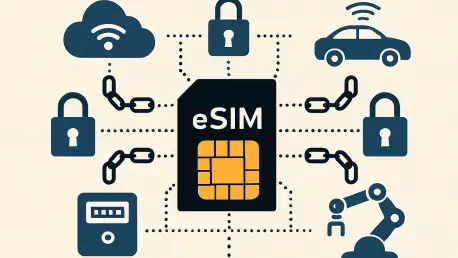

Onomondo identifies a growing risk where the remote management layer itself becomes the new point of friction in global IoT deployments. This observation comes at a pivotal moment as the industry transitions toward the SGP.32 standard, a protocol specifically engineered to streamline the remote provisioning of IoT devices. For years, the promise of cellular flexibility remained largely theoretical, as enterprises found themselves trapped by the immense technical and financial hurdles of switching connectivity providers. The introduction of Onomondo’s eSIM IoT Remote Manager (eIM) aims to disrupt this cycle by providing a specialized software layer that acts as a universal remote control for global fleets. By integrating physical eUICC SIMs, global connectivity profiles, and management software into a unified, programmable stack, the solution addresses the historical disconnect between hardware and the cloud. This evolution ensures that businesses can finally manage the entire lifecycle of a device through a single interface, making large-scale deployments more viable and less restrictive than ever before.
Technical Advancement: Overcoming Previous Standards
The shift toward SGP.32 represents a fundamental departure from the complexities of earlier eSIM iterations, which often required heavy infrastructure and proprietary integrations to function effectively. Under the new framework, the eIM serves as the critical orchestration point, allowing administrators to download, enable, or delete connectivity profiles across thousands of devices without requiring any physical intervention. This capability is particularly vital in the current landscape where devices are deployed in hard-to-reach locations or across multiple international borders. By utilizing a standardized approach, enterprises can avoid the fragmented management tools that previously hindered operational efficiency. Onomondo’s implementation further refines this by ensuring the eIM acts as a seamless gateway between the device and the network, providing real-time visibility into connection status and profile health. This level of control is no longer a luxury but a prerequisite for any organization looking to scale its IoT operations across diverse geographic regions without incurring massive overhead.
Building on this technical foundation, the consolidation of the connectivity stack allows for a more holistic approach to data management and security. In the past, managing separate contracts for SIM hardware, cellular data, and management platforms created a disjointed ecosystem that was prone to errors and security vulnerabilities. By bridging these components into a single entity, the industry is moving toward a more cloud-native model of connectivity where the network is treated as code rather than a static utility. This transition enables developers to automate the provisioning process, ensuring that every device is born with the correct configuration and can adapt to changing network conditions automatically. The result is a significant reduction in the time-to-market for new IoT applications, as companies no longer need to navigate the labyrinthine requirements of traditional mobile network operators. This streamlined architecture provides a solid base for the next generation of industrial applications, where reliability and agility are paramount to success.
Strategic Modularity: Decoupling Software From Infrastructure
A significant challenge that persists in the 2026 landscape is the subtle distinction between technical interoperability and true commercial interchangeability. While the SGP.32 standard ensures that different hardware and software components can technically communicate, it does not inherently prevent a provider from creating an environment where switching remains difficult. Onomondo has pinpointed this as a potential failure point, where the eIM itself becomes a new form of vendor lock-in if it is tethered exclusively to one carrier’s data plans. To counter this, their solution offers the eIM as a standalone, configurable product that functions independently of their own cellular services. This strategic decoupling allows an enterprise to source its data from one global carrier while using Onomondo’s platform to manage its fleet, or vice versa. By breaking the mandatory link between the management software and the underlying data pipeline, businesses regain the leverage they need to negotiate better terms and ensure their operations are never held hostage by a single vendor.
Enterprises focused on long-term sustainability recognized that the true power of SGP.32 lay not just in the technology itself, but in the operational freedom it enabled. Decision-makers evaluated their current infrastructure and realized that a software-defined approach was the only way to mitigate the risks associated with a rapidly changing carrier market. They implemented management layers that functioned independently of their data providers, which effectively neutralized the threat of vendor lock-in before it could impact their bottom line. These organizations leveraged the modularity of the eIM to create more agile supply chains and more responsive service models for their customers. By prioritizing interchangeability, they ensured that their IoT investments remained assets rather than liabilities as the decade progressed. Moving forward, the focus shifted from merely connecting devices to optimizing the intelligence and cost-efficiency of those connections through continuous management. This proactive strategy turned the technical promise of the GSMA standards into a tangible competitive advantage.