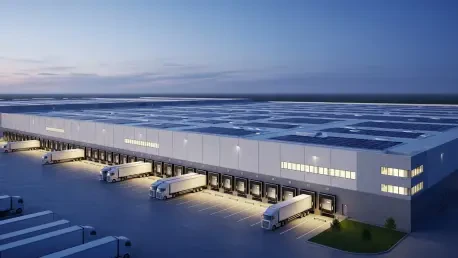

Rising from the jagged, industrial remains of a former British Steel quarry, the Corby logistics hub serves as a colossal monument to the rapid transformation and resilient engineering of the modern global supply chain. This 750,000-square-foot facility is not merely a warehouse but a sophisticated high-performance engine, representing a major evolution in third-party logistics (3PL) capabilities within the United Kingdom. Its development serves as a testament to the fact that even the most challenging landscapes can be reimagined as centers of hyper-efficiency and technological progress. By integrating massive capital investment with strategic geographical positioning, the site has become a cornerstone of the “Golden Logistics Triangle,” facilitating the flow of goods with unprecedented precision.
The significance of this facility extends beyond its sheer scale; it represents a fundamental shift in how contract logistics providers approach the balance between human expertise and mechanical automation. As global markets face increasing volatility, the ability to scale operations rapidly while maintaining cost-effectiveness is no longer a luxury but a strategic necessity. The Corby hub provides a blueprint for this transition, offering a versatile environment where high-tier technology is accessible to a broad spectrum of brands. This democratization of automation ensures that the facility remains competitive and resilient, regardless of the fluctuations in individual client demand or broader economic shifts.
A £60 Million Transformation of the Golden Logistics Triangle
The metamorphosis of a 25-acre dormant quarry into a premier logistics destination required a substantial £60 million investment and a vision that looked past the site’s rugged industrial history. Located in Corby, the facility sits within a prime geographical zone that offers optimal access to the nation’s transport arteries, making it a critical node for distribution. This investment was not just about erecting a building; it was about creating a high-performance environment capable of handling the complexities of modern commerce. The transition from a site of raw extraction to one of high-speed distribution marks a significant milestone in the regional economic landscape.
Today, the facility represents a masterpiece of industrial engineering, where the focus has shifted from the grit of steel production to the precision of pallet movements. Every square foot of the 750,000-square-foot footprint is optimized to serve as a powerhouse of efficiency, proving that strategic redevelopment can turn historical liabilities into modern assets. The project serves as a case study for large-scale infrastructure development, highlighting the necessity of forward-thinking investments to support the ever-growing demands of the ecommerce and retail sectors.
The Strategic Blueprint of a Modern Logistics Powerhouse
The physical infrastructure of the Corby hub is designed with a relentless focus on maximum density and throughput. By utilizing Very Narrow Aisle (VNA) equipment and precision-engineered racking that reaches a height of 18 meters, the facility manages to house 100,000 pallets within a footprint that would traditionally accommodate far fewer. This vertical approach to storage allows for the handling of both British and European pallet specifications with equal ease, ensuring that the facility remains compatible with a diverse range of international supply chains. Nine aisles of specialized racking create a high-density environment that maximizes storage capacity without sacrificing accessibility.
Supporting this massive storage volume is an infrastructure built for high-volume movement, featuring 49 loading docks and three expansive 30,000-square-foot mezzanines. These zones are strategically organized to handle diverse product categories, ranging from high-velocity consumer goods to bulky items requiring specialized care. Perhaps most impressive was the facility’s ability to become operational during a period of intense global disruption. Commissioned ahead of schedule during the height of a pandemic, the project demonstrated exceptional operational discipline and set a new benchmark for rapid deployment resilience in the logistics industry.
Breaking the Single-User Mold: Innovation in Automation
At the heart of the facility’s operational prowess is an £11 million automation engine designed by PSB Intralogistics. This system is a marvel of modern warehouse engineering, featuring 36,000 totes and 60 lifts that work in tandem with a high-speed conveying network. A standout component is the Rotapick machine, a sophisticated piece of equipment that facilitates rapid order fulfillment with incredible accuracy. This automation layer ensures that the facility can process high volumes of small-unit orders, which is the lifeblood of the modern ecommerce landscape, while maintaining a low margin for error.
What truly sets the Corby hub apart is the migration of this rigid automation into a flexible, multi-user environment. Historically, high-level automation systems were the exclusive domain of single-user dedicated sites, often leaving smaller brands without access to Tier-1 technology. Europa Warehouse broke this mold by creating a shared-user advantage, allowing multiple clients to leverage the same high-speed infrastructure. This flexibility allows brands like Beer52 and Naked Wines to manage seasonal spikes and market volatility without the heavy capital expenditure required to build private automated systems.
Human Capital and the Culture of “Sleeves-Up” Logistics
Despite the significant investment in robotics and conveying systems, the human element remains the most vital component of the Corby operation. The management philosophy at the site rejects the traditional, siloed labor model that often plagues large-scale logistics operations. Instead, a team-based structure is employed, supported by a comprehensive skills matrix that ensures every worker is cross-trained and capable of pivoting between different operational needs. This “sleeves-up” culture fosters a sense of ownership and accountability that is rare in high-volume environments, ensuring that the workforce is as agile as the machinery they operate.
This commitment to human capital is further evidenced by a strong emphasis on internal mobility and mentorship. The facility has a proven track record of transforming agency workers into skilled managers, providing a clear career path for those who demonstrate a “can-do” attitude. This internal talent pipeline is complemented by strategic forecasting partnerships with the 19 brand partners housed within the facility. By maintaining a rock-solid collaboration with clients, the team can predict SKU-level demand with high accuracy, preventing the need for disruptive in-day replenishments and ensuring a smooth, continuous flow of goods throughout the day.
The Digital Twin: Integrating Robotics and WMS
Digital transparency is the foundation upon which the entire Corby operation is built. The facility utilizes the HighJump Warehouse Management System, a highly configurable platform that integrates with client systems via advanced APIs and Electronic Data Interchange. This technological backbone provides brands with real-time visibility into their inventory levels and order statuses, bridging the gap between physical stock and digital storefronts. Such data-driven insights are crucial for brands navigating the fast-paced world of ecommerce, where stock accuracy and fulfillment speed can determine market success.
Innovation reached a new peak with the implementation of autonomous robotics to create a “digital twin” of the facility. Using Dexory technology, an autonomous robot scans the warehouse during off-peak hours to provide a comprehensive, high-resolution map of all inventory. This robotic stock maintenance has revolutionized the way the facility manages accuracy, replacing time-consuming manual counts with high-level data analysis. By automating the repetitive task of inventory tracking, the workforce is empowered to focus on complex troubleshooting and SKU optimization, significantly enhancing the overall quality of the logistics service.
Frameworks for Future-Proofing and Compliance
To maintain a competitive edge in a globalized market, the Corby hub leverages a robust framework of regulatory compliance and multimodal connectivity. The facility holds HMRC Wet and Dry Bond accreditation, a critical asset for clients in the alcohol and high-value goods sectors. This bonded status allows businesses to defer duty payments until the moment their products are dispatched for delivery, significantly improving their cash flow and simplifying the complexities of international trade. By integrating these customs advantages with the site’s air, sea, and road freight divisions, the facility provides a seamless end-to-end logistics solution.
Looking toward the future, the facility is prepared for sustainable scaling and continued technological refinement. Plans to integrate solar PV projects on the massive roof surface highlight a commitment to reducing the carbon footprint of large-scale distribution. Furthermore, the physical design of the hub allows for the potential doubling of mezzanine footprints, ensuring that the facility can grow in tandem with the demands of its clients. This proactive approach to infrastructure and environmental responsibility ensures that the Corby site remains a leading example of how 3PL providers can balance commercial success with sustainable operational practices.
The strategy for future logistics growth at the Corby site focused on three core pillars: energy autonomy, physical modularity, and advanced data integration. The implementation of solar energy offered a path toward carbon neutrality, while the ability to expand mezzanine levels provided the necessary room for inventory diversification. These steps ensured that the facility remained a resilient and adaptable asset. Operators discovered that the integration of digital twin technology reduced inventory discrepancies by nearly ninety percent, allowing the focus to shift toward predictive SKU management. This transformation proved that the long-term success of 3PL depended on the seamless fusion of physical infrastructure with intelligent, real-time data analysis.