
High-value crop management and livestock monitoring now rely on immediate responses to environmental changes facilitated by remote management tools. As of 2026, the integration of the Internet of Things (IoT) has ceased to be a futuristic ambition and has become the operational standard for global agriculture. This evolution is spearheaded by sophisticated precision agriculture sensors, which serve as the primary data-gathering nodes for modern smart farms. These devices are redefining how food is produced, how finite resources are managed, and how pressing environmental challenges are addressed. According to recent market analysis, this sector is positioned for extraordinary growth over the next few years, fueled by a convergence of technological maturity, economic necessity, and global food security concerns. At the heart of this change is the ability to capture granular data at the point of origin, turning individual fields into interconnected, intelligent networks that respond dynamically to local conditions.
Transitioning to Data-Driven Farming
The Role: Real-Time Intelligence in Modern Agriculture
The fundamental role of these sensors is to transition farming from a practice based on historical averages and intuition to one rooted in precise, real-time data. This shift allows for true precision in agriculture—applying the right treatment at the right time in the exact right place. Historically, a farmer might have applied water or fertilizer based on a calendar date or a visual inspection of the crop, but these methods often lead to either waste or deficiency. Today, connected sensors deployed across vast acreages provide a continuous stream of actionable intelligence to centralized management platforms. These systems enable farmers to monitor soil moisture levels, nutrient concentrations, and local weather patterns with unprecedented accuracy. By removing the guesswork from the equation, growers can make micro-adjustments that have a macro impact on their overall operational efficiency, ensuring that every drop of water and every gram of nutrient contributes to the harvest.
Functioning as the digital nervous system of the modern farm, these sensors facilitate a level of granular control that was previously impossible. When a specific zone in a thousand-acre field experiences a drop in soil moisture, the sensor network triggers a localized irrigation response rather than watering the entire area. This targeted approach not only conserves vital resources but also prevents the environmental damage often caused by runoff and over-saturation. Furthermore, the ability to monitor crop health indicators in real-time allows for the early detection of stress before it becomes visible to the naked eye. As these sensors communicate seamlessly within an IoT framework, they create a comprehensive digital twin of the physical farm. This allows operators to run simulations and adjust strategies based on real-world inputs, effectively bridging the gap between digital modeling and physical labor to produce more consistent and high-quality yields across diverse climates.
Economic Drivers: The Global Imperative for Productivity
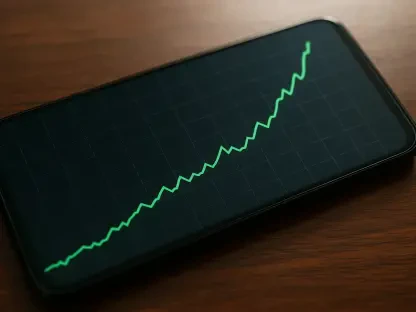
The economic trajectory of the IoT precision agriculture sensor market reflects a period of consistent and aggressive expansion. Projections for the late 2020s indicate that the market value will exceed $14 billion, maintaining a compound annual growth rate of over 21 percent. This momentum is largely driven by the global imperative to increase crop productivity as the world population continues to rise. With limited arable land available for new cultivation, the focus has shifted toward maximizing the output of existing fields. Precision sensors optimize inputs—such as seeds, fertilizers, and pesticides—thereby maximizing yields while minimizing environmental waste. For instance, data from major agricultural hubs shows that the adoption of high-tech sensors has led to significant increases in wheat and broadacre crop production. As food security becomes a central pillar of national policy in many countries, the demand for these technologies continues to outpace earlier forecasts.
Beyond the sheer volume of production, the economic viability of modern farming depends heavily on the cost-effective management of expensive inputs. Volatile global prices for fertilizers and fuel have made precision application a financial necessity rather than a luxury. By utilizing sensor data to map specific nutrient requirements across a field, farmers can reduce their chemical usage by up to thirty percent while maintaining or even improving their total harvest. This reduction in overhead directly translates to higher profit margins and greater economic resilience for agricultural enterprises. Moreover, the integration of autonomous machinery with ground-based sensor networks further reduces labor costs and human error. As the technology matures and manufacturing scales up, the cost of these sensors continues to drop, making them accessible to medium and small-scale operations that were previously priced out of the market. This democratization of technology is expanding the user base rapidly.
Infrastructure and Technological Innovation
Key Trends: Multi-Parameter Integration and AI
The evolution of the IoT precision agriculture sensor market is marked by a distinct shift toward more integrated and intelligent systems. Technology providers are moving away from single-purpose sensors that only measure one variable, such as moisture, toward multi-parameter devices. These advanced units are capable of monitoring soil temperature, moisture levels, pH, and electrical conductivity simultaneously from a single probe. This multi-modal capability significantly reduces the cost of deployment and maintenance while providing a more holistic view of the growing environment. By understanding the interplay between different soil characteristics, farmers can diagnose complex issues like soil salinity or nutrient leaching before they impact crop performance. Additionally, these sensors are designed with ruggedized casings and long-lasting batteries, often powered by integrated solar panels, to ensure reliable performance in the harshest field conditions over multiple growing seasons.
Perhaps the most significant trend in the current landscape is the marriage of sensor data with machine learning and predictive modeling. Advanced agricultural analytics platforms now ingest vast amounts of sensor data to forecast crop yields with high accuracy, predict the onset of pest outbreaks, and recommend optimal harvest windows. This transforms the sensor from a simple reporting tool into a proactive decision-support system that can anticipate problems before they manifest. For example, by analyzing patterns in humidity and leaf wetness, AI models can warn a grower of the high probability of a fungal infection, allowing for preventative treatment that saves the crop. This predictive capability is also being integrated into autonomous farming machinery, such as self-driving tractors and drones, which rely on sensor inputs to navigate and perform tasks with centimeter-level accuracy. The result is a highly synchronized operation where data flows seamlessly between the soil, the cloud, and the machinery.
Global Impact: Adoption and Future Considerations
In the context of regional development, the adoption of IoT sensors has created a polarized but rapidly evolving global market. In 2025, North America emerged as the dominant force, driven by large-scale industrial operations that require high levels of automation. However, the Asia-Pacific region is now the fastest-growing market, as countries like China and India implement massive subsidies to modernize their agricultural sectors. This rapid expansion is not merely about purchasing hardware; it is about building the digital infrastructure required to support millions of smallholder farmers. In these regions, the push for digital agriculture is closely tied to national security, as governments seek to reduce their reliance on food imports. This geopolitical factor has accelerated the rollout of low-cost, high-reliability sensors that can operate in diverse and often challenging environments. Consequently, the global market is becoming more diversified, with tailored solutions emerging to meet the specific needs of different crops and climates.
The integration of IoT sensors into precision agriculture proved to be a transformative force that fundamentally altered the human relationship with the land. By shifting the focus from manual labor to data-driven insights, the industry established a more resilient and sustainable foundation for global food production. Looking ahead, the next step for agricultural enterprises involves moving beyond basic data collection toward fully autonomous, closed-loop systems. In these environments, sensors will not only identify needs but will also direct robotic systems to fulfill them without human intervention. To prepare for this future, stakeholders must prioritize the standardization of data protocols and ensure that connectivity remains robust across remote areas. The successful adoption of these technologies determined the competitive viability of farming operations in the late 2020s, rewarding those who embraced the digital transition. Ultimately, the synthesis of hardware and intelligence ensured that agriculture remained capable of meeting global demands.