
The traditional metric of warehouse success once rested on how many millions of square feet a facility covered, but today, that measure has been eclipsed by the speed and precision of the software controlling those same spaces. Intelligent warehouse orchestration represents a radical departure from the localized automation of the past decade, moving the needle from mere robotic movement to a sophisticated, unified intelligence. This review examines how these systems have evolved from simple travel-time reduction tools into comprehensive decision-making engines that manage the intricate dance of labor, machinery, and inventory in real time.
The Paradigm Shift: From Hardware-Centric to Decision-Centric Automation
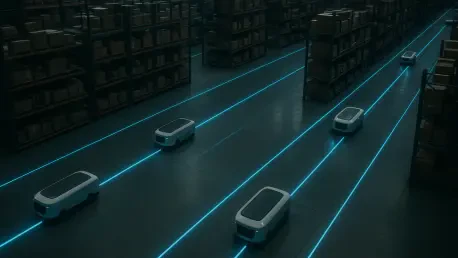
For years, the logistics sector operated under the assumption that increasing productivity was a matter of adding more hardware to the floor. However, the current landscape of 2026 demonstrates that adding more robots often leads to diminishing returns if those units are not synchronized by a centralized logic. Traditional automation was largely hardware-centric, focusing on replacing manual travel with autonomous mobile robots (AMRs). While this reduced physical strain on workers, it frequently created new bottlenecks at pick stations or packing lines because the system lacked the foresight to balance the workload across different zones.
The shift toward decision-centric automation marks the emergence of “operational intelligence” as the primary driver of fulfillment success. Instead of treating robots as isolated agents performing repetitive tasks, orchestration layers integrate them into a holistic flow. This technology responds to the critical pressures of labor shortages and the extreme volatility of consumer habits that define the current market. By prioritizing the harmony of the entire facility over the speed of an individual robot, companies are moving toward a model where the software identifies and resolves potential congestion before it even manifests on the warehouse floor.
Core Architectural Components of Orchestrated Systems
Centralized Intelligence and Real-Time Decision Engines
At the heart of high-performance orchestration lies a centralized decision engine that acts as the brain of the facility. Systems like Ocado IQ represent a significant advancement because they do not rely on static task lists provided by a warehouse management system (WMS). Instead, these engines continuously ingest data from every corner of the floor, evaluating variables such as order priority, robot battery levels, and current aisle congestion. This architectural choice ensures that the system is always recalculating the most efficient path for every unit of work, preventing the “stop-and-start” inefficiency common in older, fragmented setups.
The uniqueness of this implementation lies in its ability to facilitate connected decision-making. In a typical automated warehouse, replenishment and picking often operate in silos, leading to situations where a picker arrives at a shelf only to find it empty because the replenishment bot was delayed. An orchestrated system eliminates this friction by synchronizing these two functions. The decision engine ensures that the right inventory arrives exactly when it is needed, creating a continuous, rhythmic flow of goods that maximizes the utilization of both human and robotic assets simultaneously.
The Human-Machine Interface and Strategic Visibility
Modern orchestration does not seek to remove humans from the equation but rather to empower them through strategic visibility. Tools like “The Bridge” serve as a sophisticated interface where supervisors can monitor the pulse of the entire operation through a single pane of glass. This component is essential because it bridges the gap between the high-speed execution of robots and the nuanced oversight of human managers. By providing real-time data on pick rates and fleet health, the system allows supervisors to make informed adjustments without having to manually intervene in every minor workflow disruption.
This interface also ensures that manual labor remains as data-driven as the autonomous components of the warehouse. When a human worker is integrated into an orchestrated workflow, their tasks are optimized by the same logic that guides the robots. This prevents the common problem of “automation islands,” where the efficiency of a robotic zone is undermined by the lack of data provided to the manual picking areas. The result is a unified workforce where the line between autonomous execution and human oversight becomes increasingly blurred, leading to a more resilient operational structure.
Innovations in Hybrid Picking and Fleet Management
The latest breakthroughs in fleet management emphasize a “Lean Fleet” philosophy, which challenges the industry myth that a higher robot count translates to higher productivity. In practice, an oversaturated floor leads to traffic jams and increased safety risks. Orchestrated systems now prioritize intelligence-led scaling, where robots are deployed with the intent of maximizing their active “up-time” rather than simply occupying space. This approach reduces capital expenditure while improving the overall safety and predictability of the facility environment, making it a more attractive option for operators with limited floor space.
Innovation is also evident in the development of multi-modal operations, specifically the “Sweep” and “Rendezvous” modes. In a Sweep configuration, an associate is paired with a robot to move through narrow aisles with high density, ensuring that traffic flow remains unidirectional and organized. Conversely, Rendezvous mode allows robots to meet associates at specific high-velocity zones, minimizing the movement of the human worker. The ability of a single system to switch between these modes dynamically based on the specific needs of an aisle or a time of day is a unique feature that competitors struggle to replicate with static automation.
Real-World Applications Across Key Industries
Third-Party Logistics (3PL) and Retail Fulfillment
The 3PL sector has become a primary adopter of orchestration due to the extreme variability inherent in managing multiple client profiles. These providers require a high degree of configurability, as they must pivot between vastly different fulfillment requirements on a seasonal basis. Orchestration allows 3PLs to scale their operations without undergoing massive hardware overhauls. The technology provides the flexibility to onboard new clients with unique picking requirements into the same automated ecosystem, ensuring that the facility remains profitable regardless of the product mix being handled at any given time.
In the retail sector, the primary challenge addressed by orchestration is the coordination of omnichannel fulfillment. Distribution centers are no longer just sending pallets to stores; they are simultaneously picking individual items for direct-to-consumer delivery. Orchestrated systems balance these competing priorities by treating the warehouse as a multi-speed environment. This ensures that a surge in online orders does not delay the replenishment of physical store shelves, maintaining a delicate balance that is crucial for brand consistency and customer satisfaction in a competitive market.
E-Commerce and High-Volatility Distribution
E-commerce operators face perhaps the most intense pressure regarding carrier cut-off times and order accuracy. Orchestrated systems are specifically designed to handle the “high-volume exception” scenarios that often paralyze traditional warehouses. When a last-minute order change occurs or a specific carrier arrives early, the orchestration layer can re-prioritize the entire workflow in seconds. This responsiveness allows e-commerce facilities to maintain a steady output even during peak periods, such as holiday sales or flash promotions, without the need to stop the line for manual rescheduling.
The performance metrics reported from these implementations are transformative. Many facilities have documented productivity rates that are three times higher than traditional manual cart-based methods. This is achieved by removing the non-productive time workers spend waiting for work or navigating crowded aisles. By ensuring that every movement made by an associate or a robot contributes directly to an order being shipped, orchestration turns the fulfillment center into a high-precision engine of economic growth.
Overcoming Implementation Challenges and Market Obstacles
One of the primary hurdles in adopting this technology is the integration of legacy warehouse management systems with modern orchestration layers. Many facilities still operate on aging software that was never designed to communicate with high-speed robotic fleets. To mitigate this, developers have focused on creating robust APIs and middleware that allow for a “bolt-on” approach to orchestration. This enables companies to modernize their operations without the risk and expense of a complete “rip-and-replace” project, which has traditionally been a major deterrent for mid-sized enterprises.
Furthermore, the industry is working to overcome the misconception that automation is a rigid, long-term commitment that takes years to realize value. Modern platforms are now reaching full operational status in as little as 14 weeks, a significant improvement over the 12-to-18-month timelines common in the past. This speed of deployment is coupled with a focus on education regarding intelligence-led scaling. By demonstrating that productivity is a result of logic rather than just hardware, technology providers are helping operators build more sustainable and cost-effective automation strategies that can grow alongside their business.
The Future of Fulfillment and Long-Term Impact
The trajectory of fulfillment technology is moving rapidly toward a “software-first” era. In this future, the competitive advantage of a distribution center will not be defined by the physical assets it owns, but by the quality of the data it generates and how effectively it utilizes that data. We are seeing the early stages of predictive orchestration, where artificial intelligence analyzes historical trends and external market signals to anticipate demand spikes before they even hit the warehouse floor. This will allow facilities to pre-position inventory and scale their fleets in anticipation of orders, rather than simply reacting to them.
Long-term, this shift will fundamentally redefine the roles of the warehouse workforce. As manual, repetitive tasks are increasingly handled by orchestrated robotic units, human roles will transition toward strategic oversight and exception management. Warehouse staff will become “orchestrators” themselves, managing the system’s performance and handling the complex problem-solving that remains beyond the reach of current AI. This evolution will likely lead to higher job satisfaction and better wages as the nature of the work becomes more technical and less physically taxing.
Assessment of the Intelligent Orchestration Landscape
Intelligent warehouse orchestration successfully transitioned fulfillment from a series of discrete, disconnected tasks into a unified and thinking organism. The historical reliance on hardware-centric models proved insufficient for the demands of the modern supply chain, whereas the new decision-centric approach provided a clear and measurable path to reducing labor costs by up to 50%. The technology demonstrated that high-performance fulfillment was no longer determined by the sheer quantity of robots a facility owned, but by the intelligence with which those resources were synchronized.
The implementation of these orchestrated systems allowed businesses to achieve unprecedented levels of throughput and operational resilience. By bridging the gap between human intuition and robotic speed, the technology addressed the most persistent bottlenecks in the logistics process. Stakeholders who embraced this software-driven evolution found themselves better equipped to handle market volatility and rising consumer expectations. Ultimately, the shift toward orchestration redefined the standard for efficiency, proving that the most valuable asset in the modern warehouse was the logic that governed the flow of goods.