
The integration of three AI-driven tools is estimated to recover up to 30,000 manual work hours annually for PLDT’s customer service operations. This strategic move comes at a time when the digital infrastructure in the Philippines is undergoing a massive expansion, driven by the rapid deployment of 5G networks and high-speed fiber broadband. As the leading telecommunications provider in the country, PLDT has faced the immense challenge of managing a staggering volume of data while maintaining high service standards for millions of subscribers. To address these complexities, the organization has integrated the UiPath Platform to transform its internal logic into a more streamlined, automated system. By focusing on specialized AI applications, the company is moving away from the era of manual data processing and entering a phase characterized by near-instantaneous information retrieval and automated decision-making. This shift is not merely about speed; it is about establishing a foundation for long-term operational resilience and excellence.
Driving Operational Excellence Through Specialized AI
Optimizing Knowledge Retrieval: KAI and Ellie
KAI, which stands for Knowledge, Automation, Intelligence, serves as the cornerstone of this new efficiency model by acting as an internal AI assistant. Historically, employees spent significant portions of their week conducting manual research across various corporate databases to support new proposals or customer inquiries. With KAI, this research time has been cut from an average of five days to just one to three seconds, allowing the team to operate with unprecedented agility.
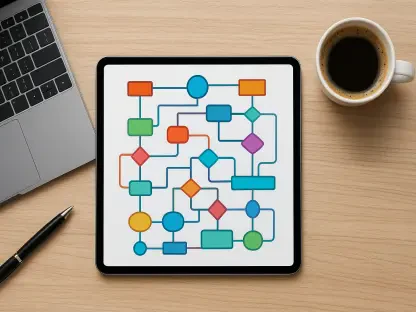
Building on this speed, the Ellie engine connects these retrieved insights to the actual workflows required to execute tasks. By bridging the gap between raw data and operational action, Ellie has reduced manual effort by roughly 30%. This dual-tool approach has fundamentally altered the backend of customer service, resulting in an 80% improvement in response times. These gains allow staff members to move away from clerical duties and focus on more complex, consultative interactions that provide greater value.
Automating Complex Risk Frameworks: The ERICA System
The introduction of ERICA in early 2026 marked a pivotal expansion of automation into the sophisticated field of enterprise risk management. Before this deployment, risk assessments were a labor-intensive endeavor, often requiring analysts to manually aggregate data and score potential threats over the course of ten business days. ERICA has modernized this process by automating the collection and analysis of risk data, completing the same evaluations in as little as five minutes to a single day.
This drastic reduction in processing time is accompanied by a 99% decrease in the manual effort required for risk reviews. Consequently, the risk management team has shifted its focus from administrative data entry to the strategic mitigation of identified threats. By leveraging ERICA to handle the repetitive aspects of risk scoring, the company ensures that its most skilled analysts are dedicated to high-level decision-making. This transformation strengthens the overall security posture of the organization without adding to its operational overhead while maintaining a competitive edge.
The Broader Impact on Organizational Agility
Shifting From Manual Research to Strategic Intelligence
The transition toward automated intelligence represents a fundamental change in corporate philosophy, prioritizing employee empowerment over simple automation. By utilizing the UiPath Platform, the company has created an environment where staff are no longer burdened by the mechanical aspects of information gathering. This shift fosters an agile organizational culture that is capable of adapting to the rapid fluctuations of the modern telecommunications market. Employees are encouraged to use these AI tools to enhance their own productivity rather than seeing them as a threat.
Moreover, this shift has reclaimed tens of thousands of productive hours, which are now being reinvested into innovation and service improvement. The organization is now better equipped to handle the increasing demands of the digital economy by utilizing a more data-driven and efficient workforce. This strategy ensures that the company can scale its operations seamlessly as the demand for connectivity grows. By focusing on strategic intelligence, the firm is building a sustainable model for growth that relies on the synergy between human talent and the latest advancements in modern technology.
Improving Service Delivery: The Path Forward
The external impact of these internal efficiencies is most clearly visible in the enhanced level of consumer trust and service reliability. By ensuring that support teams have immediate access to pre-approved and accurate data, the organization provides a more consistent and personalized experience for its subscribers. This level of responsiveness is crucial in a competitive landscape where customer loyalty is closely tied to the speed and accuracy of service delivery. The holistic automation strategy ensures that every point of contact is informed by real-time intelligence and corporate standards.
In the past, the strategic integration of KAI, Ellie, and ERICA successfully demonstrated how AI could be leveraged to achieve massive gains in productivity. The next phase of this journey should involve expanding these tools into predictive analytics to anticipate customer needs before they arise. It is recommended that the organization continues to invest in upskilling its workforce to master these advanced AI-human interfaces. By maintaining this forward-looking approach, the firm proved that digital transformation is a process that requires both technological innovation and a cultural commitment.