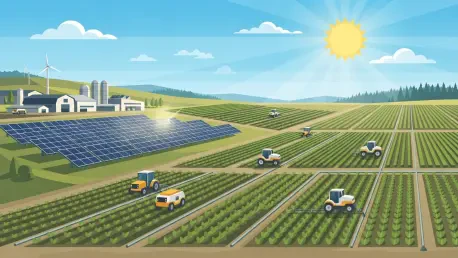

Smart irrigation systems can now activate based on real-time soil tension and weather forecasts without requiring any direct human intervention. This capability is merely the tip of the iceberg in a massive digital transformation that is fundamentally altering how food is grown across the planet. As we navigate 2026, the transition from traditional, labor-intensive methods toward a sophisticated data-driven model is accelerating at an unprecedented pace. The agricultural landscape is being reshaped by precision platforms that integrate advanced hardware and software to optimize every phase of the production cycle. With the global population continuing its upward trajectory and climate variability creating new challenges for traditional farming, these digital tools have become indispensable. The market for these platforms is expanding rapidly, moving from its 2025 valuation of $18.81 billion toward a projected $21.65 billion by the end of this year. This momentum signals a global commitment to efficiency.
The Technological Architecture: From Sensors to Decision Systems
A smart farming platform functions as a centralized digital ecosystem that harmonizes disparate technologies into a cohesive operational strategy. At the core of this architecture lie Internet of Things sensors that provide granular, real-time data on soil chemistry, moisture levels, and localized weather conditions. Complementing these ground-level insights is high-resolution satellite imagery, which allows for the continuous monitoring of crop health and land use patterns across thousands of acres. Artificial intelligence and machine learning algorithms then ingest this raw data to identify subtle patterns that the human eye might miss, such as early-stage nutrient deficiencies or emerging pest infestations. These systems do more than just display information; they offer predictive capabilities that help producers anticipate yield outcomes with remarkable accuracy. By synthesizing data from multiple sources, these platforms create a comprehensive digital twin of the farm environment.
This technological integration facilitates a shift away from traditional management methods that treat entire fields as uniform blocks of land. Instead, site-specific management allows for the precise application of resources based on the unique needs of individual zones or even single plants. Through the use of automated machinery and robotics, fertilizers and pesticides can be deployed with surgical accuracy, ensuring that no square foot of soil is over-treated or neglected. This level of precision significantly reduces the environmental footprint of large-scale operations by preventing chemical runoff and conserving precious water resources. Furthermore, the ability to adjust irrigation levels automatically in response to atmospheric changes ensures that crops reach their full biological potential without unnecessary waste. By maximizing the productivity of every acre, these precision systems allow agricultural businesses to remain competitive in a market where margins are often thin.
Socioeconomic Drivers: Meeting Global Food Demand
The primary catalyst driving the adoption of these precision tools is the staggering increase in global food demand, exacerbated by rapid urbanization. As more individuals move into metropolitan centers, the global food supply chain faces the dual challenge of declining rural labor and the need for higher production volumes. Economic data illustrates this pressure clearly, with food expenditures in major markets like the United States reaching trillions of dollars annually, reflecting a consistent year-over-year increase. To satisfy this commercial appetite, the agricultural sector must scale its output significantly without further depleting the natural resources that sustain it. Precision platforms address these pressures by optimizing resource allocation and ensuring that the remaining agricultural workforce can manage larger operations with greater efficiency. This transformation is not merely about increasing yields but about stabilizing a supply chain that must feed billions of people.
Beyond simple productivity gains, the economic necessity of precision agriculture is becoming a defining factor for long-term viability in the industry. By ensuring that expensive inputs like energy, water, and fertilizers are used with maximum efficiency, farmers can drastically lower their overhead costs. This focus on surgical accuracy helps mitigate the financial risks associated with climate variability and sudden crop loss, which have become more frequent in recent years. As governments worldwide prioritize food security, they are increasingly offering incentives for AgTech adoption, further accelerating the transition toward smart systems. The move toward digital integration is therefore becoming a standard requirement for any operation seeking to maintain profitability and sustainability. These platforms empower producers to make data-backed decisions that protect their bottom line while ensuring a more stable and scalable food supply for an increasingly urbanized global population.
Strategic Evolution: Paving the Way for Sustainable Agriculture
The transition to these digitized frameworks required stakeholders to invest heavily in rural broadband and high-speed data infrastructure. Producers who successfully navigated this period established clear protocols for data ownership and security, ensuring that the insights generated on their land remained a private asset. By prioritizing the integration of AI-driven analytics and autonomous hardware, the sector successfully moved toward a model that valued precision over sheer volume, which proved essential for long-term viability. Moving forward, the focus remained on refining these technologies to ensure they were accessible to farmers of all scales, not just large industrial operations. These advancements laid the groundwork for a more resilient food system that could withstand economic shocks and environmental pressures. The commitment to data-driven farming proved to be the most effective solution for securing the global food supply while minimizing the environmental impact.
Stakeholders who adopted these strategies ultimately realized that the key to success was the seamless interoperability between different software providers. The industry moved past the stage of fragmented tools and adopted universal standards that allowed data to flow freely from a drone to a cloud server and then to an automated tractor. This connectivity transformed the day-to-day life of a farmer, who transitioned from a manual laborer to a data analyst and system manager. As the cost of sensors and satellite subscriptions decreased, even smaller family-owned farms were able to implement these strategies, ensuring that the technological divide in agriculture began to close. Looking back, the period leading up to 2030 was a turning point where the global community decided that technology was the primary tool for environmental stewardship. The successful implementation of these precision platforms meant that the industry could finally meet the demands of a growing population.