
Global technology leaders are now competing on the strength of cross-device synergy rather than the mechanical reliability or isolated performance of individual hardware products. At the IFA 2026 trade show in Berlin, the atmosphere shifted from traditional home appliance showcases to a sophisticated demonstration of integrated living. This year has solidified the realization that the digital and physical worlds are no longer distinct categories but parts of a single, fluid experience. The traditional boundaries between a person’s mobile life, their residential environment, and their mode of transportation have essentially vanished. This evolution was not sudden but represents the culmination of years of software unification and hardware refinement that finally reached a critical mass this season.
The massive halls of the Messe Berlin, which once prioritized refrigerators and televisions, are now dominated by intelligent transport solutions and pervasive artificial intelligence. The presence of major Chinese tech firms alongside European legacy brands has created a unique friction that is accelerating innovation at an unprecedented pace. Consumers are no longer asking about battery life or horsepower in isolation; they are inquiring about how their vehicle communicates with their kitchen and how their phone manages the transition between the two. This shift highlights a fundamental change in consumer expectations, where the value of a product is measured by its ability to participate in a broader, intelligent network.
The Convergence of Lifestyle and Mobility
The current technological landscape is defined by the absolute merging of personal mobility and domestic life. This convergence is driven by the understanding that a person’s digital identity should remain consistent regardless of their physical location. As the “People-Vehicle-Home” (PVH) ecosystem moves into the mainstream, manufacturers are forced to rethink their entire product development cycles. It is no longer enough to build a great car or a high-end smartphone; these products must share a common logic and a single point of interaction. This structural shift is forcing legacy industries to adopt the fast-paced development cycles of the software world, leading to a more dynamic and responsive market.
The Rise of the Unified PVH Strategy
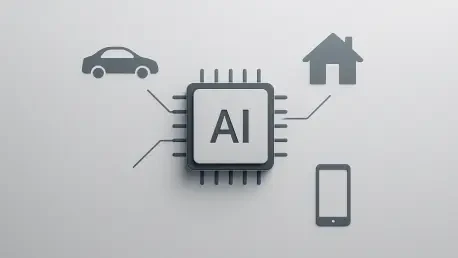
The PVH strategy has officially moved from a conceptual marketing framework to a tangible market reality during this year’s global exhibitions. For years, the industry spoke about the “connected life” in theoretical terms, but the hardware being shipped today actually delivers on that promise. The current era is characterized by a single AI framework that governs every interaction, allowing a vehicle to recognize a user’s schedule and pre-condition the home environment accordingly. This level of synchronization is achieved through deep integration at the kernel level of operating systems, ensuring that data flows securely and instantly between diverse hardware nodes.
This breakthrough signifies a historic moment where the vehicle is finally treated as a holistic digital product rather than an assembly of mechanical parts with a screen attached. Modern cars are now being designed from the ground up to function as mobile extensions of the living room, complete with the same apps, security protocols, and interface designs found in the home. The integration of high-speed connectivity and localized edge computing has allowed this ecosystem to function with zero latency. As a result, the user experience is now a seamless loop, where the transition from the office to the car and then to the home occurs without any interruption in digital services or personal preferences.
Xiaomi’s Transition to a Global Tech Giant
The evolution of Xiaomi from a manufacturer of affordable smartphones to a dominant force in the comprehensive lifestyle technology sector is now complete. Their massive physical presence in Berlin serves as a testament to their maturity and their commitment to leading the next decade of consumer technology. By effectively bridging the gap between personal electronics and intelligent mobility, they have created a blueprint for how a modern technology brand should operate. This transition was anchored by a multi-billion dollar investment in automotive research and development, which has finally borne fruit in a way that resonates with international audiences.
The company’s strategy involves using its established dominance in the smartphone and smart home markets as a foundation for its automotive ambitions. By creating a familiar environment for their millions of existing users, they have lowered the barrier to entry for their new vehicle models. The commitment shown at recent trade events demonstrates that they are not merely dabbling in the car industry but are intent on redefining it. This approach has allowed them to capture a unique segment of the market that values technical sophistication and ecosystem compatibility above traditional automotive prestige. Their success signals a shift where tech-first companies are becoming the primary architects of the modern driving experience.
Software and Intelligence as Core Drivers
At the heart of this entire transition lies the supremacy of software over hardware. In the current market, the physical attributes of a device are secondary to the intelligence that manages it. The complexity of modern life requires an operating system that can handle thousands of variables across different environments simultaneously. This has led to a focus on creating robust, scalable software architectures that can live on a watch, a wall-mounted panel, or a high-performance vehicle computer. The intelligence layer is now the primary differentiator, determining which ecosystems will thrive and which will become obsolete.
HyperOS and the Closed-Loop Experience
The cornerstone of this integrated lifestyle is HyperOS, a unified software base designed to provide a perfectly consistent user experience across every imaginable device. Whether a consumer is adjusting their home lighting, checking a notification on their wrist, or navigating through heavy traffic, the interface remains identical and the data remains synchronized. This closed-loop system is essential for maintaining user loyalty, as it creates a environment where every new device added to the ecosystem increases the value of the ones already owned. The synchronization of preferences and biometric data ensures that the technology adapts to the human, rather than the other way around.
This strategic rollout of a unified operating system has allowed companies to leverage past successes in personal electronics to fuel present growth in the automotive sector. The data gathered from years of smart home usage is now being used to refine the way vehicles interact with their drivers. This synergy ensures that the introduction of intelligent vehicles is not a standalone event but a natural extension of a user’s existing digital life. By maintaining a strict focus on software consistency, manufacturers are able to provide updates and new features simultaneously across their entire product line, keeping the ecosystem fresh and relevant for the consumer.
Xiaomi’s Strategic European Expansion
The aggressive targeting of the European market represents a significant pivot for the industry, as Asian tech giants move to challenge legacy automakers on their home turf. By showcasing the SU7 and YU7 models in major European cities, these companies are demonstrating that their technology is ready for global consumption. The signing of agreements with major German dealer groups indicates a long-term commitment to infrastructure and service, which are critical for gaining the trust of European buyers. This roadmap points toward a full-scale launch by 2027, with a focus on providing a level of cross-device integration that traditional brands currently cannot match.
Legacy European manufacturers are now finding themselves in a defensive position, struggling to replicate the software-heavy approach of their new competitors. The entrance of these tech-centric brands into the European automotive space is forcing a rapid re-evaluation of what a premium vehicle actually is. It is no longer defined solely by the quality of the leather or the smoothness of the suspension, but by the intelligence of its navigation and the depth of its integration with the owner’s digital life. This competition is driving a wave of innovation that is ultimately benefiting the consumer through better products and more competitive pricing across the entire continent.
XPeng and the Era of Physical AI
While many brands focus on the breadth of their device catalogs, others are pushing the boundaries of what is known as physical AI. This concept involves vehicles that are designed to perceive and interact with the physical world using human-like intelligence and reasoning. Their latest models utilize advanced processing chips and large-scale language models that allow the vehicle to understand complex social cues and traffic patterns in real time. This ensures that the car is not just a connected machine but an active participant in the ecosystem, capable of making autonomous decisions that prioritize both safety and efficiency.
The integration of these advanced AI models allows vehicles to adapt to different international traffic rules and driving cultures simultaneously. This level of deep intelligence is necessary for the vehicle to function as a truly smart node within the broader PVH network. Instead of relying on pre-programmed responses, these AI systems learn from every interaction, constantly improving their ability to assist the driver and manage the vehicle’s resources. This focus on “thinking” hardware represents a significant leap forward, moving the industry toward a future where mobility is defined by the quality of the silicon and the sophistication of the neural networks behind the wheel.
The Future of Industrial Connectivity
The final transition we are witnessing is the total erasure of the silos that once separated different sectors of the technology industry. The car has transformed into a mobile smart space, and home appliances have become intelligent nodes in an AI-controlled network. This fundamental shift has changed the value proposition for the modern consumer, who now prioritizes digital connectivity and intelligence over mechanical specs. In this new landscape, the companies that control the operating systems and the AI models are the ones that control the market, regardless of whether they started as phone makers or car manufacturers.
The Erasure of Traditional Industry Silos
The erasure of traditional industry silos has fundamentally altered the competitive landscape of the technology sector. In previous years, a company that made washing machines did not compete with a company that made electric sedans, but those days have passed. Today, every device in a consumer’s life is competing for a spot in the same unified ecosystem. This has led to unexpected partnerships and a blurring of corporate identities, as firms race to provide a complete, end-to-end lifestyle solution. The car is no longer just a mode of transport; it is a mobile office, a gaming center, and a component of the home security system.
This trend has de-prioritized traditional hardware specifications in favor of software-driven experiences. When consumers evaluate a new product, they are increasingly concerned with how well it “plays” with their other devices. This has created a massive advantage for companies that own the entire stack, from the silicon in the devices to the cloud infrastructure that manages the data. The ability to control the user experience across multiple domains allows these firms to offer a level of convenience that was previously impossible. As these silos continue to crumble, the industry is moving toward a state of total connectivity where every object in the physical world is a part of the digital network.
Robotics and the Extension of Smart Mobility
The definition of what constitutes a vehicle is expanding to include humanoid robotics and other autonomous systems. Recent innovations show humanoid robots sharing the same artificial intelligence “brain” as electric vehicles, allowing them to navigate complex environments with the same precision as a self-driving car. This suggests that the technology driving the automotive industry will soon be assisting with household tasks, workplace productivity, and elderly care. This convergence of robotics and automotive engineering is the next logical step in the evolution of smart mobility, moving beyond the road and into every aspect of daily human life.
This fluid category of smart mobility represents a future where the distinction between a car and a robot is merely a matter of form factor. The underlying intelligence that allows a car to navigate a busy intersection is the same intelligence that allows a robot to navigate a cluttered kitchen. As these technologies mature, they will become an invisible part of the infrastructure, providing support and convenience without requiring active management from the user. This expansion into robotics reinforces the idea that the PVH ecosystem is not just about gadgets, but about creating a comprehensive support system that follows the individual through every part of their day.
Ecological Competition as the New Standard
The global market moved into a phase of ecological competition where the success of a brand was no longer tied to a single high-quality product. Manufacturers discovered that selling a standalone device, no matter how advanced, was no longer sufficient to maintain a market lead. Instead, the strength of a brand became dependent on the depth of the linkage between its various hardware offerings and the orchestration of the user’s digital life. Those who failed to build a cohesive ecosystem found themselves marginalized, while those who embraced the interconnected model of the people-vehicle-home spectrum defined the new industry standard.
To remain relevant, organizations had to prioritize the development of cross-platform software and shared AI models over traditional hardware cycles. The actionable next step for industry participants involved securing strategic partnerships that bridged the gap between home automation and automotive technology. Investors and developers shifted their focus toward companies that demonstrated a mastery of data synchronization and user interface consistency. As the transition concluded, it became clear that the leaders of the next decade would be those who viewed the consumer not as a buyer of separate products, but as a resident of a unified, intelligent environment. This period established that the future of technology was not in the devices themselves, but in the seamless harmony between them.