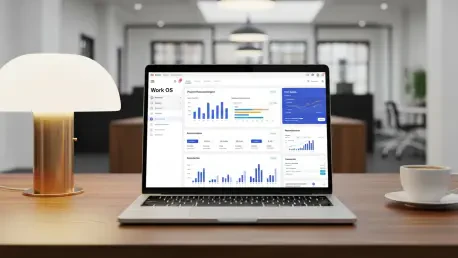

The architecture of corporate productivity has undergone a fundamental transformation as organizations move away from passive data repositories toward dynamic execution environments that prioritize momentum over mere storage. For years, the enterprise sector struggled with the limitations of disconnected spreadsheets and overly rigid resource planning systems that failed to capture the fluid nature of modern team collaboration. The emergence of Collaborative Work Management (CWM) technology has successfully bridged this operational chasm by offering a centralized layer where strategy meets daily activity. This review analyzes the current state of these systems, evaluating their shift from database-centric designs to high-velocity execution platforms that empower teams to scale without the traditional administrative burdens of legacy software.
The maturation of the CWM market reflects a broader shift in how digital labor is organized, moving from the “what” of data to the “how” of delivery. Modern platforms are no longer just places to hold information; they have become the cognitive engines of the enterprise, capable of interpreting intent and automating the bridge between a request and its fulfillment. This review will explore the technical underpinnings of this shift, the integration of artificial intelligence into the core workflow, and the strategic implications for organizations operating in an increasingly decentralized and automated global economy. By examining the functional architectures and real-world applications of these tools, one can gain a deeper understanding of why CWM has become the mission-critical layer for any business aiming to maintain a competitive edge in 2026.
Evolution of Collaborative Work Management Systems
The technological trajectory of Collaborative Work Management began with the basic premise of making data accessible, but it has evolved into a sophisticated discipline focused on accelerating the pace of work. Early iterations were often little more than cloud-based spreadsheets that allowed for concurrent editing, yet they lacked the structural logic required to drive complex projects. The true breakthrough occurred when the industry recognized the inherent limitations of a database-centric organization model. While tools like the early versions of Airtable were revolutionary in their ability to model and connect data, they often required users to act as architects rather than executors. The modern landscape has corrected this by prioritizing “execution-first” frameworks where the interface is designed to push tasks toward completion rather than simply cataloging them.
This transition from static data storage to dynamic task execution represents a paradigm shift in software engineering priorities. In the previous era, a project manager might spend hours ensuring that every cell in a database was correctly linked, often at the expense of actually managing the team. Today, CWM platforms utilize “Work OS” models that serve as a foundational layer for all business operations. This allows for a more fluid interaction between different types of data, such as connecting high-level strategic goals directly to the minute details of a daily task list. By bridging the gap between traditional spreadsheets and complex, often inaccessible Enterprise Resource Planning (ERP) systems, CWM technology has democratized sophisticated project management tools, making them available to marketing departments, sales teams, and creative agencies alike.
Moreover, the evolution of these systems has been driven by the need for greater transparency in a world of remote and hybrid work. In a centralized office, “work about work”—the status updates, check-ins, and follow-ups—could often happen organically. In a digital-first environment, these interactions must be codified within the software to ensure that no project loses momentum. The current generation of CWM tools addresses this by moving away from the isolated “silos” of information that plagued earlier systems. Instead, they promote a horizontal flow of data where information from one department automatically informs the actions of another. This evolution marks the end of the era where software was a passive tool and the beginning of an era where the software is an active participant in the workflow.
Core Components and Functional Architectures
Intelligent Workflow Automation
The heart of a modern Collaborative Work Management system lies in its ability to automate the mundane, allowing human capital to focus on high-value creative and strategic tasks. This is achieved through sophisticated automation engines that utilize logic-based triggers—often referred to as “If-This-Then-That” (IFTTT) sequences—to handle cross-departmental handoffs without human intervention. For instance, when a creative asset is marked as “complete” in a production board, the system can automatically notify the legal team for review, attach the necessary documentation, and update the project’s status on the executive dashboard. This reduces the “context switching” that often leads to errors and delays, ensuring that the momentum of a project is maintained throughout its entire lifecycle.
In 2026, these automation capabilities have been significantly enhanced by the introduction of AI-driven “Digital Workers.” These are not merely scripts that run in the background but are intelligent agents capable of monitoring work in real-time to identify potential bottlenecks. If a particular team member is consistently over-assigned or if a deadline is approaching without sufficient progress, the Digital Worker can proactively suggest a redistribution of tasks or flag the risk to leadership. This shift from reactive to proactive management is a defining characteristic of modern CWM architectures. The performance of these automation engines is measurable in the drastic reduction of manual data entry, which historical studies have shown can account for up to 20 percent of a knowledge worker’s day.
Furthermore, the integration of these automations into the core architecture ensures that they are not just “add-ons” but are fundamental to the way data is processed. These systems are designed to handle complex, multi-step workflows that can span several weeks or months. By providing a visual interface for building these automations, platforms like monday work management have made it possible for non-technical users to design sophisticated business processes. This democratization of automation logic is a critical differentiator in the current market, as it allows those who are closest to the work to be the ones who define how that work should be optimized and accelerated.
Multi-Dimensional Data Visualization
Visibility is the currency of modern leadership, and CWM platforms provide this through high-performance dashboards that aggregate real-time data into multiple visual dimensions. The ability to view the same set of data as a Gantt chart, a Kanban board, a calendar, or a workload view is not just a matter of aesthetic preference; it is a functional necessity for diverse teams. A project manager may need the temporal precision of a Gantt chart to manage dependencies and milestones, while a developer may prefer a Kanban board to track the flow of specific tickets. The underlying database remains the same, but the multi-dimensional visualization layer allows every stakeholder to interact with the data in a way that is most relevant to their specific role.
The technical challenge of these visualizations is the need for real-time synchronization across massive datasets. In an enterprise-scale implementation, a single dashboard might be pulling data from hundreds of different boards across multiple departments. Ensuring that this data is reflected accurately and instantly requires a robust back-end architecture that can handle high volumes of concurrent requests. These dashboards provide leaders with portfolio-level visibility, allowing them to see the health of an entire department at a glance. This “bird’s eye view” is crucial for strategic decision-making, as it reveals patterns and trends that might be invisible at the individual task level, such as systemic delays in a specific region or budget overruns across a certain category of projects.
Moreover, the significance of these visualization tools extends to resource planning and workload management. By visualizing the capacity of each team member across various projects, managers can prevent burnout and ensure that the most critical tasks are staffed appropriately. The Workload view, in particular, has become an essential tool for maintaining a healthy and productive workforce. It allows for dynamic adjustments—if a team member is overloaded, a manager can simply drag and drop a task to another person directly within the visualization, and the underlying data and notifications are updated automatically. This level of fluidity in resource management was previously impossible with static spreadsheets or disconnected project tracking tools.
Current Trends and Technological Innovations
The most significant recent development in the CWM sector is the integration of native AI Blocks directly into the workspace. These are modular components that allow users to apply artificial intelligence to their data without needing any coding knowledge. For example, sentiment detection blocks can analyze the comments and updates on a project to provide an objective measure of team morale or client satisfaction. Summarization blocks can take a long thread of discussion and distill it into three key action items, saving time for executives who need to stay informed without reading every detail. This use of AI moves beyond the “chatbot” model and into a more integrated “assistant” model where the technology is woven into the fabric of the work itself.
Another major trend is the evolution toward a “Work OS” model, where the platform serves as a centralized hub for all business operations rather than just a project tracker. This means that instead of having separate tools for CRM, HR, marketing, and software development, organizations are building these functions directly on top of the CWM layer. The advantage of this approach is that all data remains connected and searchable in one place. When a sales lead is closed in the CRM portion of the platform, it can immediately trigger a “New Client Onboarding” workflow in the operations portion, ensuring a seamless transition. This centralization reduces the “SaaS bloat” that many companies face, where they are paying for dozens of different subscriptions that do not communicate with each other.
Furthermore, there is an increasing emphasis on data sovereignty and the rise of open-source alternatives like NocoDB and Baserow. For industries with heavy regulatory requirements, such as finance or healthcare, the ability to self-host their work management data is a critical security feature. These open-source platforms provide the same “smart spreadsheet” functionality as proprietary tools but allow the organization to maintain full control over where the data is stored and who has access to it. This trend toward transparency and control is a direct response to the growing concerns over data privacy and the need for GDPR compliance. It represents a maturation of the market where users are demanding not just functionality, but also accountability and security from their software providers.
Real-World Applications and Sector Integration
The deployment of CWM technology has seen its most rapid adoption in sectors that require high levels of cross-functional coordination, such as marketing and software development. In a typical marketing agency, a single campaign might involve copywriters, designers, social media managers, and data analysts, all of whom need to stay aligned. CWM platforms facilitate this by creating “request-to-delivery” flows. In these scenarios, a standardized form is used to collect incoming requests from clients or other departments. The submission of this form then triggers an automated routing process where the request is sent to the appropriate creative lead for approval, a resource is allocated based on current workload, and a project timeline is automatically generated.
Software development teams have also found great value in CWM platforms, particularly in how they bridge the gap between technical and non-technical stakeholders. While developers might live in Jira or GitHub, the rest of the business often needs a more accessible way to track the progress of new features or bug fixes. CWM tools can integrate with these technical platforms, pulling in live data and presenting it in a format that product managers and executives can understand. This synchronization ensures that the entire company is moving in the same direction and that there is a “single source of truth” for the product roadmap. The ability to manage global portfolios across multiple time zones is another key application, as these platforms provide a centralized digital workspace that is accessible 24/7, regardless of geographical location.
Sales operations are also being transformed by the integration of CWM tools with traditional CRM data. By bringing collaborative features to the sales process, teams can better manage complex deals that require input from legal, finance, and engineering. Instead of having these conversations in disparate email threads, they happen directly on the “deal card” within the CWM platform. This ensures that everyone involved has the full context of the negotiation and can provide their input more efficiently. The success of these implementations is often measured by a significant reduction in the sales cycle and an increase in the accuracy of revenue forecasting, as the data is always up-to-date and reflects the actual state of the pipeline.
Technical Hurdles and Market Obstacles
Despite the rapid advancement of CWM technology, significant challenges remain, most notably the issue of “configuration tax.” This refers to the excessive amount of time teams often spend building and maintaining the system rather than actually using it to perform their work. When a platform is too flexible, it can become a burden, as users feel the need to constantly tweak their workflows or create complex new automations. The industry is currently working to solve this by providing more “opinionated” templates and pre-built industry solutions that offer a best-practice framework from day one. The goal is to move toward a “no-code” experience that is truly accessible to everyone, rather than just those with a logical or technical mindset.
Regulatory and security issues also present ongoing obstacles, especially for global enterprises. While GDPR has established a baseline for data protection, many regions are introducing even more stringent data residency requirements. This means that a CWM provider must be able to offer regional data storage options and granular, cell-level permissions to ensure that sensitive information is only accessible to those who strictly need it. Implementing these features in a way that does not degrade the performance of the platform or the user experience is a major technical hurdle. Organizations are increasingly looking for platforms that offer robust audit logs and the ability to set complex permission hierarchies that can mirror the structure of a large, multi-national corporation.
Finally, the migration process from legacy database tools to modern execution platforms continues to be a point of friction. Many companies have decades of data locked in old Excel files or on-premise SharePoint sites, and moving this information into a new CWM system can be a daunting task. While many platforms offer “import” tools, these often struggle with complex formulas or non-standard data types. The ongoing development of more sophisticated migration assistants and API-first architectures is aimed at making this transition smoother. The challenge is not just moving the data, but also retraining the workforce to think in terms of “workflows” and “automations” rather than just “lists” and “tables.”
Future Outlook and Predictive Analysis
The future of Collaborative Work Management will be defined by the integration of predictive analytics, moving the technology from a record of what has happened to a forecast of what will happen. By analyzing historical performance data, future systems will be able to flag project risks before they manifest as actual bottlenecks. For example, if the data shows that a specific type of creative task usually takes three days longer than estimated when assigned to a certain sub-team, the system can proactively adjust the project timeline or suggest additional resources at the outset. This “predictive project management” will allow organizations to be much more realistic in their planning and will significantly improve the reliability of their delivery schedules.
Another exciting frontier is the development of autonomous workflows that can self-optimize based on performance data. Instead of a human having to manually create an automation, the platform might observe that a certain sequence of tasks is performed repeatedly and suggest an automated workflow to handle it. Over time, these autonomous systems could even begin to redistribute work based on real-time productivity metrics, ensuring that the entire organizational “machine” is running at peak efficiency. This does not mean that human managers will become obsolete; rather, their role will shift from managing the “mechanics” of work to managing the “intent” and “strategy” behind it, while the software handles the tactical execution.
The long-term impact of CWM on the decentralized workforce will also be profound, as it provides the digital infrastructure necessary for a truly global labor market. As these platforms become more intelligent and more integrated, the barriers of geography and time zone will continue to fade. CWM technology will play a central role in shaping the future of digital labor, providing a transparent and equitable way to track contributions and reward performance in a world where “going to work” means logging into a platform rather than entering a physical building. This shift will likely lead to new models of organizational structure, where fluid “talent clouds” can be assembled and disassembled around specific projects with unprecedented speed and efficiency.
Assessment of the Modern Work Management Landscape
The shift from simple data organization to complex work execution has fundamentally altered the expectations for enterprise software. Collaborative Work Management has matured from a niche category of productivity tools into a mission-critical business layer that is essential for any organization looking to scale in an increasingly automated economy. The assessment of the current state of this technology is overwhelmingly positive, as it has proven its ability to deliver a significant return on investment by reducing administrative overhead and improving the speed and quality of project delivery. The most successful platforms have been those that can balance the need for deep technical functionality with a user experience that is intuitive and accessible for everyone.
Throughout the evolution of these systems, the most important lesson has been that technology must serve the workflow, not the other way around. The early mistakes of creating overly complex databases have been replaced by a focus on “momentum” and “execution,” which has resonated with teams across all sectors. While challenges like configuration tax and regulatory compliance remain, the industry is making steady progress in addressing these issues through better design and more robust security features. The impact on organizational ROI is clear: companies that embrace CWM technology are able to move faster, adapt more quickly to market changes, and maintain a higher level of employee engagement by removing the “drudgery” of manual status tracking and administrative busywork.
The future of this technology was once a matter of speculation, but it has now become a central pillar of the modern corporate strategy. The ability to link high-level strategic goals with daily tactical execution is no longer a luxury; it is a necessity for survival in a globalized, digital-first marketplace. As AI and predictive analytics continue to be integrated into these platforms, the value they provide will only grow. Organizations that invested in these systems early have already seen significant benefits, and those that are just now beginning their journey will find a mature and highly capable landscape ready to support their growth. The verdict on Collaborative Work Management is that it has successfully transitioned from a “nice-to-have” tool to the indispensable operating system for the modern enterprise.
The transition from traditional, siloed project management to an integrated Work OS has been characterized by a notable reduction in organizational friction. Looking back at the shifts observed, it was evident that the primary value of CWM was not in the storage of data, but in the visibility and speed it provided to every level of the company. Companies that successfully migrated from legacy systems found that their internal communication became more purposeful, and their decision-making was consistently grounded in real-time evidence rather than anecdotal reports. The initial hurdles of adoption were quickly outweighed by the gains in efficiency, as teams moved from a reactive posture to one of proactive orchestration.
Moving forward, the focus for organizations should be on deepening the integration of these platforms into every facet of their operational DNA. It was once sufficient to use CWM for specific project tracking, but the new standard required a holistic approach where every business process, from finance to HR, was centralized on the execution layer. The actionable step for leaders was to evaluate their current “configuration tax” and seek ways to simplify their setups through the use of intelligent AI blocks and pre-configured industry templates. By prioritizing the “Digital Worker” as a partner in productivity, firms ensured they were not just keeping up with the pace of change but were actively defining the new standards of digital labor.
The maturation of the CWM landscape also highlighted the necessity of a resilient data strategy that prioritized both access and security. As organizations navigated the complexities of global data residency and granular permissions, the choice of a platform became as much about trust and compliance as it was about features. The forward-looking perspective emphasized that the winners in the next phase of the digital economy would be those who could balance the fluidity of a decentralized workforce with the rigors of enterprise-grade governance. This evolution ensured that while work could happen anywhere, it remained secure, transparent, and aligned with the overarching strategic mission of the firm.