
Retail calendars rarely bend, yet ingredient declarations shift at the eleventh hour, cartons scuff on cross-docks, and a national promo can morph into a regional offer before the ink dries on the planogram. These jolts collide with production realities: high-speed lines optimized for long runs, validated bill-of-materials locked weeks ahead, and changeovers that risk eroding OEE and delivery promises. The result is a familiar bind—either stop the line to chase exceptions or ship late and absorb penalties. Co-packing reframes that dilemma. By moving select packaging tasks to near-market partners, brands keep conversion assets fully loaded while shaping finished goods to real-time needs. This is not a workaround for poor planning; it is a planned “postponement” layer that absorbs volatility without pushing shocks upstream. When built into the network—commercial terms, data flows, QA, and reserved capacity—co-packing turns turbulence into localized work, not system-wide disruption.
The Case for Decoupling Production and Packaging
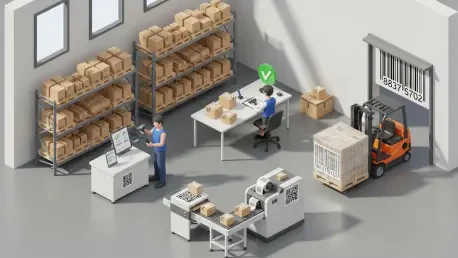
Treating packaging as a late-stage, configurable step separates what must remain stable from what can flex. Core lines run base SKUs at economic rates; near-market co-packers handle labeling, kitting, and market-specific inserts as demand clarifies. The connective tissue is digital and procedural: EDI orders signal work releases; a WMS allocates pre-approved components; GS1-128 labels, SSCCs, and ASN data align with retailer portals; and QA plans define sampling and traceability. Some sectors add UDI or serialized QR that link to dynamic instructions-for-use pages. With this architecture, a compliance update in Quebec or a retailer-specific bundle in Texas no longer threatens master schedules. The physical design helps too—generic cartons with printable panels, multi-language leaflets, and tamper-evident seals compatible with semi-automatic lines—so the “last mile of packaging” is fast, auditable, and repeatable.
Building on this foundation, the economic case becomes clearer. Every avoided line stoppage protects throughput and labor stability; every deferred changeover preserves OEE. Finished goods staged as “near-finished” inventory shorten speed to shelf because only labeling or kit assembly stands between stock and a purchase order. Reverse logistics shrink as rework moves forward, closer to the point of sale and the problem. Retailer readiness improves when co-packers can print store-compliant barcodes, apply on-pack coupons, or apply holiday livery in days, not weeks. Quality does not have to slip: vision inspection catches mislabels, in-line scales verify counts, and digital travelers capture lot genealogy. Moreover, cost visibility tightens when co-pack statements detail touches by SKU, letting planners weigh a small co-pack batch against a full factory rerun. Decoupling is not a theory; it is a governance choice backed by process control and modular packaging design.
Proof in Practice: Three High-Impact Scenarios
Consider a multilingual rollout in smaller markets. A beverage maker locked artwork early to hit a continental launch, only to face a late allergen labeling tweak and retailer font-size rules in two countries. Instead of pausing a PET line built for 60,000 bottles per hour, the company released base-labeled product and issued revised over-stickers to a regional co-packer. Thermal-transfer printers produced country-specific labels with GS1-compliant barcodes, while QR codes routed consumers to updated nutrition pages. Cartons were opened, relabeled, and re-taped under a documented AQL plan, and ASNs reflected new GTINs by destination. In parallel, a personal care brand commissioned gift bundles without touching the main fill line: a co-packer assembled trial-size duos, applied heat-shrink bands and instant redeemable coupons, and built mixed-display pallets tailored to big-box resets. Both cases met on-time delivery and sidestepped disruptive factory changeovers.
The same playbook recovered value after transit damage and set up a more resilient run path. A shipment of cosmetics arrived with crushed outers and scuffed trays; a local partner triaged units, reboxed salable goods, and reprinted labels fed by the ERP’s item master, preserving barcode integrity and avoiding write-offs. From that experience, brands codified next steps: pre-qualify two co-pack sites per region with reserved surge hours, integrate them into the ERP and TMS for real-time inventory visibility, and standardize components for late-stage differentiation—blank panels, universal inserts, and tamper seals compatible with semi-automatic applicators. Commercial terms baked in escalation paths and KPI gates for rework lead time, first-pass yield, and ASN accuracy. Teams were trained to trigger co-pack work orders when specific thresholds were hit—regulatory change, promo pivot, or damage event—so exceptions flowed into a ready channel. Treated as a planned buffer, co-packing had safeguarded revenue, protected retail relationships, and kept lines producing while markets shifted.