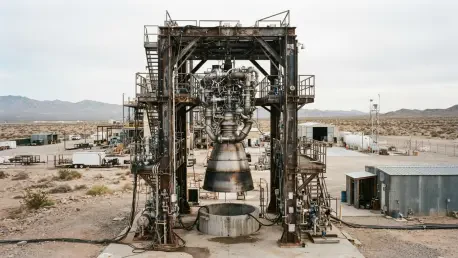

The emergence of high-growth reusable rocket companies in China is being driven by the necessity to deploy massive national internet constellations similar to the G60 Starlink. This strategic shift represents a fundamental departure from the industry’s early reliance on small, solid-propellant rockets toward much larger, liquid-fueled systems that can compete on the global stage. As the commercial space industry in China enters this transformative era, the focus has settled on sophisticated heavy-lift launch vehicles that mirror the operational efficiency of international leaders. The technical scale of these projects has expanded alongside the financial ambitions of domestic startups, which are now targeting the 12-to-25-metric ton payload class for Low Earth Orbit. This rapid evolution is not merely a technical achievement but the result of a massive influx of venture capital, signaling that the “reuse race” is officially underway. With valuations soaring and technical milestones becoming more ambitious, the sector is positioning itself to revolutionize the economics of satellite deployment and deep-space logistics within the current decade.
The Economic Landscape of Space Venture Capital
The economic landscape of space venture capital has undergone a massive transformation in recent years as private enterprises take the lead in extraterrestrial exploration and satellite deployment. This shift is driven by a significant reduction in launch costs and the miniaturization of hardware, which have collectively lowered the barriers to entry for startups aiming to capitalize on the burgeoning orbital economy. Professional investors are increasingly allocating capital toward launch services, satellite communications, and Earth observation technologies, recognizing the long-term strategic value of sovereign space capabilities. Despite market volatility and the inherent high-risk nature of aerospace engineering, the influx of private funding suggests a robust confidence in the future of commercial space activities. As the sector matures, the focus is shifting from experimental prototypes to scalable business models that promise consistent revenue streams from both government contracts and commercial clients. This maturation is essential for sustaining the current momentum and ensuring that space remains a viable frontier for venture-backed innovation and global infrastructure development.
Comparing Global Investment Levels
China’s commercial space sector previously received over 15 billion yuan in investment, which represented a 40 percent year-on-year increase at the time. Now in 2026, the pace of funding has accelerated even further as institutional investors recognize the strategic importance of orbital infrastructure. A single funding round for an industry leader like i-Space now accounts for a significant portion of the sector’s total capital from previous years, highlighting a concentration of capital among top-tier firms. This financial consolidation is necessary because the development of reusable heavy-lift rockets requires billions in upfront capital for research, testing, and manufacturing facilities. As domestic startups move past the initial prototyping phases, the scale of these “Series D” and “Series E” rounds reflects the maturing market and the high stakes involved in securing a dominant position in the global launch services landscape.
On the current global stage, China has firmly secured its position as the second-largest hub for space venture capital, trailing only the United States. While American firms lead with roughly €2.9 billion in space-related venture capital, Chinese entities follow closely with €1.9 billion, placing them comfortably ahead of Europe’s €1.5 billion. Analysts observing the market in 2026 suggest that if current trajectories hold, the gap between American and Chinese space funding will continue to narrow significantly. This shift is driven by the fact that Chinese startups are absorbing vast amounts of capital specifically for hardware-intensive development, which is far more expensive than the software or light boosters targeted in the past. This influx of cash ensures that these companies have the runway needed to survive the high-risk “valley of death” that typically precedes the first successful orbital landing and reuse cycle.
The Shift in Funding Maturity
The transition from light-lift boosters to heavy-lift reusable systems has fundamentally altered the investment thesis for private equity firms in the region. In the past, investors were satisfied with the smaller, more manageable risks associated with solid-propellant rockets, which were essentially one-off expendable vehicles. Today, the focus has shifted toward complex liquid-fueled systems that require far more sophisticated engineering but offer significantly higher margins through multiple reuses. This evolution in maturity means that venture capitalists are now looking for companies that have not only a viable rocket design but also a clear path toward mass production and rapid turnaround times between flights. Funding cycles are no longer about proving that a rocket can fly, but rather proving that it can be recovered and relaunched at a fraction of the original cost, which is the only way to achieve sustainable profitability in the modern satellite market.
This maturity is also evident in the emergence of a clear hierarchy within the Chinese private space ecosystem, where a few select players are capturing the vast majority of available capital. This winner-take-all dynamic is a common feature of capital-intensive industries where the barriers to entry are exceptionally high. In 2026, the market has moved beyond the experimental phase where dozens of small startups competed for scraps of funding. Instead, the focus is now on four or five major contenders that have the engineering pedigree and financial backing to challenge global incumbents. These market leaders are using their massive capital reserves to poach top-tier talent and build out proprietary supply chains, effectively creating a high barrier to entry for any new competitors. This consolidation of resources is a vital step toward achieving the economies of scale necessary to deploy the massive satellite constellations that China requires for its national digital infrastructure.
Profiles of Key Market Leaders
Comprehensive Monitoring and Analysis of Capital Investment Rounds and Funding Milestones for i-Space and Orienspace
i-Space, also known as Beijing Interstellar Glory, is currently the frontrunner in capital acquisition through a rapid and aggressive “laddering” strategy. After successfully closing a multi-billion yuan round earlier this year, the company is now targeting a Series E round at a pre-money valuation of RMB 23.5 billion. These massive funds are specifically designated for the Hyperbola-3 vehicle, which is the cornerstone of its plan to dominate the medium-to-heavy lift market. Furthermore, a significant portion of this capital is being funneled into the mass production of its liquid-oxygen methane engines, known as the Focus-2 series. By securing such high valuations before even completing a full reuse cycle, i-Space has demonstrated that investors have high confidence in its ability to bridge the gap between Chinese commercial capabilities and the performance standards set by international pioneers.
Orienspace has similarly navigated the high capital requirements of the industry, raising nearly RMB 3 billion in the first half of 2026 alone. Its flagship project, the Gravity-2 rocket, represents a sophisticated approach to heavy-lift logistics, utilizing a nine-engine configuration on its first stage that provides significant redundancy and thrust capacity. This architecture closely mirrors some of the most successful Western heavy-lift designs, signaling a strategic move toward proven kerosene-powered systems that offer reliable performance for heavy payloads. The company’s ability to attract such large sums of capital in a short period underscores the market’s appetite for diverse launch options. Orienspace is positioning itself as a reliable alternative for large-scale constellation deployment, focusing on a balance between technical innovation and the practical realities of high-frequency commercial operations.
Deep Blue and CAS Space Growth
Deep Blue Aerospace is currently focusing on the high end of the payload spectrum with its ambitious Nebula-2 project, which aims to be a cornerstone of China’s heavy-lift capability. With nearly RMB 2 billion in recent funding, the company is targeting a 25-ton payload capacity to Low Earth Orbit, which is currently the largest capacity among China’s private competitors. This focus on super-heavy lifting is a high-risk, high-reward strategy that requires immense engineering precision and thermal management capabilities, especially during the re-entry phase of the booster. Deep Blue has used its capital to build out dedicated testing facilities that allow for more frequent engine firings, shortening the development cycle for its complex propulsion systems. By aiming for the upper limit of private payload capacity, the company is attempting to carve out a unique niche that serves the most demanding military and industrial satellite customers.
Meanwhile, CAS Space has taken an institutionally linked path toward the public markets, leveraging its connections to provide a unique sense of stability to investors. Following the successful flight of its Kinetica-2 rocket this year, CAS Space officially filed for an IPO on the Shanghai Stock Exchange’s STAR Market. This move seeks to raise an additional RMB 4.18 billion, representing a significant bridge between private venture development and the massive liquidity available in public equity markets. This IPO path provides a potential blueprint for other startups looking for long-term financial stability beyond the traditional venture capital cycle. By moving toward the public markets, CAS Space is signaling that its technology has reached a level of maturity that justifies transparency and accountability to a broader set of shareholders. This transition is essential for the long-term health of the industry as it moves from a subsidized experimental phase into a self-sustaining commercial sector.
Technical Realities and Design Philosophy
Managing the Reuse Penalty
The primary technical challenge for developers in 2026 remains the “reuse penalty,” which is the significant reduction in payload capacity caused by the need to save fuel and structural weight for landing. For instance, the Hyperbola-3 vehicle from i-Space faces a 39 percent reduction in capacity when switching from an expendable mission to a reusable one. This is a substantial trade-off that requires the rocket to be much larger and more powerful than a traditional expendable booster of the same class. To mitigate the economic impact of this loss, i-Space has opted for methane-oxygen propellant, which is cleaner and produces less soot than kerosene. This choice enhances engine durability and simplifies the refurbishment process, allowing the booster to be turned around faster. The goal is to ensure that the savings gained from multiple flights far outweigh the initial cost of hauling the extra fuel required for a controlled vertical landing.
In contrast to the high-penalty approach, Orienspace’s Gravity-2 reports a much lower reuse penalty of only 19 percent, indicating a very different design philosophy or recovery profile. This lower penalty suggests a highly efficient aerodynamic descent or perhaps a larger initial thrust margin from its nine-engine configuration that allows for more flexible propellant management. Such variations in design philosophy across the major players highlight the different ways Chinese firms are attempting to solve the complex physics and economics of returning boosters to Earth. Some companies prioritize the longevity of the hardware through cleaner fuels, while others prioritize maximizing the payload delivered per launch even in reusable mode. These competing strategies will ultimately be tested in the coming years as the market decides which approach provides the best return on investment for constellation operators who need high-volume, low-cost access to space.
Infrastructure and Sizing Trends
A notable and very practical trend in the Chinese space sector is the widespread convergence on a 4.2-meter core diameter for many new rocket designs. This specific sizing is not a coincidence; rather, it is dictated by the physical constraints of China’s national logistics infrastructure. Specifically, the width of railway tunnels and the turning radii of specialized transport trucks limit the size of boosters that can be moved from inland manufacturing hubs to coastal launch sites. By designing their rockets to fit within these dimensions, companies like i-Space and Orienspace ensure that their hardware can be transported across the country without requiring a radical and expensive overhaul of the national transportation network. This pragmatic approach to engineering demonstrates that these startups are focused on the “ground game” of logistics just as much as they are on orbital mechanics and propulsion.
Building on these logistical constraints, firms are also investing heavily in their own dedicated infrastructure to bypass the bottlenecks of state-owned launch centers. In 2026, we see a massive push for private engine test stands and sea-based recovery vessels that provide more flexibility for launch and landing windows. By owning these facilities, commercial rocket companies can conduct more frequent tests and recover their boosters in the South China Sea without waiting for permission or scheduling slots from military-controlled facilities. This vertical integration is a critical component of the “moat” that top-tier companies are building to keep smaller competitors at bay. Owning the entire life cycle of the launch—from the factory to the landing barge—is the only way these firms can achieve the rapid flight cadence necessary to compete with established global leaders who have already mastered these complex logistics.
Strategic Drivers Behind the Investment
Establishing a Comprehensive Proof of Concept While Analyzing Current Market Demand and Potential Growth Opportunities
The continued success and dominance of SpaceX have served as the ultimate proof of concept for the Chinese venture capital community. For years, the idea of landing a rocket vertically was viewed by many as a high-risk gamble, but the operational reality of reusable boosters in the United States has removed that psychological barrier. In 2026, investors no longer waste time questioning whether a rocket can land; instead, they are focused on how quickly a domestic Chinese firm can replicate that success and at what cost. This has created a sense of urgency among institutional investors who fear that if China does not develop its own reusable heavy-lift capability soon, it will be permanently sidelined in the race to colonize and commercialize low Earth orbit. The benchmark for success is no longer an orbital flight but a routine, reliable turnaround of hardware that drastically lowers the price per kilogram of payload.
Furthermore, a global “launch shortfall” is driving unprecedented investment as the demand for satellite deployment far outstrips the current supply of available rockets. Between the massive national “G60 Starlink” equivalent and the increasing needs of military and commercial communications, there is a significant backlog of customers waiting for a ride to space. Investors are betting that even if Chinese startups do not immediately achieve the world’s lowest launch costs, the sheer scarcity of available boosters will ensure high profitability for years to come. This supply-demand imbalance provides a safety net for venture capital, as any company that can reliably put 20 tons into orbit will find a line of customers regardless of minor price fluctuations. This guaranteed market demand is what allows these startups to raise billions of yuan even before they have demonstrated a successful orbital recovery of their primary stages.
Developing and Sustaining a Comprehensive Infrastructure Moat for Long-Term Strategic and Technical Advantage
A significant portion of the capital raised in 2026 is being diverted away from theoretical research and toward “hard” physical infrastructure. This includes the construction of private, high-pressure engine test stands that can simulate the stresses of multiple reignitions, as well as the acquisition of massive sea-recovery vessels equipped with advanced stabilization systems. By building these assets themselves, companies are reducing their dependence on state-owned infrastructure, which is often overburdened and prioritized for government missions. This strategy of vertical integration allows private firms to move much faster than their state-aligned counterparts, conducting tests and launches on their own timelines. It also creates a massive competitive advantage, as any new startup would now need to raise billions just to build the facilities required to compete with the current market leaders.
In addition to physical assets, these companies are using their capital to build a moat around their proprietary propulsion technology. Developing a reliable liquid oxygen-methane or kerosene engine is a multiyear process that requires specialized alloys and advanced manufacturing techniques, such as the 3D printing of complex components. By owning the means of production for these engines, companies like i-Space and Deep Blue ensure they are not vulnerable to supply chain disruptions from outside vendors. This control over the “heart” of the rocket ultimately determines the success of a reusable system, as the engine must withstand the intense heat and vibration of multiple launches without significant degradation. Investing in these specialized manufacturing capabilities will differentiate true market leaders from companies that merely assemble components from third-party suppliers.
Comparative Outlook and Risk Factors
China vs. Western Capabilities
While many media reports in 2026 frequently compare these Chinese vehicles to the SpaceX Starship, a closer look at the data shows that domestic firms are currently targeting a different market segment. Most Chinese reusable rockets in development are in the medium-to-heavy class, similar to Rocket Lab’s Neutron or the standard Falcon 9, rather than the super-heavy class represented by Starship. The objective for these firms is not necessarily to build the largest rocket ever conceived, but to build the most “economically optimal” vehicle for the current commercial market. This means focusing on a payload range that is ideal for deploying batches of internet satellites or large scientific instruments without the immense overhead and complexity of a 100-plus ton vehicle. By targeting this “sweet spot” of the launch market, Chinese firms hope to achieve high flight rates and quick profitability more easily than they could with a super-heavy design.
However, the comparison still highlights a significant technical gap that Chinese startups are working feverishly to close. Western firms have a decade-long head start in operational experience with vertical landings and sea-based recovery, giving them a vast database of flight telemetry that Chinese firms are only just beginning to collect. To compete, Chinese companies must not only build a working rocket but also develop the sophisticated flight control software and grid-fin actuators required to navigate a booster back through the atmosphere at supersonic speeds. The goal for 2026 and beyond is to reach a price point that either matches or undercuts Western offerings, which is only possible through high volume and high reliability. If Chinese firms can master the turnaround cycle, they will be well-positioned to serve the domestic market and potentially win contracts from international partners who are looking for more affordable alternatives to American launch services.
1. Is it anticipated that there will be a significant increase in the number of companies pursuing initial public offerings on the stock market?
Following the trail blazed by CAS Space, other major players like i-Space and Orienspace are widely expected to formalize their plans for the Shanghai Stock Exchange’s STAR Market within the next year. The pressure to go public is mounting as early-stage venture capital investors look for exit strategies and the companies themselves require even larger amounts of capital for the mass production phase. Public listings provide a level of financial transparency that can help attract more conservative institutional investors, such as pension funds and state-backed investment groups. However, the transition to becoming a public company also brings significant scrutiny, as every test flight failure or delay will be reflected in the stock price. This shift toward public equity marks the final stage of the industry’s evolution from an experimental startup scene to a legitimate and permanent pillar of the national economy.
2. What specific metrics and standardized methodologies will be implemented to determine the exact manner in which ongoing technical progress will be measured and evaluated throughout this project?
In the current landscape, the primary metric for technical progress has shifted from “successful launches” to “engine endurance and reliability.” Experts are looking for announcements regarding the successful 10-time or 20-time test-firings of engines like the Focus-2 or Yuanli-110 as a proxy for how close a company is to achieving true reusability. A rocket is only reusable if its engines can be refurbished quickly and affordably, so demonstrating long-term durability on a test stand is a critical prerequisite for orbital success. Additionally, the industry is closely watching the progress of at-sea recovery trials, as landing a booster on a moving platform in the ocean is significantly more complex than landing on a stationary pad. These milestones will be the true indicators of who is leading the race, providing investors with the data they need to separate technical reality from marketing projections.
3. In which specific physical or virtual environments will the scheduled disaster recovery tests be conducted and evaluated for effectiveness?
We should expect to see high-stakes sea-recovery trials taking place in the South China Sea or the Yellow Sea within the next twelve months as companies move from tethered hops to full-scale orbital recovery attempts. These regions provide the necessary space to clear flight paths away from populated areas, which is a major logistical advantage for coastal launch sites. These tests will be publicly scrutinized events that will either validate the massive infrastructure investments reported in 2026 or serve as a wake-up call regarding the difficulty of vertical landing. Successful sea recoveries will be a major psychological milestone, proving that the Chinese private sector has finally mastered the most difficult part of the reusability puzzle. These trials will also test the robustness of landing barge technology and the communication links required to coordinate a high-speed descent hundreds of miles from the shore.
4. Could you please provide a comprehensive assessment regarding the likelihood of any potential schedule delays occurring during the project’s execution?
Given the extreme complexity of moving from 10-ton to 25-ton capacity rockets, it is highly likely that projects like Deep Blue Aerospace’s Nebula-2 will face revisions to their current timelines. The transition to larger vehicles involves exponential increases in vibration, thermal loads during reentry, and acoustic stress on the payload, all of which can lead to unforeseen engineering challenges. In the current year, we have already seen minor delays in engine certification for some of the smaller players, and these issues tend to compound as the hardware gets larger. Investors are generally prepared for these delays, as they are a standard part of the aerospace development cycle, but any major setback could lead to down rounds that diminish market momentum. The key for these companies will be to manage expectations while continuing to hit smaller development milestones that keep the capital flowing.
5. Is it likely that the global financial market will undergo a significant period of strategic consolidation in the near future?
As the capital requirements for heavy-lift rockets continue to climb into the tens of billions of yuan, smaller startups that failed to secure “billion-yuan” rounds in 2026 will likely face acquisition inquiries from better-funded market leaders. The industry is currently in a phase of consolidation where the “Big Four” or “Big Five” are looking to absorb smaller teams that have specialized expertise in areas such as avionics, materials science, or recovery software. This consolidation is a healthy sign of a maturing market, as it prevents the fragmentation of talent and resources across too many competing projects. By the end of the current development cycle, we will likely see a Chinese commercial space sector dominated by a few massive, vertically integrated firms that have the scale and stability to compete globally. This move toward consolidation will ensure that the most promising technologies receive the funding they need to reach the finish line.
The strategic pivot toward reusable heavy-lift launch systems demonstrated a significant maturation of the commercial space industry in China. Investors recognized that the path to true orbital dominance required a massive shift away from light, expendable boosters toward complex, liquid-fueled systems capable of rapid refurbishment and relaunch. This evolution was not without its risks, as the technical demands of vertical landing and sea-based recovery tested the limits of domestic engineering and logistics. However, the concentration of capital in top-tier firms like i-Space and Orienspace provided the necessary runway for these companies to build out the private infrastructure that will define the next phase of the industry. As the sector moved closer to demonstrating full-scale reusability, the focus shifted from proving the concept to scaling operations for the deployment of massive national satellite constellations. The successful integration of public and private funding through the STAR Market established a sustainable financial foundation that ensured these firms could weather the high-stakes environment of modern spaceflight. Consequently, the progress made during this period set the stage for a new era where domestic launch services are no longer just a state-led endeavor but a vibrant and competitive commercial sector. The focus for the industry now turns toward refining the refurbishment process to further drive down costs and establishing a consistent flight cadence that can meet the growing global demand for orbital access.