
Electricity systems need firm, clean power that can run when wind stalls and clouds linger, and that urgency has put geothermal back in the spotlight with a twist: smarter discovery driven by AI that promises to cut risk before a single drill bit turns. This roundup gathers insights from geothermal developers, grid planners, investors, and land stewards on whether machine learning can translate faint subsurface hints into bankable projects. The goal is simple but ambitious—map heat, fluids, and pathways with enough confidence that natural geothermal can scale beyond a boutique niche.
Participants across the value chain converge on one point: success starts with better probabilities. Traditional exploration treats each dataset—gravity anomalies, magnetotellurics, fault mapping, well logs—as a partial clue. AI changes the workflow by fusing these weak signals into stronger, ranked targets, much like medical imaging blends modalities for a clearer diagnosis. This shift, advocates argue, can shrink the number of expensive dry holes, lower the cost of capital, and expand the geographic footprint of viable sites.
Skeptics do not dispute the value of improved maps; they question the boundary conditions. Heat is widespread, but productive permeability and sustainable flow are not. To them, higher-confidence prospecting must still pass the test of local geology and permitting bottlenecks. Even so, they acknowledge that risk-weighted returns improve if discovery moves from artful hunches to reproducible models. That tempered agreement sets the stage for how AI and drilling craftsmanship might converge.
Rethinking the Subsurface with Algorithms and Drill Bits: How AI Could Unlock “Natural” Geothermal at Scale
Teaching Machines to Read the Earth: Inside Zanskar’s Fusion of Geology, Geophysics, and Remote Sensing
One camp highlights an exploration-led thesis: use machine learning to stack inconclusive datasets until a pattern emerges that points to hidden resources. In this view, firms like Zanskar Geothermal exemplify a new class of subsurface analytics—ingesting geologic maps, thermal gradients, historical wells, satellite data, and geophysics, then training models to isolate anomalies that a single discipline would miss. The promise is not magic; it is statistics at scale, turning a nation’s worth of scattered clues into ranked drill prospects.
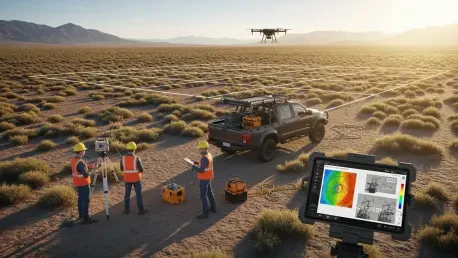
Exploration geologists in this camp describe a workflow that pairs probabilistic maps with ground truth. Models narrow the search; field teams validate with targeted surveys; drilling confirms or falsifies the signal. Early case studies suggest the approach can surface sites in familiar basins that prior passes overlooked. The upshot is a resource base that may be larger and closer to load centers than conventional wisdom assumed—if the models keep holding up under the bit.
Finding versus Fabricating Flow: AI-Led Prospecting Weighed Against Engineered Geothermal Systems
A second camp stresses the virtues of engineered geothermal systems (EGS), where companies such as Fervo Energy adapt shale-era techniques—horizontal drilling, stimulation, fiber-optic sensing—to create or enhance permeability in hot rock. Proponents argue that EGS decouples geothermal from the lottery of natural flow, offering geographic flexibility and a more standardized build-out path once designs are proven. The trade-off is clear: higher complexity and potential capex in exchange for a wider map.
Backers of AI-led natural discovery counter that, when found, naturally permeable systems can deliver competitive costs and long-lived assets with fewer subsurface interventions. They frame the choice not as rivalry but as portfolio logic: in regions with receptive geology and existing transmission, find-and-produce can move quickly; where natural flow is scarce, engineered pathways can still unlock firm power. Grid planners in this roundup tend to agree—the mix will be regional, dictated by rocks, water, and rights-of-way rather than ideology.
Money, Rigs, and Maps: The Scaling Math Behind Credit Facilities, Permitting Speed, and Regional Geology
Financiers emphasize that exploration certainty is its own asset class. When models reduce uncertainty, innovative funding follows—like credit facilities designed to underwrite multi-asset drilling programs rather than single bets. Bankers interviewed for this piece describe a subtle shift: cash flowing earlier in the cycle to secure leases, run surveys, and pre-permit clusters of wells, with tranches released as geologic confidence milestones are met. That structure, they contend, can turn subsurface insight into a factory model.
Operators, meanwhile, put numbers on rigs and timelines. Redirecting even a fraction of the domestic drilling fleet toward geothermal could add tens of gigawatts over a few build seasons, provided permitting accelerates and service supply chains adapt. However, speed is uneven. Western basins with known heat flow but patchy data look ripe for AI triage; other regions may be map-limited or infrastructure-constrained. The consensus across interviews: capital, rigs, and high-confidence maps form a virtuous triangle, but the slowest leg—often permits and interconnection—will govern pace.
Capital Narratives in Flux: What SpaceX’s Rise and Tesla’s Pivot Signal for Climate Tech Investors and for Geothermal
Public-market sentiment colors all of this. Many investors noted a growing tilt of attention toward SpaceX as a clean “execution story” with recurring revenue and fewer direct rivals, while Tesla leans harder on AI-laden futures like robotaxis and general robotics. That divergence matters for climate capital: when a single ecosystem captures the “innovation premium,” adjacent sectors can either benefit from spillover enthusiasm or compete for mindshare.
For geothermal, the takeaway from these narratives is discipline. Investors scanning for the next durable platform seek repeatability—programmatic exploration, standard well designs, predictable costs, and credible offtake. The companies that translate AI prowess into steady megawatts, not just glossy maps, will earn that premium. In this reading, natural discovery and EGS both have lanes; the winner in any region is the approach that marries subsurface truth, transparent metrics, and quiet, relentless delivery.
Turning Promise into Projects: What Developers, Regulators, and Investors Should Do Now
Developers interviewed for this roundup advised a three-step cadence: start with multi-source AI targeting to narrow prospects; run focused field campaigns to de-risk structure, temperature, and permeability; then build clustered programs that share pads, roads, and interconnection. That last step matters because learning curves compound at the pad, not across scattered one-offs. Moreover, placing exploration and construction teams under a single operations rhythm shortens handoffs and cuts cost leakage.
Regulators and land managers underscored complementary priorities. Permitting windows shrink when applications arrive with robust data, early tribal and community engagement, and clear mitigation plans for water, seismicity, and habitat. Lessons from forest management resonate here: proactive, region-specific stewardship prevents crises later, whether in fuels buildup or in subsurface-induced quakes. Aligning geothermal leasing with resilience goals—such as fire-safe infrastructure corridors—helps build coalitions that speed approvals.
Investors focused on contract quality and portfolio design. They favored offtakes that value firmness—hourly matching, capacity payments, or ancillary services—paired with transparent performance monitoring. On portfolio shape, several advocated mixing quick-win natural projects with longer-lead EGS pilots, plus exposure to transmission upgrades. That blend hedges geology, policy, and interconnection risk while preserving upside if either discovery or engineering breaks open new terrain.
Beyond the Hype Cycle: AI as a Force Multiplier, Not a Substitute, for Disciplined Geothermal Execution
Across conversations, a consistent refrain emerged: AI multiplies skill; it does not replace it. Subsurface models thrive on quality inputs and feedback loops. Teams that institutionalize post-drill learning—updating priors with fiber logs, microseismic, tracer tests, and production curves—improve faster than those that treat AI as a one-off scouting tool. In practice, the best programs look like aviation checklists: data hygiene, model runs, field truthing, iteration, repeat.
Broader climate and market signals reinforce the need for execution. Wildfire smoke, creeping eastward and southward, keeps the public health stakes visible as air quality alerts climb. Aviation’s slow decarbonization and the growing pains of carbon removal markets remind stakeholders that firm power close to load is precious. Policy volatility—state preemption of local climate rules here, new incentives there—adds noise. Firm geothermal that shows up on time and on cost cuts through that noise by anchoring grids that want fewer headaches, not more.
The concluding advice from this roundup was pragmatic. Developers doubled down on clustered drilling and shared infrastructure to speed learning. Regulators pushed for data-rich applications and earlier engagement to reduce surprises. Investors asked for standardized metrics—resource confirmation thresholds, cost per stimulated foot where relevant, uptime, and decline profiles—to compare apples to apples across natural and engineered projects. For more depth, readers were directed to technical primers on geothermal reservoir characterization, policy briefings on permitting reform and interconnection, and market analyses of firm clean power contracting.