
The vulnerability of interconnected blockchain ecosystems was exposed when privileged governance commands on one chain compromised the security of integrated decentralized applications. For a grueling twenty-five-hour period, the Cosmos Hub, a central nervous system for the broader interchain

The self-signing mechanism within the Chainlink Runtime Environment ensures that financial institutions do not have to transfer signing authority to any third-party platform. This foundational security feature is central to a new era of digital finance, where the partnership between Chainlink and
The transition to quantum resistance involves shifting away from public-key cryptography toward lattice-based schemes like the ML-DSA-44 standard. This fundamental change is currently being pioneered through the launch of Quantumnet, a specialized experimental environment for the Tezos blockchain.
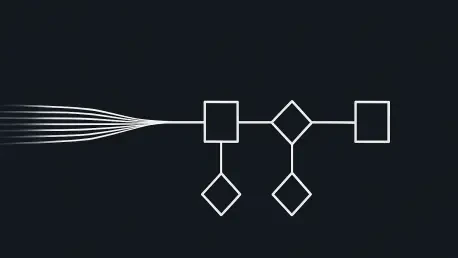
The technical foundation relies on pipelining within the HyperBFT protocol to overlap voting rounds for consecutive blocks and maximize throughput. This architectural breakthrough comes at a critical juncture for decentralized finance, as traditional exchange models have reached the limits of
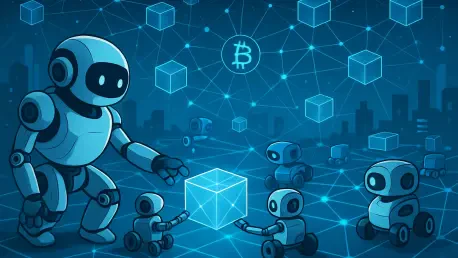
Efficient invisible infrastructure will likely dominate the next decade of blockchain development as human-centric design fades into the background. For years, the industry chased the elusive dream of a billion human users, pouring billions of dollars into simplified wallets and gamified social

When the digital economy meets the deep complexity of human speech, the result is often a wall that separates millions from the progress of the modern world. For years, the global tech industry focused on connecting computers, yet the people using them remained siloed by thousands of distinct