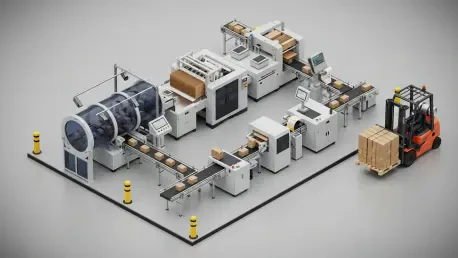

Spiking oil and gas prices, periodic disruptions in Gulf shipping lanes, and rising energy costs have made every cubic inch of wasted packaging a bill that arrives twice—once in materials and again in freight—turning right-size automation from a nice-to-have into a practical lever for cost control and resilience. The technology does something deceptively simple: it builds a box that fits the order, then proves that precision at scale reshapes labor, materials, and transport economics all at once.
What Automated Right-Size Packaging Is and Why It Matters Now
Automated right-sizing combines three building blocks—dimension data capture, cartonization software, and on-demand box creation—to produce a container tailored to each order. The principles are straightforward: fit-to-product geometry eliminates void, reduces board, and preempts damage while keeping dimensional weight in check.
The urgency stems from context, not novelty. Petrochemical volatility inflates plastic void-fill prices, energy costs raise paperboard and linehaul rates, and e-commerce continues to skew toward smaller, more frequent orders that magnify packaging’s share of unit cost. Layer in regulatory pressure from EPR fees and EU PPWR rules, and the incentive to remove grams and cubic inches becomes immediate.
System Architecture and Core Capabilities
The stack blends hardware and software into a tight loop: products are scanned, a packing plan is computed, and a corrugated blank is cut, creased, and sealed on demand. Unlike pre-made carton assortments, the system exploits measurement fidelity and algorithmic selection to avoid paying for air.
On-Demand Box Fabrication and Cutting
Box-on-demand machines pull fanfold corrugated and convert it into custom cartons via automated cutting, creasing, and gluing. Cycle times typically span seconds per box, with tolerances tight enough to avoid crush while still hugging the product.
Performance hinges on size range, uptime, and maintenance cadence. Wide-format cutters handle long or irregular items; quick-change tooling and predictive maintenance sustain throughput during peaks.
Dimensioning, Scanning, and Product Measurement
3D scanners, vision systems, and scales capture length, width, height, and weight, including protrusions that cause damage or shipping surcharges. The system’s payoff rises with measurement accuracy because small errors compound into void or rework.
High-fidelity scans let software shave millimeters from each face, removing the need for foam or bubble while reducing drop damage. Better data directly converts into fewer claims and cleaner carrier audits.
Cartonization and Packing Algorithms
Cartonization software selects box styles and board usage to minimize material while meeting strength and carrier rules. For multi-item orders, algorithms nest geometries and choose fold patterns that protect edges and surfaces.
Tight WMS/TMS integration matters. Shipping labels and dimensional weight declarations flow from the same decision graph, which prevents misrouted parcels and unexpected surcharges at induction.
Materials Optimization and Void-Fill Elimination
By shrinking internal volume, systems eliminate plastics and reduce exposure to petrochemical swings. Glue-based sealing lowers tape use and boosts recyclability, though adhesive selection must balance fiber tear with speed.
Board savings come from both design and grade choice. Software can down-gauge where geometry adds stiffness, cutting cost without trading away drop performance.
Throughput, Labor, and Quality Controls
Automated infeed/outfeed, print-and-apply labeling, and inline checks create a closed loop that spots mis-scans and jam risks before they cascade. The effect is fewer touches and fewer errors.
Labor shifts from repetitive packing to exception handling and machine oversight. Ergonomic strain falls, while KPIs trend toward boxes per labor hour, scan-to-ship times, and damage rates.
Developments Shaping Adoption and Performance
Oil-linked plastics inflation and maritime risk have made bubble and foam unreliable hedges. Simultaneously, higher electricity prices feed into paper mills and long-haul fleets, compounding total landed cost.
Vendors responded with faster cutters, greener adhesives, and mono-material designs that simplify recycling. Better APIs reduced integration pain, helping right-size systems act as a native node in warehouse automation rather than a bolt-on.
Practical Applications and Notable Implementations
E-commerce apparel, electronics, and home goods benefit from lower damages and right-sized parcels that fit more vehicles per route. Marketplaces and 3PLs like configurable cells that expand during peaks without committing to excess carton SKUs.
Industrial spares see outsized gains: awkward shapes pack tighter, service levels rise, and cross-border paperwork aligns with accurate declared dimensions. Last-mile carriers also gain denser loads and fewer dimensional-weight disputes.
Cost, Environmental, and Operational Impact
Savings arrive on three fronts. Eliminating plastics reduces exposure to oil volatility and trims emissions; board use falls—often cited up to 29%—and, combined with void-fill removal, total materials can drop 35% or more. Smaller boxes raise trailer density and cut dimensional-weight fees, amplifying transport savings.
Compliance follows cost. Material reduction shrinks EPR liabilities and aligns with PPWR targets, while operational benefits—higher throughput, redeployed labor, fewer returns—compress payback to months under current conditions.
Constraints, Risks, and Paths to Mitigation
Edge-case SKUs, fragile surfaces, and giant or ultra-thin items stress algorithms and forming tolerances. Integrations can stall if master data is poor or carrier rules shift midstream.
Mitigation looks practical, not heroic: pilot lanes, hybrid cells that divert outliers, dual-sourced fanfold grades, and continuous model tuning tied to delivery feedback loops. Site planning for footprint, noise, and maintenance keeps uptime predictable.
Outlook and Strategic Considerations
Near term, volatile energy and regulatory pressure tilt ROI in favor of automation. The road map points to faster forming heads, AI-driven cartonization that learns from damage patterns, and closed-loop optimization fed by carrier scan data.
As pricing models evolve, expect packaging offered as a managed service with outcome guarantees tied to damage, emissions, and spend. Smaller parcels will nudge carrier tariffs and unlock more micro-fulfillment footprints.
Summary and Overall Assessment
Right-size automation turned packaging into an active control lever when upstream shocks felt immovable. Compared with pre-box assortments and heavy void-fill regimes, it uniquely linked measurement, decisioning, and fabrication into one flow, compounding gains across materials, transport, and labor. The balanced verdict was clear: for shippers facing fuel-driven inflation and tightening rules, automated right-sizing delivered fast, defensible payback, and the next step was disciplined pilots that target mixed-carton lanes, integrate with carrier data, and codify design rules so savings persist beyond the first quarter.