
Power failures, ransomware, supply snags, or a cloud region blip do not ask for permission, and the cost of downtime compounds by the minute as customers queue, transactions stall, and regulators start watching closely. That pressure explains why continuity has moved from a binder on a shelf to a living system: a layer of software that plans, tests, executes, and proves recovery across the whole enterprise. The promise is simple but ambitious—replace scattered documents and ad hoc calls with coordinated playbooks, automated signals, and evidence that the business will hold together when something breaks.
The shift matters because resilience has become measurable and board-visible. Continuity used to be a compliance chore; now it is an operating discipline with metrics, ownership, and budgets. Platforms in this category unify risk-based prioritization, business impact modeling, and real-time orchestration, so leaders can direct resources where they protect revenue, customers, and obligations most. The review that follows examines how these systems work, where they deliver, where they still struggle, and what sets them apart from familiar neighbors like IT service management and pure disaster recovery tooling.
What It Is and How It Works
At its core, business continuity software is an orchestration layer for resilience. It centralizes planning artifacts (business impact analyses, recovery strategies, crisis communications) and couples them to the signals and workflows that trigger action. The data model revolves around critical functions, dependencies, and objectives—typically recovery time (RTO) and recovery point (RPO)—so that a disruption can be translated into specific steps: who does what, in which order, using which systems, and by when. Instead of static PDFs, teams operate from versioned playbooks with assignments, approvals, and test histories.
The operating principle is risk-based prioritization. Rather than trying to “save everything,” the platform quantifies impact by function, maps upstream and downstream dependencies, and allocates effort to what keeps cash flowing and customers protected. That logic drives planning cadence and test frequency, but it also shapes runtime response. When an event is declared, the system does not just notify people—it sequences coordinated tasks across business units and IT, checks prerequisites, and records each step for audit. Over time, continuous improvement loops take test results and real incidents, analyze gaps, and update both plans and triggers, so the program hardens rather than drifts.
Feature Deep Dive: From Planning to Orchestration
Planning Templates, Playbooks, and Workflow Engines
Contemporary platforms start by eliminating the blank page. Pre-built templates encode common recovery strategies by industry and function, then adapt through low-code configuration. Dynamic checklists expand or contract based on context—location, system, severity—so responders see only what matters. Versioning and approvals enforce governance: edits are sandboxed, peer-reviewed, and signed off with a traceable trail. The real value appears when templates graduate into executable playbooks, binding narrative steps to actual tasks, owners, and due times.
This move from “document” to “workflow” changes behavior under stress. Role-aware flows distribute work across facilities, IT, HR, and communications at once, preventing bottlenecks that occur when one team is overloaded. Because the engine tracks progress, leaders can spot lagging steps and reassign resources on the fly. The test cycle benefits, too—tabletop outcomes become deltas in the playbook rather than notes in a slide deck, making learning compound rather than evaporate after the meeting.
Risk Assessment and Business Impact Analysis
Threat libraries and likelihood-impact matrices might sound academic, but the most useful platforms make them operational. Instead of generic risk lists, teams score threats against specific functions and tie those scores to concrete tolerances—how long the order-to-cash process can be down, how much data loss customer support can tolerate, which dependencies are single points of failure. RTO/RPO modeling turns policy into math: given storage snapshots and failover architecture, can finance meet its two-hour objective, or does the current setup cap at eight?
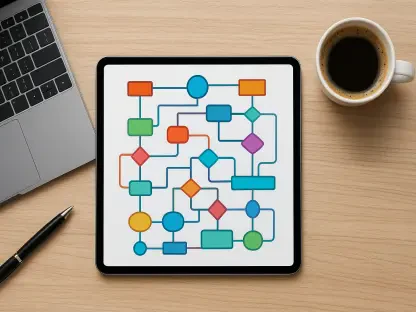
Dependency mapping is where theory meets the real world. Visual maps link business services to applications, data stores, facilities, and vendors, exposing fragile chains and hidden couplings. Scenario analysis then runs “what ifs”—power loss in one plant, cloud outage in a single region, payment processor failure—and surfaces cascade effects in seconds. This is not just for design; during an incident the same maps help responders understand second-order risks and choose the least-bad workaround.
Incident Management and Crisis Communications
Event intake begins with structured triggers: monitoring alerts, user-submitted incidents, or manual declarations by authorized roles. Triage policies classify severity and route the event into the right playbooks. Escalations are policy-driven rather than ad hoc; a missed acknowledgment or a blocked task automatically pings backups, then leadership, before the clock runs out. The platform’s communications layer spans SMS, voice, email, and workplace chat, so critical messages reach people where they already are.
Stakeholder messaging is not a copy-paste exercise. Pre-approved templates adapt to the event type and audience (employees, customers, regulators), and approval workflows ensure legal or PR signoff without delaying urgent notices. Audit trails capture who said what and when, a detail that matters when regulators later ask for evidence of timely and accurate disclosure. The practical upside is alignment: responders get instructions, executives get situational summaries, and external parties get consistent facts.
Recovery Orchestration and Automation
Runbooks bridge planning with action. Good platforms do more than list steps—they codify prerequisites, parallelize independent tasks, and block steps that would make things worse. Integrations turn checkboxes into causation: a declared data-center outage can automatically open ITSM changes, spin up recovery environments, or pause scheduled jobs that could corrupt data. Readiness checks run in the background, verifying backup currency, failover health, and communications rosters before an incident ever happens.
Automation does not remove humans; it removes waste and reduces error. When a failover runbook can validate that last night’s backups completed and that DNS changes propagated, responders stop burning time on guesswork. The bigger win is consistency—every time the runbook runs, it runs the same way, which means test results are comparable and improvements are traceable.
Data Protection and Disaster Recovery Integrations
Continuity platforms are not backup tools, but they must speak the same language. Connectors to backup, replication, and failover systems pull telemetry on snapshot age, replication lag, and recovery status. That data populates dashboards that compare actual performance to RTO/RPO targets, exposing gaps that would otherwise stay buried in vendor consoles. When a recovery is initiated, the platform can coordinate DR steps with business-side continuity actions, ensuring, for example, that customer communications align to when systems will truly be available.
SLA adherence becomes more than a contract clause. By correlating protection telemetry with business impact thresholds, teams can prioritize investments where SLAs are at risk of causing actual business harm. The nuance is important: not every dataset needs the same recovery posture, and the platform’s visibility helps avoid overspending on low-value assets while under-protecting revenue-critical ones.
Integrations and Extensibility
Continuity fails when it is a silo. Modern platforms integrate with collaboration tools (Slack, Teams), ITSM (ServiceNow, Jira Service Management), SIEM, ERP/CRM, and HR systems to keep data fresh and actions connected. APIs and webhooks enable custom flows—triggering a vendor notification when a specific plant goes offline, or updating a customer portal banner when a certain incident class is declared.
Extensibility is a hedge against change. As vendors swap and architectures evolve, open connectors reduce lock-in and keep the continuity brain in place while the nervous system changes. Teams that invest early in clean integrations get faster, more credible tests and fewer “we thought someone else handled that” moments during real events.
Security, Compliance, and Governance
Because continuity data often touches sensitive operations and customer information, the platform must be hardened by default. Role-based access controls limit who sees what, field-level permissions protect especially sensitive entries, and strong encryption covers data at rest and in transit. Data residency options and tenant isolation help regulated organizations meet regional laws and internal policies.
Compliance mappings are practical accelerators. Aligning controls and artifacts to ISO 22301, SOC 2, HIPAA, or sector-specific frameworks shortens audits and clarifies where the program still falls short. Secure audit logs that are tamper-evident provide the forensic backbone regulators expect after major incidents. Governance is not a checkbox; it is the structure that keeps the program intact as teams and systems change.
Analytics, Dashboards, and Reporting
Resilience becomes manageable when it becomes measurable. Dashboards track plan currency, test pass rates, mean time to recover against RTO, communication acknowledgment times, and vendor performance. Trends matter more than snapshots: is plan freshness improving, are critical-path tests failing less, and did last quarter’s focus on supplier continuity reduce time-to-restart manufacturing lines?
Executive summaries abstract noise into decisions. Board-ready views focus on exposure reduction, compliance posture, and investments needed to close the next set of risks. Auditor-ready reports export the evidence trail—plans with versions, test schedules with results, incident timelines with signoffs—cutting weeks from review cycles and replacing manual collation with one-click exports.
Usability, Administration, and Scalability
A continuity platform fails if people avoid it. The best products combine clear navigation with mobile access and offline modes for field teams. Low-code configuration lets program owners tailor forms, workflows, and dashboards without waiting on development queues. Multi-tenant architectures serve global organizations with partitioned data and delegated administration, while still providing cross-tenant rollups where governance requires central oversight.
Scalability is not only about user counts; it is about stress. During an actual incident, notification spikes and workflow updates hit all at once. Platforms that have optimized message fan-out, de-duplication, and real-time state synchronization maintain composure when users need it most. Performance under load is not a nice-to-have; it is a success criterion.
Performance in the Wild
Financial services measure continuity in cleared payments and regulatory composure. Banks use integrated BIA and runbooks to protect high-value processes like real-time settlement, then rehearse cyber incident drills that blend security operations with customer communications and regulatory reporting. The result is not perfect immunity—no platform prevents all fraud or outages—but a disciplined recovery muscle that reduces cascading failures and evidences control when supervisors investigate.
Healthcare’s test is patient safety. Electronic health record downtime procedures, backup power protocols for critical equipment, and supply chain visibility combine into playbooks that protect care continuity. Where platforms earn their keep is cross-shift coordination and rigor under HIPAA constraints—keeping sensitive details constrained while still ensuring the right clinician or admin sees the right step at the right time. The measurable win shows up in shortened diversion times and cleaner post-incident documentation.
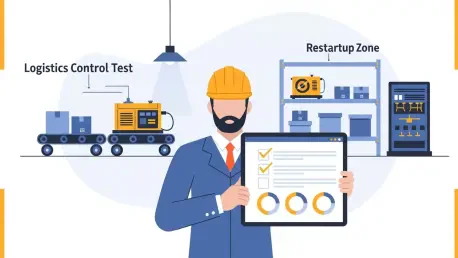
Manufacturing demands choreography across IT and operational technology. Plant outage playbooks coordinate safety, production rerouting, and supplier communication, while dependency maps highlight where a single supplier jeopardizes multiple lines. The platforms that integrate telemetry from both enterprise systems and shop-floor sensors deliver faster, safer restarts. Retail and e-commerce, by contrast, lean on surge-season readiness and logistics rerouting; when a carrier fails or a fulfillment center goes offline, continuity software turns delay into a managed detour with customer messaging to match.
SaaS and technology companies live by uptime SLAs. Here, continuity software ties multi-region failover mechanics to customer support continuity and status disclosures. It also helps align product engineering, SRE, and customer success in one rhythm, so that technical resolution and stakeholder communication keep pace. In the public sector and education, the emphasis is on campus closures, emergency notifications, and remote operations—domains where clear chains of command and inclusive communication channels matter as much as technical recovery.
Differentiators and Trade-Offs
Why this category and not just an ITSM upgrade or a DR suite? ITSM excels at incident ticketing and change control but centers on service health rather than business function survival. DR tools can bring systems back but rarely orchestrate cross-departmental workarounds or stakeholder narratives. Business continuity software sits above both, translating business risk into coordinated technology and process action, then proving—with metrics and evidence—that objectives were met.
Within the category, differences hinge on three axes. First, depth of business modeling: platforms that treat BIA as living data tied to workflows outperform those that treat it as a static report. Second, runtime orchestration: the ability to turn a plan into automated, sequenced execution reduces variance when it counts. Third, ecosystem fit: open APIs and native connectors decide whether the platform becomes a hub or another silo. The trade-offs mirror those strengths. Rich modeling demands better data hygiene and user discipline. Heavy automation requires careful guardrails to avoid amplifying mistakes. Deep integrations take time to wire and test, especially in legacy environments.
AI, SaaS, and Market Direction
AI has crept from novelty to utility in this space. The useful implementations do three things. They assist risk detection by scanning plan portfolios and operational data to flag stale dependencies, inconsistent RTOs, or missing approvals. They recommend plan improvements by learning from incident patterns—suggesting that two teams merge steps, or that a vendor-specific contact be added where delays keep recurring. And they spot anomalies during incidents—escalating when acknowledgment times deviate from norms or when telemetry contradicts the declared recovery state. These are not magic; they compress analysis and nudge action, lifting program maturity faster than manual reviews.
The market’s tilt to SaaS has reduced administrative drag and accelerated feature delivery, but it also raises questions about data residency and offline resilience. Vendors respond with regional hosting, exportable evidence stores, and offline-capable mobile apps. Convergence is the other strong current: business continuity, disaster recovery, and cyber resilience are blending into unified “resilience platforms” that speak both business and technical dialects. Tighter coupling to ITSM, DevOps, and observability shortens the loop from detection to coordinated recovery, turning noisy alerts into structured playbooks that matter.
Regulatory pressure acts as a forcing function. Auditability and demonstrable testing are no longer optional in many sectors, which favors platforms with rigorous evidence trails. At the same time, SMB-friendly packaging—modular features, guided setups, and consumption pricing—has broadened adoption beyond highly regulated giants. The net effect is a more disciplined, more accessible market, with differentiation shifting from checklists to execution quality and ecosystem gravity.
Limitations, Risks, and Mitigations
Every strength carries risk. The best continuity software still depends on accurate inputs. Out-of-date contact trees, missing vendor data, or stale dependency maps will mislead the very workflows designed to help. Vendors counter with automation—scheduled reminders, ownership tracking, and data pulls from systems of record—yet program leaders must enforce service-level expectations for data freshness or the platform’s value decays.
Interoperability and lock-in remain perennial concerns. While open APIs help, bespoke integrations and proprietary data models can make switching costly. Selecting platforms that export plans, test histories, and dependency maps in standard formats is a pragmatic hedge. Overreliance on tooling is subtler but real; a well-oiled platform can create a false sense of security if testing cadence slips or scenarios remain too sanitized. Embedding tabletop-to-simulation progressions, with red-teaming and vendor participation, keeps the muscle memory honest.
Cost and ROI require hard-nosed framing. The right lens ties value to reduced downtime, audit efficiency, and risk transfer (such as improved cyber insurance terms), not vague “peace of mind.” Privacy and sensitive data handling also deserve scrutiny, especially where crisis communications and vendor contracts intersect with regulated content. Granular permissions, data segregation, and tamper-evident logs are not bonuses—they are prerequisites.
Verdict and Next Steps
This review found that business continuity software matured from a static documentation aid into an operational control plane for resilience. The strongest platforms modeled business reality with living BIAs, orchestrated response with automated runbooks, and proved outcomes with rigorous analytics. They beat ITSM and DR point tools at the very thing that matters when events unfold: aligning people, process, and technology around business outcomes, not just service tickets or storage jobs.
However, success hinged on disciplined data stewardship, realistic testing, and thoughtful integration strategy. Teams that treated the platform as a one-time project left value on the table; teams that wired it into daily operations—tying plan health to team goals, folding outcomes into budgets, integrating with ITSM and comms—saw faster recovery and cleaner audits. The unique edge belonged to vendors that combined open ecosystems with prescriptive guidance, allowing organizations to standardize where it helps and customize where it counts.
For buyers charting next steps, the path looked actionable. Start by pressure-testing current RTO/RPO commitments against actual DR capabilities and vendor SLAs; update tolerances where math and money disagree. Map three revenue-critical functions end-to-end, then pilot automation on their runbooks to quantify time saved and variance reduced. Insist on exportable evidence and API-first integrations to future-proof the investment. Finally, schedule a six-month progression from tabletop to simulation, bringing vendors and regulators into the loop where appropriate. Those moves turned continuity from a binder into an advantage, and they separated organizations that recovered on purpose from those that recovered by luck.