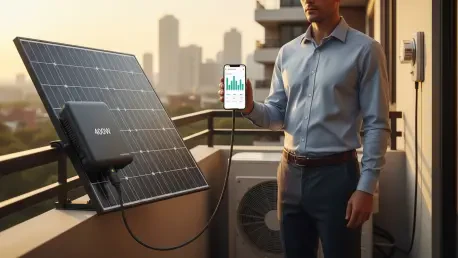

A humming air conditioner, a spinning meter, a quiet balcony panel sending power back through a simple cord—this everyday scene now hinted at a twist in the energy story, where a $400 purchase and a standard outlet together pushed households from passive users to confident producers.
The Hook: A Provocation at the Outlet
A timely question now hung over porches and patios: could low-cost, outlet-ready panels dent bills and ease brutal summer peaks at the same time? The devices were unassuming—compact modules with microinverters that plugged into a household circuit—yet their promise was not. As prices slid and rules softened, the case for “starter solar” sharpened.
The stakes were not just personal. A balcony kit hinted at a grid that learned from many small voices instead of a few big ones. Faster adoption, lower entry costs, and millions of micro-contributions during afternoon spikes together mapped a future that looked distributed by design rather than by exception.
Nut Graph: Why This Story Mattered Now
Electricity demand had surged as data centers grew and electrification spread through vehicles, heat pumps, and industry. That urgency favored supply that could appear quickly, even if small. Plug-in solar fit the brief: fast to mount, easy to understand, and ready to work the day it arrived.
Policy momentum signaled a cultural shift. Several states loosened rules on plug-in systems, reflecting regulator comfort with UL-listed microinverters and anti-islanding protections. The household math also turned heads: entry kits around $400 created access without heavy subsidies, and in many markets simple payback improved as daytime rates rose.
Public debate about “fair share” lingered, but the ground had moved. With demand climbing, utilities could absorb more distributed daytime generation without unraveling finances, especially if those watts shaved peak purchases. The question became less about who subsidized whom and more about how many reliable contributors the grid could recruit.
How It Worked: The Mechanics and the Market
Plug-in solar paired one or two panels with a microinverter that synchronized to household frequency and fed a standard outlet. Typical kits delivered 400–800 watts, quietly offsetting baseline loads—fridges, routers, always-on electronics—and taking a bite out of mid-afternoon air conditioning. Monitoring apps turned invisible kilowatt-hours into visible savings.
Adoption blossomed on balconies, patios, and exterior walls in cities and suburbs alike. Renters favored reversible mounts; homeowners treated kits as a gateway to larger arrays. Abroad, where balcony solar spread earlier, retailers reported strong self-consumption rates that trimmed feeder stress under high sun.
Upfront cost, local sun hours, and retail rates drove payback. In hot regions, a single 400-watt panel could shoulder a noticeable slice of AC fan load at noon. Aggregated across thousands of homes, those modest streams added up, smoothing the very hours that strained feeders and peaker plants.
Voices, Data, and Field Notes
“This is a peak resource that happens to sit on people’s railings,” said a utility planning manager, citing feeder data that showed localized voltage staying steadier on clear afternoons. A state regulator described plug-in pilots as “a low-risk path to build confidence in distributed generation.”
Market signals underlined the shift. Panel and microinverter costs kept easing, retail kit prices trended down, and bundled monitoring became common. Studies of balcony systems abroad found high self-consumption during sunny hours, aligning production with the loads that drive costs.
On the ground, a renter in Phoenix reported a balcony kit that “knocked the midday bite out of the bill,” while a neighborhood pilot aggregated dozens of units to clip local peaks. A small installer said, “Starter solar turned tire-kickers into long-term customers—once people see the app, they call about bigger systems.”
A Practical Playbook for Getting Started
Rules still mattered. Prospective buyers checked state and local codes, HOA rules, and any utility notification requirements, then confirmed UL-listed microinverters and compliant plugs. Electricians advised using dedicated or appropriately rated circuits to avoid overloading.
Right-sizing was simple: match wattage to daytime loads, study sun exposure and shading, and favor sturdy mounts with weather-rated cabling. Monitoring helped time flexible tasks—laundry, dishwasher cycles, even EV trickle charging—so production met consumption on the spot.
Conclusion: From Households to Helpful Neighbors
The road ahead had favored action at human scale: check the rules, choose certified gear, mount securely, and shift a few loads to sunny hours. As aggregation programs expanded, those steps had unlocked payments for midday output and prepared homes to pair with larger rooftop systems or future storage.
What started as a $400 experiment had read as infrastructure in miniature. By treating balconies and backyards as steady contributors, communities had found a way to cool feeders on the hottest days and cut bills without waiting for decade-long builds. The surprise was not that panels made power; it was that a simple plug had connected households to the grid’s most urgent job.