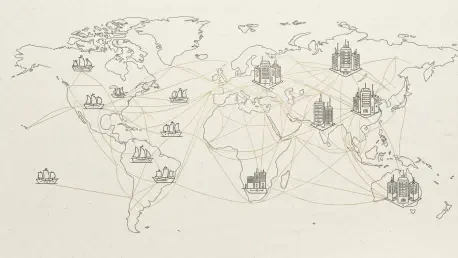

Business leaders are finding that the most effective way to manage systemic vulnerability is to identify and build alternatives for single points of jurisdictional failure. For decades, the global marketplace operated under the illusion that commerce was a neutral territory, insulated from the friction of statecraft and national interests. This era of apolitical globalism has officially concluded, replaced by a landscape where trade routes, data flows, and financial clearinghouses are active instruments of geopolitical leverage. Organizations that once viewed political instability as a peripheral risk to be managed by public relations departments now recognize it as a core architectural concern that dictates the long-term viability of their international operations.
The transition from viewing geopolitics as a series of external shocks to a systemic operational reality requires a fundamental rewiring of strategic frameworks. It is no longer sufficient to monitor headlines for potential disruptions; instead, executives must audit the very plumbing of their enterprises. This shift demands that resilience be treated not as a buffer for emergencies, but as a primary competitive advantage in a fragmented world where interdependence is increasingly weaponized by state actors. This evolution in thinking ensures that the firm remains robust even when the external environment becomes adversarial or unpredictable, moving strategy from a defensive to a proactive stance.
The Evolution of Risk: From Events to Systems
The current strategic imperative involves a move toward systemic analysis, where the focus shifts from predicting specific political events to understanding the networks that enable business. Historically, managers concentrated on just-in-case inventory to mitigate supply chain disruptions. In today’s environment, this narrow focus is inadequate because the primary vulnerabilities often reside in the invisible connective tissues of the digital and financial worlds. These systems, once assumed to be universal utilities, are now recognized as channels through which political pressure is transmitted and enforced across borders, often without the need for formal trade barriers or physical blockades.
Rigorous mapping of these dependencies is the first step in this transformation. This goes beyond identifying the geographical origin of physical parts to include the jurisdictional oversight of critical software and financial links. By visualizing these links, leaders can identify where a foreign administrative decision could paralyze their operation. This transparency allows firms to move from a reactive posture to one of proactive structural design, ensuring no single government holds an absolute veto over their model. By diversifying these systemic dependencies, a corporation can maintain its operational autonomy even during periods of intense international competition or localized political instability.
The Payment Paradox: Avoiding the Utility Trap
Payment systems and digital infrastructures often suffer from being categorized as boring utilities, leading to a dangerous lack of scrutiny regarding their concentration. In a fragmented global economy, these mundane services become prime targets for state coercion. If an organization relies on a single dominant vendor for global transactions, it essentially operates at the pleasure of that vendor’s home government. The broken mirror effect describes the sudden realization that these shared systems are not truly neutral, but are subject to the legal mandates of specific jurisdictions that may conflict with a firm’s global interests, resulting in sudden exclusion from vital markets.
To counter this vulnerability, firms are increasingly treating financial and digital connectivity as a market-creation problem rather than a procurement task. Relying on existing off-the-shelf solutions may be efficient, but it often lacks the jurisdictional diversity required for modern resilience. Leaders are now exploring consortium-based models and neutral, cross-border infrastructures that provide alternatives to concentrated points of failure. This approach requires a long-term investment in developing new pathways that are not tied to the political fluctuations of any single superpower or regional bloc, ensuring that the flow of capital and information remains uninterrupted by political shifts.
Strategic Procurement: Resilience over Efficiency
The traditional procurement model, which prioritized cost efficiency and lean operations above all else, is undergoing a necessary revolution. In the current climate, procurement has evolved into an exercise in high-level scenario planning and political diversification. This involves seeking second sources that are geographically and jurisdictionally distinct from primary suppliers. The goal is to ensure that a political rift in one region does not lead to a total collapse of the supply chain. This diversification often comes at a higher price point, but it serves as a critical insurance policy against the rising costs of systemic failure and the potential for total market exclusion.
Furthermore, the criteria for selecting partners now include an assessment of their political alignment and the stability of their home governments. Procurement officers are tasked with evaluating the likelihood of sanctions or export controls affecting their vendors over the next several years. This forward-looking approach allows companies to gradually shift their dependencies toward more stable or diversified sources before a crisis forces an immediate and costly exit. By treating procurement as a geopolitical tool, organizations can build a more robust foundation that withstands the pressures of a multi-polar world and avoids the traps of over-reliance on volatile political environments.
Market Creation: Collaborative Infrastructure Solutions
Mapping dependencies leads to a critical realization: in many sectors, resilience cannot simply be purchased from a catalog. If a firm relies on a technology or financial system dominated by a single jurisdiction, there may be no immediate alternative if that link is severed. Consequently, resilience becomes a market-creation problem rather than a standard procurement issue. Firms may need to cooperate with competitors and align with public policy to build shared, neutral infrastructures. This is particularly evident in the development of shared digital infrastructure in regions like Europe, where firms are seeking to reduce their reliance on monolithic providers.
Such a task is too large for a single company and too complex for states to deliver in isolation. It requires a collaborative framework where private sector innovation meets public sector stability. By pooling resources, organizations can create robust alternatives to existing monopolies, reducing the risk of being used as a pawn in geopolitical disputes. This proactive approach ensures that the fundamental tools of commerce remain accessible, regardless of shifts in the global political climate or trade relationships. Collaborative infrastructure serves as a hedge against the fragmentation of global systems, preserving a space for neutral commerce to continue effectively.
Cognitive Competence: Bridging the Expertise Gap
One of the most significant yet overlooked vulnerabilities in modern corporations is the cognitive gap regarding geopolitical literacy. Many executives have spent their careers in an environment where political risk was secondary to market dynamics, leaving them ill-equipped to discern signal from noise in a complex global landscape. This lack of expertise can lead to strategic paralysis or, conversely, overreactions to short-term headlines that do not reflect long-term tectonic shifts. Bridging this gap requires fostering an internal culture where geopolitical insights are integrated into every level of decision-making, from the board of directors to the frontline procurement teams.
Building this capability involves moving beyond reliance on external consultants and developing deep, in-house expertise that understands the intersection of state policy and corporate operations. Leaders must be authorized to escalate concerns that may appear routine on a balance sheet but carry significant political exposure. Training programs and cross-functional teams that pair geopolitical analysts with operational managers can help translate abstract risks into actionable intelligence. This evolution in leadership talent ensures that the organization can navigate ambiguity with confidence, making informed choices that balance immediate economic opportunity with long-term political reality.
Internal Diplomacy: The Firm as a Social Forum
Modern corporations are increasingly serving as social forums, where the complexities of global politics are internalized through their employees and customers. In a fragmented world, a company’s internal culture is not immune to the tensions existing outside its walls. Employees from different regions may hold conflicting views on sensitive issues, requiring leadership to engage in sophisticated internal diplomacy. This requires a transparent dialogue about the company’s values and the inevitable trade-offs involved in operating across diverse and often adversarial jurisdictions. This internal cohesion is vital for maintaining productivity and brand integrity during political crises.
Maintaining organizational cohesion in this environment necessitates a clear communication strategy that emphasizes shared goals and ethical boundaries. Leaders must be able to explain the rationale behind difficult strategic decisions, such as exiting a market or changing a major supplier, to an increasingly vocal and informed stakeholder base. This internal transparency builds trust and resilience, allowing the firm to present a united front even when facing external pressure. By treating the corporation as a diplomatic space, executives can manage the social risks of geopolitics while maintaining the focus on the organization’s mission, ensuring that internal divisions do not compromise strategic goals.
Private Engagement: The Role of Track-Two Diplomacy
As formal diplomatic ties between nations become more strained, the role of business in maintaining informal communication channels becomes vital. Corporate infrastructures often serve as the primary vehicles for international engagement, providing a continuous link even when official government relations are at a standstill. This positioning allows business leaders to act as unofficial diplomats, preserving relationships and fostering dialogue that can help mitigate the impact of broader political conflicts. This active participation in the global dialogue is a strategic necessity for firms with extensive international footprints, as it provides an alternative layer of stability.
However, this diplomatic role carries significant responsibility and requires a high level of discretion and ethical clarity. Firms must navigate the thin line between facilitating international cooperation and being perceived as interfering in national interests. Successful engagement depends on maintaining a focus on mutual economic benefit and technical cooperation, which can serve as a bridge during periods of high political tension. By recognizing their role in the global diplomatic ecosystem, corporations can contribute to a more stable environment for international trade while protecting their own interests in a fractured world. This private diplomacy acts as a stabilizer for global commerce.
Conclusion
The strategic landscape demanded a fundamental shift in how global enterprises operated. Leaders realized that geopolitical resilience was no longer an elective but a core competency for survival. Organizations successfully transitioned by prioritizing jurisdictional diversity and fostering internal expertise to bridge the cognitive gap. They moved away from fragile, cost-optimized systems toward robust, collaborative infrastructures. This strategic pivot allowed companies to maintain their operational integrity even when traditional diplomatic channels faced significant strain. These actions effectively transformed the corporate framework into a more resilient entity capable of navigating systemic shocks.
These steps ensured that businesses remained viable despite increasing fragmentation. Looking ahead, the integration of political intelligence into the heart of corporate strategy will define the next generation of global industry leaders. This shift represented the final transition from managing static risks to navigating a dynamic and multi-polar economic reality. By embedding geopolitical literacy into their governance models, these organizations achieved a level of agility that was previously impossible. Moving forward, the focus must remain on identifying emerging points of failure and developing flexible alliances that can withstand the continued rewiring of the global economic order.