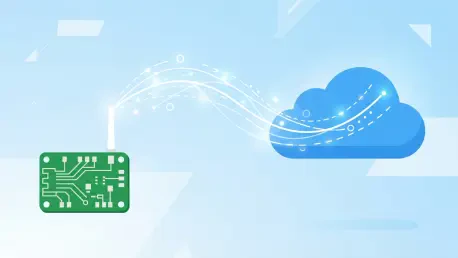

Implementing a small language model for local orchestration ensures that basic facility monitoring remains resilient even when external cloud services are unreachable. This realization marks a departure from traditional IoT architectures that relied exclusively on high-latency cloud processing for every decision. The Strands Agents open-source Python SDK, built upon the Adaptive Agentic Intelligence Framework (AAIF), provides a modular bridge between the immediate physical world and remote servers. By leveraging this framework, developers can deploy autonomous agents that transition across different hardware tiers, from edge devices to cloud clusters. The central challenge in modern IoT is no longer just connectivity, but rather the intelligent management of data flows to maintain operational integrity during network disruptions. This hybrid approach allows for localized reasoning while still tapping into large language models for complex analytical tasks when the connection is active.
Distributed Intelligence: Balancing Local and Cloud Resources
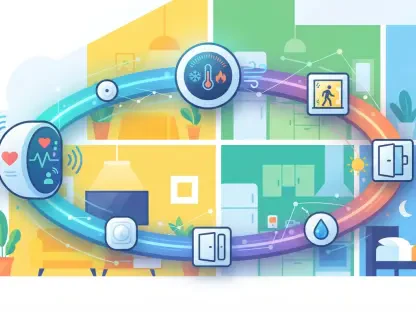
The facility monitoring pattern serves as a prime example of how Strands Agents distribute processing power to optimize performance. In this configuration, a small language model like Llama 3.2:1b is deployed locally via Ollama to manage routine telemetry and immediate sensor feedback. This local agent acts as a first responder, filtering raw data and performing diagnostic checks without needing to transmit data outside the facility. However, when the system encounters an anomaly that requires deep historical context or complex reasoning, it strategically offloads the query to Amazon Bedrock. This hierarchical design ensures that the most critical, time-sensitive functions remain operational at the edge, while high-level expert insights are reserved for the cloud. By utilizing this tiered intelligence structure, organizations significantly reduce bandwidth costs and latency, ensuring that their monitoring remains robust even in the face of fluctuating internet connectivity.
Integration of specialized tools within the AAIF allows agents to adapt their behavior based on the current network state. If the connection to the cloud is severed, the local agent continues to operate with its internal knowledge base, maintaining essential safety protocols and data logging functions. This resilience is vital for industrial applications where even a few minutes of downtime can lead to significant operational losses. The framework facilitates a smooth transition back to full-capacity intelligence once the connection is restored, synchronizing local findings with the cloud for a comprehensive audit trail. This method effectively solves the problem of over-reliance on external APIs, which has historically been a weak point for intelligent IoT systems. By treating the cloud as an optional specialist rather than a mandatory controller, the Strands SDK enables a more reliable infrastructure that prioritizes local control without sacrificing the power of generative AI for strategic analysis.
Physical Orchestration: Resilience in Fleets and Farming
In more complex scenarios, such as edge-based agriculture or robot fleet coordination, the Strands SDK handles physical hardware interactions and collective movement. For agriculture, agents on a Raspberry Pi 5 manage GPIO sensors and irrigation tasks through AWS IoT Greengrass, using MQTT for low-latency internal messaging. Meanwhile, robot fleets utilize a dual-transport system where Zenoh provides peer-to-peer communication for local coordination and AWS IoT Core manages global orchestration. This combination allows units to discover one another on-site and exchange state information instantly, avoiding collisions without cloud-induced lag. Global commands like emergency stops are pushed through the cloud to ensure consistency across the entire fleet. By grounding AI in physical reality through these local tools, the framework bridges the gap between digital reasoning and physical action, providing a comprehensive solution for modern, tech-driven environments requiring high precision.
The emergence of the Model Hardware Standard (MHS) represented a critical step toward creating a unified interface for safety-critical operations like interlocks and boundary management. By standardizing how agents interacted with hardware, the framework provided a safer environment for robotic autonomy in industrial settings. Organizations that adopted these agentic systems began prioritizing modular designs, allowing them to swap hardware or cloud providers without redesigning their entire intelligence layer. This transition moved the industry toward a resilient model where local tools handled routine work and cloud-based AI provided specialized reasoning. Implementing these hybrid systems allowed companies to optimize both operational reliability and analytical depth. For those moving forward, the focus shifted toward expanding localized capabilities. This shift effectively bridged the divide between the edge and the cloud, setting a new standard for intelligent automation following 2026.