
The formal onboarding of 17 Technology Collaborators marks a definitive milestone in Penang’s strategic efforts to cement its status as a premier hub for semiconductor and electronics innovation. This initiative, orchestrated through the combined expertise of InvestPenang and the Penang Skills Development Center, represents a significant shift in the regional industrial landscape. By establishing a formalized network of technology partners, the state is moving beyond traditional manufacturing roles to become a primary site for high-level research and automated testing. This centralized approach aims to provide a structured environment where local companies can thrive by accessing resources that were previously out of reach for individual small and medium-sized enterprises. The project serves as a bridge between home-grown ingenuity and the rigorous demands of the global market, ensuring that the next generation of automated test equipment is both designed and validated within a robust local ecosystem that prioritizes technical excellence.
Part 1: Launching the Shared Lab Facility
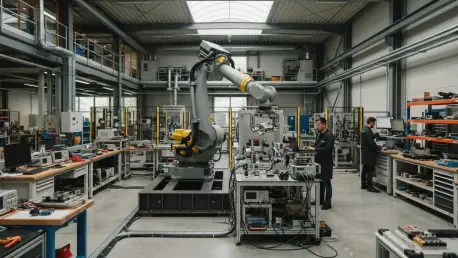
The centerpiece of this massive industrial undertaking is the Shared Lab located at the Penang Skills Development Center, which is scheduled for its official launch in the first quarter of 2027. This facility is designed to act as a communal technical resource, providing local manufacturers with the ability to utilize sophisticated design software and precision machinery without the burden of high individual capital expenditures. By centralizing these high-tech tools, the lab democratizes access to innovation, allowing smaller firms to compete on a more level playing field with global giants. The infrastructure is being meticulously curated to support every phase of the development lifecycle, ensuring that a product can move from an initial concept to a fully functional prototype within a single, integrated environment. This collaborative space is expected to significantly reduce the time-to-market for new technologies, fostering a faster cycle of experimentation and technical validation that is essential for maintaining a competitive edge.
Part 1: Integrating Global Technology Partners
To ensure comprehensive technical coverage, the technology collaborators have been organized into four specific developmental stages that cover the entire breadth of equipment manufacturing. The first phase focuses on conceptual design and virtual modeling, utilizing the specialized software capabilities of industry leaders like Dassault Systèmes and E-Plan to build accurate digital twins. Following this, the assembly and integration phase leverages the automation expertise of partners such as Siemens and Rockwell Automation to bring these designs to life in a virtual commissioning environment. Before any equipment can reach the global market, it must undergo rigorous reliability testing and compliance certification provided by specialized bodies like SIRIM QAS International and TÜV SÜD Malaysia. Finally, the operational longevity of the lab is secured through dedicated maintenance and hardware support from specialized service partners. This structured approach ensures that every piece of equipment meets high international safety and performance standards.
Part 2: Cultivating Specialized Human Capital
Beyond the impressive physical infrastructure of the campus, the initiative places a profound emphasis on the development of human capital through a specialized talent development framework. This strategy recognizes that the true value of technological advancement lies in the skills of the workforce, often referred to within the industry as brainware. The 17 technology collaborators are not merely vendors of equipment; they are active participants in a knowledge-sharing ecosystem designed to upskill local engineers and technicians. Through hands-on training sessions and collaborative projects, these industry experts are transferring critical competencies in system integration, automation, and advanced diagnostics to the local workforce. This intentional focus on high-value skill sets allows the region to transition away from basic assembly operations toward more complex roles in system design and architectural engineering. By nurturing a pool of specialized talent, the campus ensures that the local industry remains resilient and adaptable to the global sector.
Part 2: Expanding into the MedTech Market
Another vital component of the campus strategy is the deliberate diversification into the medical technology sector, which helps to insulate the local economy from the inherent volatility of the semiconductor market. In collaboration with the Association of Malaysian Medical Industries, the Penang ATE Campus has successfully demonstrated that many of the testing solutions developed for electronics can be effectively adapted for the production of sophisticated medical devices. This cross-industry synergy has already led to successful pilot projects with major global players like Boston Scientific and B. Braun. Local firms such as ViTrox and TT Vision Technologies are leveraging their expertise in automated optical inspection to provide quality assurance for high-precision medical components. This pivot not only opens new revenue streams for local manufacturers but also strengthens the overall industrial ecosystem by creating a more versatile manufacturing base. This expansion ensures that technological expertise in one sector provides a competitive advantage in another.
Part 3: Financial Backing and Economic Outlook
The financial commitment driving this project reflects a serious long-term investment by both federal and state authorities, with approximately $6.12 million allocated under the current national development plan. This funding is further bolstered by the Penang state government’s contribution of ten acres of prime industrial land, providing a solid physical foundation for the campus to expand its operations. These investments are precisely timed to align with the explosive growth of the global automated test equipment market, which is on a clear trajectory to reach a valuation of $12 billion by 2033. Since the Asia-Pacific region currently controls more than half of the global market share, Penang is uniquely situated to capture a significant portion of this growth. The region already hosts over thirty local companies specializing in testing equipment, many of which are listed on the national stock exchange with a substantial collective market capitalization. This physical infrastructure provides the necessary stability for the campus to execute its vision.
Part 3: Future Roadmap for Industrial Resilience
In conclusion, the strategic framework established through the Penang ATE Campus successfully addressed the complex challenges of the global supply chain by fostering deep local partnerships. The initiative moved beyond simple industrial clustering to create a dynamic environment where multinational corporations and local firms collaborated on high-value technological solutions. Stakeholders noted that the structured approach to first-customer deployment allowed domestic technology champions to validate their systems in real-world production environments, which significantly boosted their international credibility. Furthermore, the integration of cutting-edge research facilities with targeted talent development programs ensured that the region’s industrial growth remained sustainable and innovation-driven. This comprehensive strategy not only secured Malaysia’s reputation as a critical node in the semiconductor industry but also provided a clear roadmap for future industrial evolution. By prioritizing local ownership of the technological lifecycle, the state effectively transformed its manufacturing landscape.