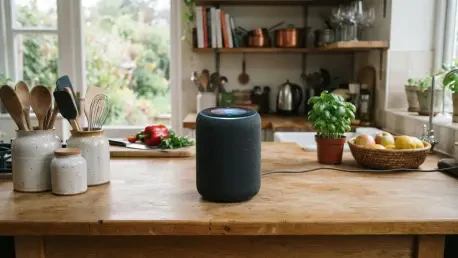

The upcoming iteration of the HomePod represents a pivotal moment for Apple to redefine its presence in a smart home sector that is increasingly dominated by more versatile and affordable devices. For several years, the tech giant has maintained a primary focus on high-fidelity audio, positioning its speaker as a premium music player first and a smart assistant second. However, this strategy faced significant headwinds as consumers began to prioritize functional intelligence and ecosystem flexibility over pure acoustic performance. The current landscape in 2026 sees the HomePod 3 entering a market where users expect their devices to do more than just play music; they want a proactive companion. By waiting to launch the third generation until its proprietary intelligence framework was fully matured, Apple signaled a significant shift in priorities. This deliberate pause allowed engineers to focus on the underlying architecture, ensuring that the hardware could support the intensive processing required for generative AI.
Intelligence and Ecosystem: Transforming Siri and Service Integration
Siri’s reputation was built on being the first to market, yet it quickly became synonymous with rigid, phrase-specific interactions that often frustrated users. The HomePod 3 addresses this legacy by incorporating advanced large language models that allow for a more fluid and natural dialogue. Unlike previous iterations that relied on predetermined scripts, the new system leverages the full breadth of Apple Intelligence to maintain context across multiple queries. For example, if a user asks about the weather and then follows up with a question about whether they should carry an umbrella to a specific meeting, the system can cross-reference calendar data with atmospheric forecasts without needing the subject repeated. This leap in cognitive capability is not merely a software update; it represents a fundamental change in how the device processes human intent. By moving toward an intent-based architecture, Apple ensured that the assistant could handle the messy way that people actually speak.
Historically, the HomePod has been criticized for its “walled garden” approach, which often limited its appeal to those fully committed to the Apple Music ecosystem. In the current market, however, such exclusivity acts more as a barrier to entry than a feature of the brand. For the HomePod 3 to achieve mass-market success, it was essential to treat third-party services like Spotify, Tidal, and YouTube Music as first-class citizens. This means providing native voice control and Handoff support that feels as intuitive as the experience with proprietary apps. Users today demand the freedom to use their preferred platforms without encountering technical friction or being forced into secondary connection methods like AirPlay. By opening these APIs, Apple acknowledged that the value of the hardware lies in its performance, not in its ability to lock users into a specific subscription. This inclusive strategy broadens the potential customer base significantly, inviting enthusiasts from various backgrounds.
Strategic Hardware: Visual Command Centers and Enhanced Reliability
As the smart home market evolved toward 2026, the limitations of a purely voice-controlled device became increasingly apparent in high-traffic areas. While audio cues are useful for quick updates, complex information often requires a visual component for better comprehension and interaction. The HomePod 3 meets this need by introducing an integrated display that serves as a visual command center. This screen does not merely repeat what is being said; it provides a persistent anchor for data that users need to reference over time. For instance, in a kitchen setting, seeing a countdown for multiple timers is far more effective than asking Siri for an update every few minutes. Additionally, the display allows for a more immersive smart home control experience, giving users the ability to see a layout of their home and make adjustments with a simple touch. This hybrid approach combines the convenience of voice with the precision of a graphical user interface, making the device much more useful.
The evolution of the HomePod 3 demonstrated that a successful smart home strategy required more than just superior acoustics; it demanded a seamless blend of intelligence and accessibility. Once the hardware hurdles were cleared, the focus shifted toward how these devices could anticipate user needs through ambient sensing and advanced machine learning. By establishing the speaker as a neutral hub for diverse services, Apple paved the way for a more unified home experience that moved beyond the constraints of a single brand. Industry experts noted that the most significant legacy of this device was its ability to bring high-level artificial intelligence into the physical domestic space without compromising privacy. Future developments in this product line were expected to build upon this foundation, exploring even deeper integration with proactive energy management. The success of the third generation provided a blueprint for how a legacy product could be successfully reimagined for an era defined by conversational computing.