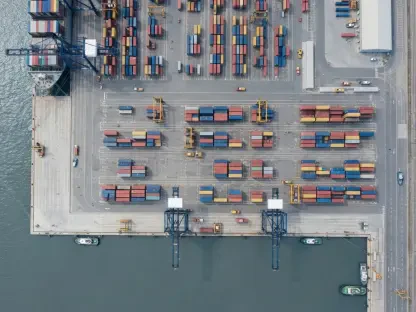

A New Era of Integrated Supply Chain Management in North America The global maritime industry has recently witnessed a monumental shift as container shipping giants evolve into comprehensive logistics powerhouses that control every segment of the global supply chain journey. CMA CGM’s acquisition

When a modern corporation invests millions of dollars to accelerate a redundant business process by twenty percent, it has not achieved a breakthrough; it has merely perfected a systemic mistake at a higher velocity. Most organizations today are caught in a cycle of paving the cow path, a term used

The relentless velocity of modern e-commerce has forced a radical rethink of how distribution hubs function, turning once-static warehouses into precision-engineered engines of global commerce. At Forrest Park, the collaboration between DPD and ASSA ABLOY Entrance Systems represents a definitive

Scaling a logistics operation without a linear increase in headcount necessitates software that can handle the preparatory and administrative heavy lifting of exception management. For years, the industry relied on basic predictive models to flag delays, but the labor-intensive work of resolving

The most insidious threat to corporate stability in 2026 does not involve a loud server crash or a frantic system notification but manifests as a perfectly polished response that is fundamentally flawed. In the current landscape of enterprise operations, traditional computing errors have been

Digitizing work orders through specialized software removes the friction found in traditional maintenance workflows and improves overall operational efficiency. This transition represents a fundamental shift in how global enterprises perceive their physical and digital footprints. In the current