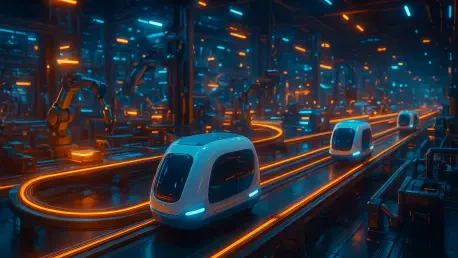

The transition from digital curiosity to physical utility has reached a fever pitch as artificial intelligence models are no longer confined to the screen but are now actively rewiring the foundations of global industry. As of 2026, the marketplace has moved decisively beyond the era of experimental dialogue systems and toward a reality where physical intelligence serves as the primary driver of economic growth. This evolution represents a fundamental realignment of how technology interacts with labor, creativity, and physical infrastructure. By examining the current convergence of high-stakes media partnerships and the rise of autonomous robotic systems, this analysis identifies the critical pivot points that are defining the modern industrial landscape. The focus is no longer on what a model might do in a hypothetical scenario, but on how it is currently being integrated into the very fabric of commercial reality through specialized execution and massive capital deployment. This shift is particularly evident in the way legacy industries are absorbing cutting-edge software to maintain relevance in an increasingly automated world.
The Dawn of Specialized Execution and Physical Intelligence
The landscape of artificial intelligence is undergoing a profound transformation, moving away from the era of experimental chatbots toward a period defined by deep industrial integration and sophisticated physical automation. As the market moves through 2026, the focus has shifted from theoretical research to the deployment of domain-specific models designed to solve complex, real-world challenges. This transition is marked by a move toward systems that do not merely process text or images but interact meaningfully with the physical world and specialized professional environments. The emergence of these technologies indicates that the “generalist” phase of development has matured into a “specialist” phase, where the value of a system is measured by its ability to execute precise tasks within a defined vertical.
This period is also defined by a shift in how intelligence is perceived; it is no longer just a digital assistant but a form of physical intelligence that can navigate a factory floor or manage a complex media catalog. The strategic alliances formed during this time are setting a new standard for how technology interacts with both culture and industry. By moving toward specialized execution, companies are able to mitigate the risks of “hallucinations” and inaccuracy that plagued earlier models. This reliability is the cornerstone of the current industrial era, allowing for the deployment of AI in high-stakes environments where precision is not just a feature but a requirement for operational success.
From General Models to Purpose-Built Solutions
Historically, the initial surge in AI adoption was characterized by general-purpose systems that showcased impressive but often unrefined capabilities. Early generative models faced significant hurdles, including legal disputes over intellectual property in the arts and the inherent brittleness of robotics in manufacturing, where machines required rigid, manual programming for every individual task. These foundational challenges shaped the current landscape, necessitating a move toward ethical licensing and adaptive learning. Understanding this shift is essential because it marks the transition of AI from a digital novelty to a fundamental utility. The industry has learned that for technology to be sustainable and profitable, it must respect existing legal frameworks while providing the flexibility to operate in unpredictable physical environments.
This move toward purpose-built solutions has allowed for the creation of models that are inherently more robust and scalable. Instead of trying to build a single brain that can do everything, the trend from 2026 to 2028 will likely favor the development of interconnected, specialized systems. This modular approach ensures that each component can be optimized for its specific environment, whether that is a recording studio or a logistics hub. By focusing on these purpose-built applications, developers have unlocked new levels of efficiency that were previously unattainable with broader, less focused architectures.
Redefining Creativity and Labor Through Foundational Models
The Strategic Democratization: Digital Media and Fan Engagement
The music industry offers a premier example of how AI is being integrated into complex commercial ecosystems. The partnership between Universal Music Group and ElevenLabs, now valued at $11 billion, represents a pivotal shift from defensive litigation to proactive monetization. By launching platforms that allow fans to remix and personalize tracks from extensive catalogs, the industry is moving toward a model of interactive consumption. This human-centric approach ensures that artists remain at the center of the creative process, with technology acting as a tool for engagement rather than a replacement for talent. This strategy not only legitimizes generative systems in the creative arts but also establishes a gold standard for ethical rights management and artist compensation.
Furthermore, this democratization of media creation allows for a more participatory relationship between the creator and the audience. Fans are no longer just passive listeners; they are active contributors who can engage with their favorite artists in ways that were previously impossible. This shift has opened up entirely new revenue streams for labels and artists alike, transforming the traditional consumption model into a dynamic, two-way exchange. The success of this model proves that when technology is implemented with a focus on licensing and transparency, it can enhance rather than disrupt traditional creative industries.
Physical AI: The Evolution of General-Purpose Robotics
While media undergoes a digital transformation, the field of robotics is experiencing a breakthrough via physical AI. The S1 robotic foundation model, supported by advanced computational infrastructure, exemplifies this leap. Unlike traditional robots that require months of coding, the modern foundation model utilizes in-context learning, enabling machines to execute tasks like brewing coffee or assembling electronics simply by observing human demonstrations. The technical efficiency is stark: successful execution rates for complex tasks have jumped from 9% in legacy systems to 66% with modern neural brains. This agility allows for rapid deployment across various sectors, proving that the intelligence powering the machine is now more valuable than the hardware itself.
The ability of these machines to learn from minimal data points is a game-changer for the manufacturing and logistics sectors. Instead of requiring a team of engineers to reprogram a robot for every new product line, a floor manager can simply demonstrate the task. This reduction in technical friction is driving a new wave of localized manufacturing, where small-scale operations can use the same level of sophisticated automation as global giants. The focus has shifted from the mechanical capabilities of the robot toward the cognitive flexibility of the underlying model.
Navigating Global Scaling: The Infrastructure of Innovation
The scaling of these technologies is further accelerated by the deep involvement of infrastructure giants. The role of hardware providers extends beyond providing chips; through advanced simulation tools, they provide the digital twins necessary to train robots in virtual worlds before they enter the real one. These alliances help mitigate the risks associated with rapid deployment. Furthermore, the speed of commercialization is unprecedented, with leading startups reaching $100 million revenue run rates within months of their initial launch. This trend highlights a broader market readiness for AI-driven transformation, where established gatekeepers and nimble firms collaborate to absorb traditional logistics and hardware divisions into a unified, AI-first vertical.
The integration of simulation and reality has created a feedback loop that accelerates the pace of innovation. By testing every possible scenario in a virtual environment, companies can ensure that their physical systems are safe and efficient before they ever touch a factory floor. This “simulation-first” approach is becoming the standard for all physical automation, reducing the cost of failure and allowing for more experimental and innovative designs. As these systems scale globally, the focus remains on building a resilient infrastructure that can support the massive data and power requirements of a fully automated economy.
Future Projections: Autonomous Systems and Market Regulation
Looking ahead, several emerging trends will likely redefine the industry. A move toward total verticalization is expected, where software firms continue to acquire hardware manufacturers to ensure seamless integration of their intelligence. Economically, the shift toward physical automation will likely prompt new regulatory frameworks focused on workplace safety and the ethical transition of the labor force. The distinction between digital AI and physical AI will continue to blur, leading to a world where autonomous systems are as ubiquitous in the home and factory as the smartphone is today. As these models become more refined, their ability to learn autonomously from minimal data will drastically lower the barrier to entry for small-scale automation.
From 2026 to 2030, the global economy will likely see a massive restructuring of the labor market. While automation will replace certain repetitive tasks, it will also create a demand for new roles focused on the management and maintenance of these complex systems. Governments and private institutions will need to work together to ensure that this transition is handled with a focus on reskilling and social stability. The regulatory environment will play a crucial role in determining the pace and direction of this change, with a growing emphasis on transparency and accountability in autonomous decision-making.
Strategic Frameworks: Navigating the New AI Era
For businesses and professionals, the takeaway is clear: the era of “wait and see” regarding AI is over. To remain competitive, organizations should prioritize partnerships that emphasize licensed data and ethical integration. Best practices include investing in robot-agnostic software that can be updated as models improve, rather than tying oneself to specific hardware. In the creative sector, the focus should shift toward participatory experiences that empower the end-user while protecting intellectual property. Leaders must look beyond the hype and identify specific, domain-related problems that can be solved with specialized execution, ensuring that deployment remains responsible, profitable, and scalable.
Organizations must also foster a culture of continuous learning and adaptability. The speed at which these technologies are evolving means that a strategy set today may need to be adjusted within months. By building flexible operational frameworks, companies can pivot as new breakthroughs occur. Additionally, the focus on ethical AI is not just a moral imperative but a commercial one; consumers and partners are increasingly favoring companies that demonstrate a commitment to responsible innovation.
The Physical Reality: An AI-Integrated Future
The shift toward industrial integration and physical automation defined a definitive new chapter for artificial intelligence. By moving from screens into the speakers of homes and the robotic arms of factories, foundational models proved their worth as essential drivers of global productivity and culture. The massive valuations and strategic alliances witnessed during this period were more than just financial milestones; they reflected a world where technology became deeply embedded in the physical fabric of society. As intelligence moved from what it could do to what it was doing at scale, the focus remained on human-centric innovation that harmonized technological power with ethical responsibility. The results demonstrated that the most successful applications were those that prioritized real-world utility over theoretical potential. Moving forward, the blueprint for success involved a commitment to licensed ecosystems and adaptive, physically grounded intelligence. This era proved that the integration of digital brains into physical bodies was the key to unlocking the next level of human achievement and economic prosperity.